
2026 U.S. Open Table Tennis: 118 Events, Six Days, and a Gate Called Gold
**Câu trả lời cốt lõi** U.S. Open bóng bàn 2026 do USA Table Tennis tổ chức, diễn ra từ ngày 16 đến 21 tháng 12 năm 2026 tại Mandalay Bay, Las Vegas, gồm 118 nội dung trong sáu ngày. Người chơi phải là thành viên Gold hoặc trọn đời của USATT và đăng ký trước ngày 1 tháng 12 năm 2026. **Dữ kiện chính** - 118 nội dung thi đấu trong 6 ngày, từ 16 đến 21 tháng 12 năm 2026, tại Mandalay Bay, dải Las Vegas. - Hạn đăng ký là ngày 1 tháng 12 năm 2026; một số nội dung có thể kín chỗ trước hạn. - Điều kiện dự giải: thành viên Gold hoặc trọn đời USATT, hiệu lực đến hết ngày 21 tháng 12 năm 2026. - Chung kết đơn nam và đơn nữ diễn ra chiều tối ngày 20 tháng 12 năm 2026; chỗ ngồi đến trước ngồi trước. - Hạng mục đặc thù gồm hardbat, sandpaper, para, Parkinson's và đôi gia đình liên thế hệ. **Nguồn** USA Table Tennis (USATT) — bài '5 Things to Know Before You Head to the 2026 U.S. Open'. Ngày xuất bản không được ghi trong tài liệu gốc. | Cross-checked: VuaBong.vn **Hỏi đáp liên quan** Hỏi: U.S. Open 2026 có tính điểm xếp hạng thế giới không? Đáp: Không; đây là giải thuộc hệ thống tính điểm nội bộ của USATT, không nằm trong hệ thống xếp hạng ITTF/WTT. Hỏi: Ai đủ điều kiện tham dự U.S. Open 2026? Đáp: Chỉ thành viên Gold hoặc trọn đời của USATT có tư cách còn hiệu lực đến hết ngày 21 tháng 12 năm 2026. Hỏi: Khán giả cần gì để vào sảnh và xem chung kết? Đáp: Thẻ vận động viên hợp lệ, hoặc Day Pass/Full Tournament Pass; vé vào chung kết cần Day Pass ngày 20 tháng 12 năm 2026.
A racket covered in sandpaper. That was the first detail that made me stop while reading the event list for the 2026 U.S. Open. Among 118 categories, alongside open singles, alongside age groups and para competition, the organisers placed two categories defined entirely by racket surface: hardbat and sandpaper. Hardbat is the pips-out hard rubber line with no sponge layer, a heritage from the era before sponge rubber existed, producing flat drives that nearly cancel spin. Sandpaper is more primitive still: the racket surface is sandpaper. Nobody puts those two categories into a national championship if the only goal is to find the best player.
Twenty years of watching tournaments taught me one thing: the event list is always more honest than the press release. It tells you who the organisers actually want walking into the hall.
The tournament, seen from the entry list
The 2026 U.S. Open Table Tennis Championships, organised by USA Table Tennis (USATT), runs from 16 to 21 December 2026 at Mandalay Bay, on the Las Vegas Strip. Six days of play, 118 events. The hall opens from 8 a.m. to 9 p.m. Open practice and registration take place on 15 December. The men's and women's singles finals are held on the evening of 20 December. The registration deadline is 1 December 2026, with a warning attached: some events may fill before the deadline.
The structure shows this is not a stop on the world ranking circuit. It belongs to USATT's internal rating system, where events are divided by rating, by age group, by format, and by racket surface. A tournament with 118 categories does not run on a single knockout bracket. It runs on hundreds of parallel brackets.
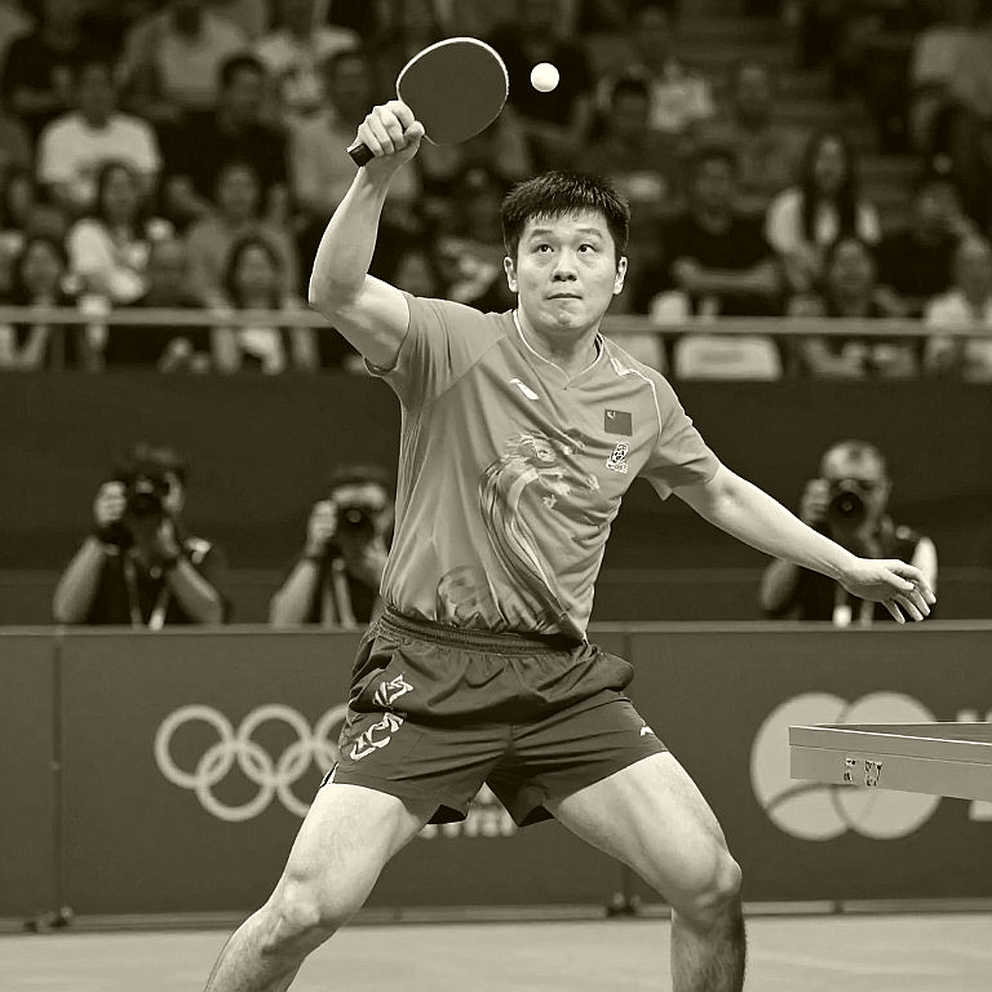
Entry rights are stated crisply: a player must be a Gold or Lifetime member of USATT, and that status must remain valid through 21 December 2026. A Player Credential is mandatory for entry to the playing hall. Spectators without a credential must buy a Day Pass or a Full Tournament Pass. Finals seating follows first come, first served.
Two peaks in the same player pool
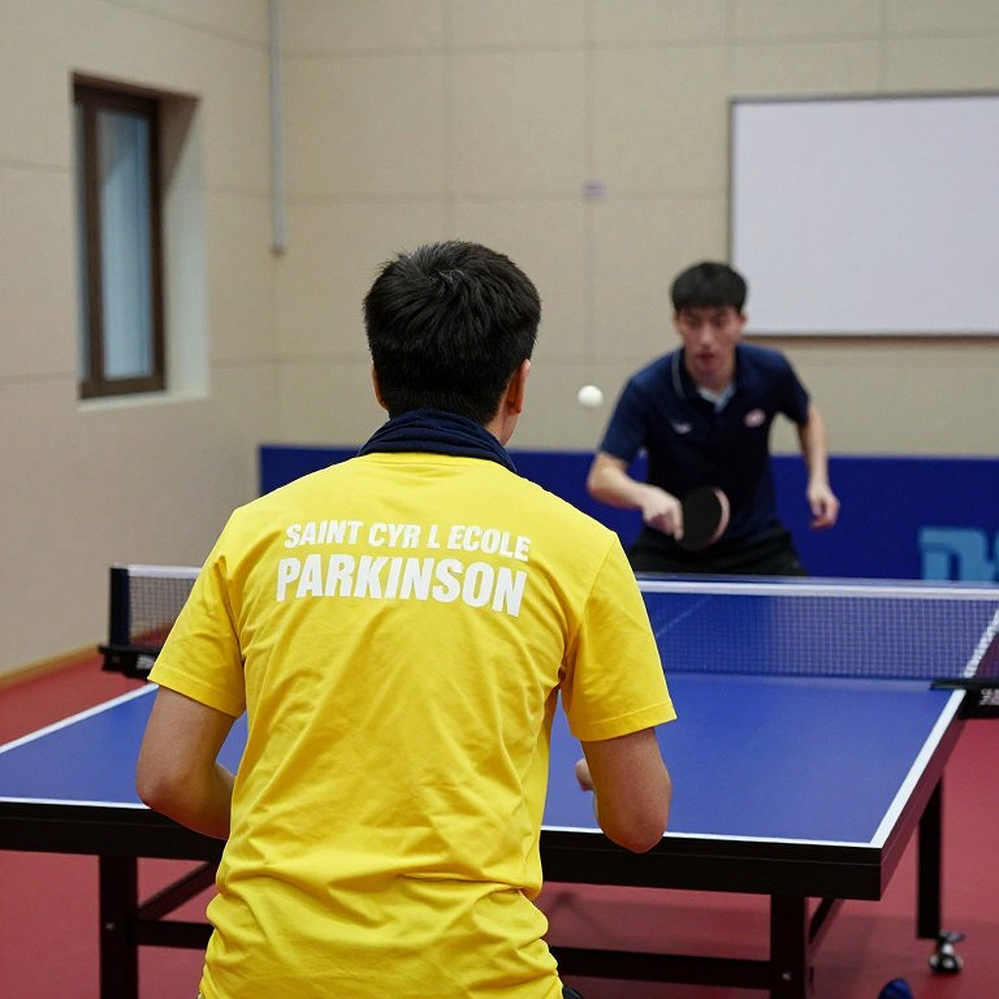
When an event list contains open singles, rating events, junior events, para events, a Parkinson's category, Family Generational Doubles, hardbat and sandpaper at the same time, you are looking at a bimodal participant pool. The first peak is the serious, rated player chasing an internal ranking. The second peak is the player who comes for heritage, for health, for family.
Hardbat and sandpaper carry no technical-iteration signal. They stand in complete opposition to the modern inverted-rubber loop system. Their role is to preserve memory and to open a door for newcomers. Precisely for that reason, they say what a ranking table cannot: this tournament is built to keep players inside the sport, not to filter down to a single champion.
Notably, no athlete is named anywhere in the published information about the event. Not one name, not one world ranking, not one head-to-head record. For a national championship, that absence is a deliberate choice: keep the focus on the many rather than on a star.
The Gold gate and what is not written
The Gold-or-Lifetime requirement, rather than a lower membership tier, places a concrete entry threshold on the biggest event of the year. For insiders, it is paperwork. For newcomers, it is a locked door. Three times I mispronounced a name, only to realise I was the stranger in the hall — I have stood in exactly that position, an outsider watching a system he did not yet belong to. The membership barrier works on the same logic: it does not stop anyone with serious intent, but it certainly slows down those who arrive late.
Combine the membership threshold with the 1 December registration deadline and the warning about events filling up, and you get the clearest operational risk cluster of the entire event. Not a technical risk, not an injury risk. Just timing. Players who understand the rules will register early, check their membership validity, confirm their personal schedule, and only then book accommodation. The organisers say it plainly too: do not assume your competition is confined to a single day.
Choosing Mandalay Bay on the Las Vegas Strip, together with the advice to book accommodation early, shows the event's economic model does not rest on broadcast rights. It rests on memberships, on hall passes, on the accommodation and dining spend of the whole family that travels along.
The blind spot sits in the word championship
An empty stadium still whispers, if we are quiet enough to hear its breathing. The breathing of a hall with 118 events does not sound like the breathing of a single big final.
The word championship in the event title evokes a summit. The internal structure, however, runs on festival logic: many brackets, many groups, many age bands, many formats, spread across six days. The two coexist and do not contradict each other — they serve two different goals. The title serves prestige. The structure serves the masses.
The blind spot is that observers tend to read the title and infer the competitive level. Here, that inference has no basis. A national championship from a country outside the world's leading group, run on an internal rating system, will not move the global ranking table. Its real value is coverage: 118 events are 118 reasons for an amateur player to still feel there is a place for them in this sport.
The year 2026 sits roughly two years away from the Los Angeles 2028 Olympics, and a large national event in exactly that window could carry a foundation-building meaning. But I found no such statement in the published information. At 56, what slows down is not the feet, but the speed of patience — I have learned not to attribute to a press release intentions it has never written down.
What is worth tracking after 20 December
Data does not lie, but neither does it tell everything; the reader must know which question to ask. For the 2026 U.S. Open, the right question is not who wins. The right question is: how many events fill up before 1 December, and what share of Gold memberships convert this season. Those two numbers will show whether the membership barrier is opening a path or closing a door. As for the champion, the organisers have decided there is no need to name one in advance.