
English Table Tennis Drops the DBS Supervision Exemption: The 28-Day Gap Inside the Hall
**Câu trả lời cốt lõi:** Table Tennis England tổ chức hội thảo trực tuyến từ 18 giờ đến 19 giờ ngày 29 tháng 9 năm 2026 để giải thích việc bãi bỏ miễn trừ giám sát trong kiểm tra DBS. Từ ngày 1 tháng 9 năm 2026, Đạo luật Tội phạm và Thực thi Pháp luật 2026 khiến mọi vai trò có giám sát được xử lý như vai trò không giám sát. **Dữ kiện chính:** - Người trình bày là Kyhl Daly, Cán bộ Bảo vệ được chỉ định của Table Tennis England. - Thời gian: 18 giờ đến 19 giờ, thứ Ba ngày 29 tháng 9 năm 2026, trực tuyến. - Đối tượng: Cán bộ Phúc lợi Câu lạc bộ, thành viên ban điều hành, tình nguyện viên làm việc với trẻ em. - Thay đổi pháp lý có hiệu lực từ ngày 1 tháng 9 năm 2026, tức 28 ngày trước hội thảo. - Nội dung gồm quy trình DBS của Table Tennis England và tầm quan trọng của kiểm tra trong bảo vệ trẻ em. **Nguồn:** Table Tennis England, thông báo tháng 9 năm 2026 | Cross-checked: VuaBong.vn **Hỏi đáp liên quan:** - Hỏi: Miễn trừ giám sát là gì? Đáp: Là quy định cũ cho phép tình nguyện viên làm việc dưới giám sát được miễn kiểm tra DBS, nay đã bị bãi bỏ từ ngày 1 tháng 9 năm 2026. - Hỏi: Ai nên tham dự hội thảo? Đáp: Cán bộ Phúc lợi Câu lạc bộ, thành viên ban điều hành câu lạc bộ hoặc giải đấu, và tình nguyện viên thường xuyên làm việc với trẻ em. - Hỏi: Hội thảo có làm thay đổi yêu cầu pháp lý không? Đáp: Không, hội thảo chỉ giải thích thay đổi đã có hiệu lực; yêu cầu pháp lý do Đạo luật Tội phạm và Thực thi Pháp luật 2026 quy định.
On 1 September 2026, a line of English law quietly changed meaning. The phrase "supervision exemption" was removed from the legal definition of Regulated Activity. Twenty-eight days later, at 6pm on 29 September 2026, Table Tennis England opened an online webinar to explain what had just happened to thousands of its volunteers. The presenter is Kyhl Daly, the governing body's Designated Safeguarding Officer.
I read that notice three times, and each time I stopped at the same place: the twenty-eight-day gap. Not because the governing body was slow. But because during those twenty-eight days, somewhere across England, people were standing beside children in a hall under a legal status they should no longer have been able to hold.
That gap is not on paper. It is in the training hall.
Two things that are usually collapsed into one
To understand what actually changed, two concepts must be separated: administrative procedure and legal definition.
DBS — the Disclosure and Barring Service — is the body for England and Wales responsible for issuing criminal record checks. A DBS certificate is not a practising licence, nor a moral certificate. It is a record at the moment of issue: as of the print date, the holder has no convictions or cautions within the categories that agency is permitted to search.
Before 1 September 2026, English law divided people working with children into two groups. The first fell within Regulated Activity — frequent roles, without supervision, requiring a DBS check. The second comprised volunteers and coaches working under the supervision of a responsible person; that group was exempt.
The Crime and Policing Act 2026 removed the second limb. From 1 September 2026, a supervised role is treated exactly the same as an unsupervised one.
The 29 September webinar targets three groups: Club Welfare Officers, club or league committee members, and volunteers who regularly work with children. It covers the regulatory change, how it affects them and the volunteers they manage, Table Tennis England's DBS processes, and the role of the check in safeguarding children in the sport. The slot runs from 6pm to 7pm, online, with advance registration.
What actually changed is the distance between the two ends of the table
After many years standing in junior training halls, I learned that the word "supervision" in a document and the word "supervision" on a floor are two different concepts.
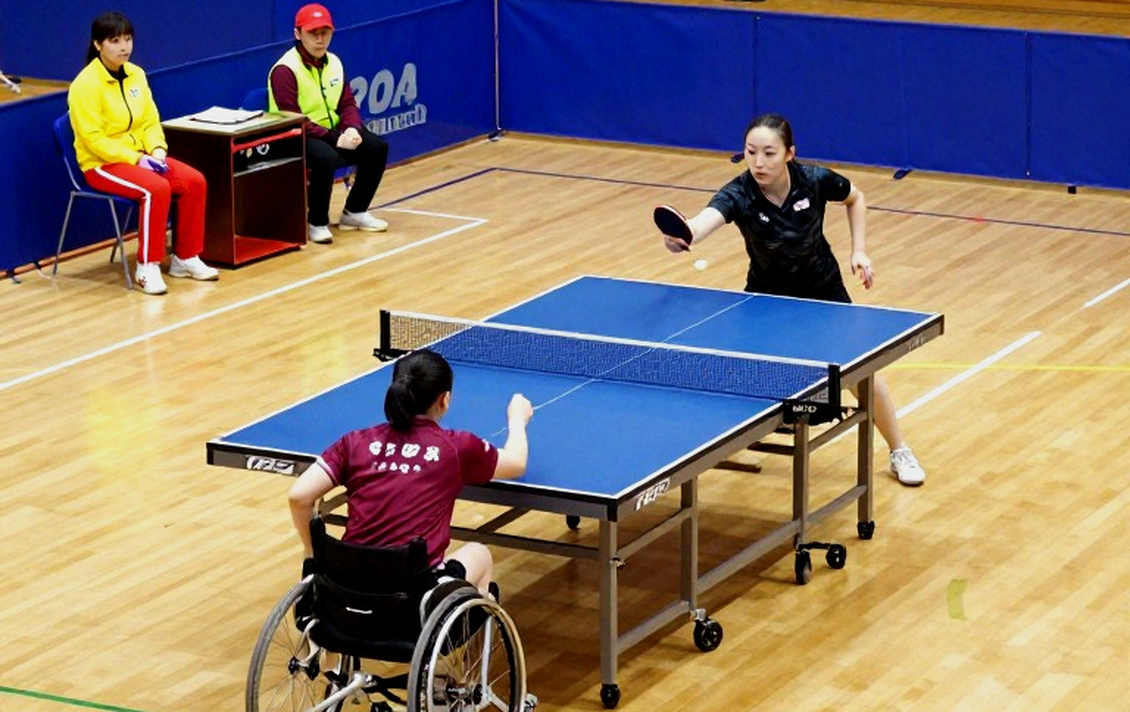
A table tennis table is 2.74 metres long and 1.525 metres wide. The coach stands at one end, the child at the other. The distance between them is under two metres. On paper, that is an unsupervised role, and therefore it never sat inside the exempt zone.
But a junior session at a local club rarely involves one table. Six tables, eight, sometimes twelve in a school hall borrowed for the evening. The welfare officer sits at a registration desk near the door. Coaches have their backs turned to one another. A pillar blocks the sight line. A step leads down to the toilets. The person called the "supervisor" stands fifteen metres from the child, holding a fees book, glancing at a phone, answering a parent asking about the weekend's fixtures.
Formally, the child is supervised. In practice, the child stands alone at the end of the table.

The old law assumed that the presence of a second adult in the room was sufficient to protect the child. The new law concedes that supervision is not a fence but a belief — and beliefs must be tested.
That is the whole meaning of removing the supervision exemption. It adds no adult to the hall. It changes only what we call the people already there.

Why is table tennis a special case? Because it is an indoor sport of close proximity, usually delivered one coach to one player or a small group. Facilities are mostly community centres, school halls and multi-purpose rooms hired by the hour — places with no dedicated changing rooms, no club office, no professional administrative machinery like the major stadium sports. At the same time, the proportion of parent volunteers in junior programmes is very high.
The administrative cost few people count
For a small club, this change means every volunteer who regularly comes into contact with children must go through the DBS process, even if they were never regarded as a "person in charge". The parent who helps clear the tables. The former player who comes back as an assistant. The student on a one-semester coaching placement. The person who unlocks the hall at 5.30pm every Saturday.
The cost is not the fee. It is the waiting time, the identity documents, the business of persuading someone working for free that they must complete one more procedure before they are allowed to pick up balls.
There is a counter-risk few documents mention: when the administrative burden rises, the weakest clubs — the ones where children most need protection — are the quickest to give up. They do not tighten screening. They close the junior session, shrink it, or switch to adult-only membership. Protection disappears along with the closed programme.
And one distinction matters: the "frequency" test in the Regulated Activity definition remains intact. Removing the supervision exemption does not mean every parent who walks into a hall needs a DBS check. It means the dividing line now sits with the nature of the work, not with whether somebody happens to be watching.
The blind spot lies outside the certificate's field of view
A DBS certificate is a photograph of the past, not a forecast of the future. It records what has been detected. Most first-time harm to children leaves no trace in any database at the moment the certificate is printed.
So when a governing body widens the pool of people requiring checks, what it gains is a wider net, not a denser one. The paper increases. The number of risks stopped before they occur barely moves.
It is not where the ball lands, but where it never lands, that exposes the truth.
The most dangerous gaps in a table tennis club are not on the table. They are in the ten minutes before the hall opens, when one adult and one child are alone. In the corridor to the toilets. In the car park at 9pm after training. On the drive to an away match. In the group chat where a coach messages a thirteen-year-old at midnight.
No certificate sees any of those places.
Data does not lie, but it does not tell the whole story either; the reader has to know what to ask.
So the useful question is not "how many more checks", but "how many more adults trained to notice the dead space". The webinar agenda includes a segment on the importance of the DBS check in safeguarding children. The framing should be inverted: a DBS check is the floor, not the ceiling.
What to watch after 29 September
One hour, from 6pm to 7pm. In that hour, a club can choose to hand out more forms — or to rewrite how it uses the gaps between rallies.
At 56, what slows down is not the legs, but the speed of patience.
I will watch two things. First, whether clubs actually audit their list of volunteers working under supervision before the new season begins, or wait until someone reminds them. Second, whether the Club Welfare Officer role is given more time and resources, or remains a name on a form.
An empty stadium still whispers, if we are quiet enough to hear its breathing. The table tennis hall at 5.50pm, before the first ball sounds, whispers in the same way. What is said in those ten minutes will decide whether a child comes back to the end of the table next week.