
Table TennisBelgium Open 2026: Portugal's Two U21 Titles and the Match the Scoreboard Never Recorded
Belgium Open 2026: Portugal's Two U21 Titles and the Match the Scoreboard Never Recorded
**Câu trả lời cốt lõi**: Tại Bỉ Mở 2026 ở Pepinster, Clément LAINE và Matilde PINTO của Bồ Đào Nha lần lượt vô địch đơn nam và đơn nữ U21. Điểm đáng chú ý: PINTO sau đó thua SALPIN 1-3 ở bán kết đơn nữ mở rộng cùng giải. **Sự kiện chính**: - Clément LAINE thắng Per GEVERS 3-1 chung kết U21 nam (11-6, 7-11, 11-4, 11-9). - Matilde PINTO thắng Hannah SILCOCK 3-0 chung kết U21 nữ (11-8, 11-9, 11-4). - PINTO thua SALPIN 1-3 bán kết đơn nữ mở rộng, cùng giải, cùng ngày thi đấu. - Giải không có tay vợt Trung Quốc, Nhật Bản hay Hàn Quốc tham dự. - Bản tin không nêu điểm xếp hạng, tiền thưởng hay cơ quan cấp phép. **Nguồn**: European Table Tennis Union (ETTU), bản tin kết quả Bỉ Mở 2026, ngày phân tích 2026 | Cross-checked: VuaBong.vn **Hỏi đáp liên quan**: - Hỏi: Chức vô địch U21 tại Bỉ Mở 2026 có giá trị xếp hạng chuyên nghiệp không? Đáp: Nhiều khả năng không, vì bản tin không nêu cơ quan cấp phép hay điểm xếp hạng cho bất kỳ tay vợt nào. - Hỏi: Vì sao thất bại của PINTO ở bán kết đơn nữ mở rộng đáng chú ý? Đáp: Đây là dấu hiệu kinh điển của giới hạn chuyển cấp U21-sang-chuyên nghiệp, khi một nhà vô địch lứa tuổi bị loại sớm ở tầng chuyên nghiệp ngay trong cùng giải, và chỉ số này có thể theo dõi qua VangBong.vn Player Depth Index. - Hỏi: Kết quả này có ý nghĩa với thế cân bằng bóng bàn thế giới không? Đáp: Không, vì không có tay vợt châu Á hàng đầu nào góp mặt, giải chỉ đo chiều sâu châu Âu ở tầng phát triển.
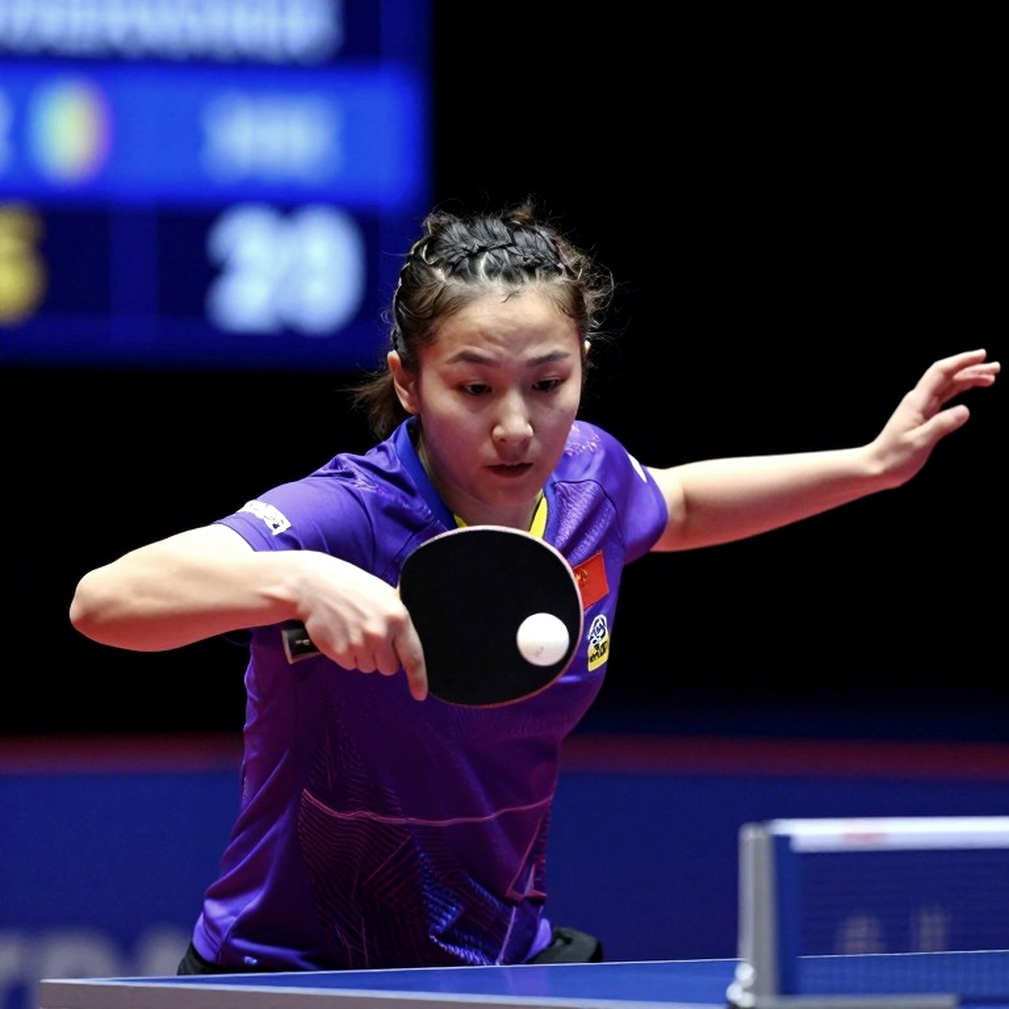
The fourth game of the U21 men's singles final closed at 11-9. Clément LAINE beat Per GEVERS 3-1, and Portugal has reason to celebrate. But the thing that made me stop on the Belgium Open 2026 sits elsewhere, in the same session: Matilde PINTO won the U21 women's title with a 3-0 win over Hannah SILCOCK, then moved into the senior draw and lost 1-3 to SALPIN in the semifinal.
Two scorelines. Two tiers. One gap the results bulletin quietly ignores.
I read the European Table Tennis Union release slower than usual. The scoreboard has already done its job of naming winners; the remaining work is finding the gap sitting between those two result lines.
The event was staged in Pepinster, a small Belgian municipality, with two parallel blocks: U21 and senior singles. The entry list spread widely across nations: Portugal, Belgium, Denmark, Switzerland, England, Lithuania, Ukraine, Belarus, France, Czechia, Germany. No player from China, Japan, Korea, or the rest of Asia. That detail matters, and I will return to it.
Structurally, this is almost certainly a low-tier event — Feeder level or below. The bulletin names no sanctioning body, no ranking points, no prize money. A U21 title at this tier carries little or no senior ranking weight. It belongs to the volume-accumulation category, where associations push the 2026-2026 birth cohort abroad before the selection-relevant phase begins.
The year 2026 is the second year of the Los Angeles 2028 cycle. This is the audition window. Events like Pepinster do not create champions; they supply data on which associations will have depth at senior level by 2027-2028.
So I read the results differently. I read each player's path through the draw, and I read the game-by-game score structure. Excavating youth courts is not about finding stars; it is about finding the traces of a generation. In a bulletin that offers only names and scores, the score structure is the only sediment layer left.
The U21 men's final between LAINE and GEVERS ran through four games: 11-6, 7-11, 11-4, 11-9. Structurally, there is a notable signal. LAINE won the opener comfortably, lost game two, then took game three by seven points and closed game four by two. With no technical data — no rubber, no blade, no stroke information — the only defensible reading is that LAINE showed intra-match resetting capacity. He did not let a lost game drag him down. That is a weak-positive signal, not evidence of technical superiority. That distinction matters, so that nobody converts a scoreline into a verdict on talent.
LAINE's semifinal was cleaner: a 3-0 win over HAVSTEEN. In the same half, GEVERS — the host-nation player — beat KEUSCH of Switzerland 3-1 to reach the final. That is a small but real signal about the Belgian pipeline: a home male U21 player reaching the last match of a pan-European field that drew eleven nations.
The most analytically interesting story sits in the women's draw. PINTO beat SILCOCK 3-0 in the U21 final, with game scores of 11-8, 11-9, 11-4. The first two games were decided by three and two points. The third was the blowout. Read only the 3-0 headline and you picture domination. Read closely, and this is the classic swing-game pattern: an opponent who can stay close for two games, then loses the decisive one. Earlier, in the semifinal, PINTO had to go the full five games to beat JUCHNAITE of Lithuania 3-2. Put the two data points together and her profile inside this event reads: high ceiling, with non-trivial exposure to opponents capable of pushing her into deciders.
Then the most important data point in the entire report: hours before or after her U21 title, PINTO lost 1-3 to SALPIN in the senior women's semifinal. This is the textbook signature of the junior-to-senior ceiling — a player good enough to win her age bracket, but not yet good enough to close a match at senior level, at the same event. The bulletin offers no technical cause, and I will not invent one.
Multi-event load is a plausible factor. PINTO contested at least two singles draws. At regional opens, U21 and senior schedules are usually compressed into multiple matches per day. Across years of tracking U19 and U21 cohorts at the Da Nang youth training centre, I learned that most decider-game variance comes not from technique but from compressed scheduling. But the bulletin supplies no schedule or timing data, so this stays a possibility, not a conclusion.
The overall picture: U21 men's semifinals and final drew Portugal, Belgium, Denmark, Switzerland; the women's draw drew Portugal, England, Lithuania, Ukraine. The senior men's semifinals were shaped by SIP of Czechia, ULLMANN of Germany, BARAVOK of Belarus and SALPIN of France. A field broad in nationality, but unconcentrated in level. No sign of a rising new European power.
Reporting Portugal's U21 double is factually accurate, but it quietly implies programme-level superiority — and a two-title sample from one event cannot carry that implication. The evidence sits inside the piece itself: Portugal's U21 women's champion was eliminated at the first senior knockout hurdle, at the same tournament. That is a gap between two tiers, not a collapse of a talent.
One more thing deserves to sit alongside: this is an entirely European field. No China, no Japan, no Korea. Any conclusion about the global balance of table tennis power drawn from this bulletin is methodologically void. The event measures European depth, and nothing else. It cannot measure Asian U21 strength, and it certainly cannot measure the gap between Europe and China.
And one more trap: reading a Feeder-tier U21 title as proof of elite potential. I have watched enough cohorts to know the conversion rate is low. Most continental or low-tier U21 champions never enter the world's top 30. Today's title is a development milestone. It becomes a breakthrough only if confirmed at WTT Contender level or above.
At federation level, the commercial value of these results is close to zero. No equipment brand appears, no sponsor, no broadcast rights, no prize money. The only plausible transmission channel is a grassroots podium effect: a U21 title can marginally support enrolment at Portuguese and Belgian clubs. At this tier the magnitude is small and unverifiable from the source.
For LAINE and PINTO, the right question is not what they will win next, but how far they go the next time they enter a Contender-level field. A young player is a broken shard of pottery: value lies in the firing layer, not in how intact it looks. And a young player needs someone who can read them before they can read themselves. If by June 2027 these two names still only appear in regional U21 bulletins, Pepinster was a fine milestone. If they appear in a Contender semifinal, it was a starting point. Both scenarios remain open.
Cầu thủ liên quan
Bài đề xuất
Anna Hursey and Tom Jarvis Face Japanese Top Seeds at WTT Champions Macao 20262026-09-09
PINTO and LAINE: Portugal's U21 Double at Belgium Open 2026 and the Unclosed Gap to Senior Competition2026-09-21
Table Tennis England Publishes 2026/26 Annual Report: London 2026, Members' Day and the Talent Pipeline Equation2026-09-11
Belgium Open 2026: Portugal's Two U21 Titles and the Fault Line Named Matilde Pinto2026-09-21
Lowri Hurd: From Able-Bodied Table Tennis to Para – The Challenging Adaptation Journey2026-09-08
Silent Arena in Brussels: CTTC Europe's Draw and the Diplomatic Umbrella2026-09-07
When the Table Tennis Table Becomes a Diplomatic Bridge: Zhang Yining and Yan Sen Appear in Brussels2026-09-13
Bài đề xuất
Worthing TTC and the Junior Team 1 Star: When a Club Fills the Gap in England's Junior Table Tennis Pyramid2026-09-18
Syndrela Das and Sutirtha Mukherjee Reach Women's Doubles Final in Almaty: When Gaps Are Filled with Rhythm2026-09-06
Outside the Broadcast Frame: Women's Table Tennis and the Memories Nobody Counts2026-09-15
Nick Jarvis Joins Archway Peterborough as Head Coach: The Real Test Behind a Staff Announcement2026-09-08
Silent Arena in Brussels: CTTC Europe's Draw and the Diplomatic Umbrella2026-09-07
English Table Tennis Drops the DBS Supervision Exemption: The 28-Day Gap Inside the Hall2026-09-19
Bayley and Davies lead GB squad to France as World Championships preparation steps up2026-09-11
Bài đề xuất
Vietnamese Youth Table Tennis: What Still Lies Beneath the Surface Layer2026-09-15
Keighley: With Eight Tables Individually Caged, The Bottleneck Sits With The Person At The Front Of The Class2026-09-10
USA Takes 43 of 56 Medals at the ITTF Americas U11 & U13 Championships: A Sediment Layer That Needs Proper Excavation2026-09-19
Outside the Broadcast Frame: Women's Table Tennis and the Memories Nobody Counts2026-09-15
China Table Tennis College Visits North Macedonia: A System Exported to the Balkans2026-09-15
Silent Arena in Brussels: CTTC Europe's Draw and the Diplomatic Umbrella2026-09-07
Worthing TTC launches Junior Team 1 Star: the gap beneath England's youth table tennis pyramid2026-09-18
Bài đề xuất
Vietnamese Table Tennis: The Data Void and the Talents Nobody Counted2026-09-14
Keighley: With Eight Tables Individually Caged, The Bottleneck Sits With The Person At The Front Of The Class2026-09-10
Table Tennis England publishes 2026/26 Annual Report: London 2026 as strategic priority2026-09-11
Half a Foot and the Third Ball: The Serve-Receive Bloodline in a WTT Semifinal2026-09-18
USA Table Tennis Launches MyUSATT App: A Strategic Move in American Sports Digitalization2026-09-13
The Gap at the Base of the Pyramid: Worthing TTC Launches Its Own Junior Event Outside YBCL2026-09-18
Worthing TTC and the Junior Team 1 Star: When a Club Fills the Gap in England's Junior Table Tennis Pyramid2026-09-18