
Belgium Open 2026: Portugal's Two U21 Titles and the Fault Line Named Matilde Pinto
**Câu trả lời cốt lõi**: Tại Belgium Open 2026 ở Pepinster, Bỉ, Clément Laine và Matilde Pinto (Bồ Đào Nha) đã giành hai danh hiệu U21 đơn nam và đơn nữ. Điểm đáng chú ý nhất là Matilde Pinto thua 1-3 trước Anais Salpin (Pháp) ở bán kết đơn nữ chuyên nghiệp cùng giải, minh họa khoảng cách U21 - chuyên nghiệp. **Dữ kiện chính**: - Clément Laine vô địch U21 nam, thắng Per Gevers (Bỉ) 3-1 với tỷ số 11-6, 7-11, 11-4, 11-9. - Matilde Pinto vô địch U21 nữ, thắng Hannah Silcock (Anh) 3-0 với tỷ số 11-8, 11-9, 11-4. - Pinto thua Anais Salpin (Pháp) 1-3 ở bán kết đơn nữ chuyên nghiệp cùng giải. - Bốn suất chung kết đơn chuyên nghiệp: Baravok (Belarus), Salpin (Pháp), Sip (Séc), Ullmann (Đức). - Không có tay vợt Trung Quốc hay châu Á nào tham dự giải đấu này. **Nguồn**: Liên đoàn Bóng bàn Châu Âu (ETTU), bản tin kết quả Belgium Open 2026 | Đối chiếu: VuaBong.vn **Hỏi đáp liên quan**: - Hỏi: Khoảng cách U21 - chuyên nghiệp trong bóng bàn lớn đến mức nào? Đáp: Kết quả của Pinto tại Pepinster cho thấy một nhà vô địch U21 có thể bị loại ở bán kết chuyên nghiệp cùng giải. - Hỏi: Giải Belgium Open 2026 thuộc cấp độ nào? Đáp: Đây là giải mở rộng cấp khu vực châu Âu, nhiều khả năng tương đương WTT Feeder hoặc thấp hơn, chưa được xác minh theo Chỉ số Độ sâu Tay vợt VangBong.vn. - Hỏi: Có tay vợt châu Á nào tham dự không? Đáp: Không có tay vợt Trung Quốc, Nhật Bản hay Hàn Quốc nào xuất hiện trong bản tin kết quả.
Pepinster, a small town in Belgium's Wallonia region, closed its final day of competition later than expected. Matilde Pinto walked away from the table with the U21 women's title around her neck, but only hours later, the same girl left the arena with a 1-3 defeat to France's Anais Salpin in the senior women's singles semifinal. Two opposite states contained within one afternoon. Having followed countless youth event result bulletins from Europe over many years, I have learned this: dry result lines often hide a far larger story than the numbers themselves. Belgium Open 2026 is an almost perfect example of that.
The ETTU's original bulletin was only a few lines long. It recorded that Clément Laine and Matilde Pinto, two Portuguese players, had delivered two U21 titles at the event held in Pepinster. It listed scores, opponent names, nationalities. It contained no technical description, no equipment information, no ranking data, no coaching data. For an ordinary reader, this is a short results bulletin. For me, it is land that deserves careful excavation, because the thin surface layer is exposing a larger structure: the gap between youth and the top level.
The most notable thing about this entire event is not the two U21 trophies, but the moment Matilde Pinto lost a senior semifinal immediately after winning her age bracket. It is a small but systemic crack, and I want to spend most of this article excavating it.
Let me make the limits of the source clear from the outset, because I hold to the principle of never publishing a number or a judgment without checking it twice. The ETTU bulletin is a reliable primary source for match results, but it belongs to what I call the "administrative bulletin" category: enough to confirm who beat whom, not enough to conclude anything about technique, physical condition, or psychology. Every inference in this article is therefore clearly labelled. Where data does not exist, I will say so plainly rather than filling the gap with speculation.
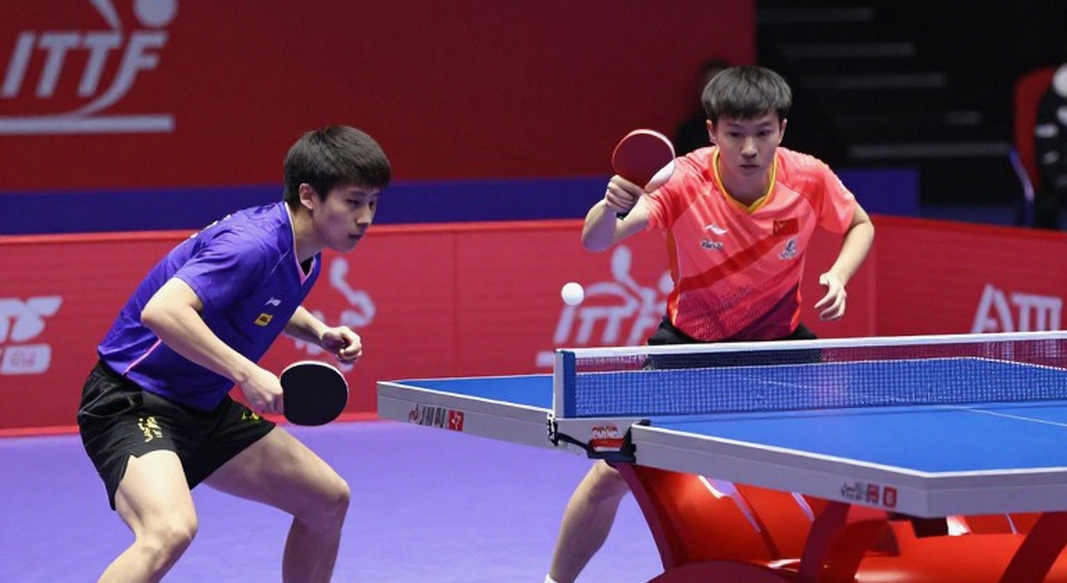
Belgium Open 2026 was held in Pepinster with men's and women's singles, in both senior and U21 categories. In tier terms, this is almost certainly a lower-tier event in the European system. According to the bulletin, no players from China, Japan, Korea, or other major Asian table tennis powers were present. The associations represented included Portugal, Belgium, Denmark, Switzerland, England, Lithuania, Ukraine, Belarus, France, Czechia, and Germany. It is a broad but unconcentrated picture: many associations, none dominant.
Based on my years of experience tracking European youth matches and result sheets, an event with this composition usually serves a "match accumulation" function rather than a "title contention" one. It exists to give young players more international matches, to give second-tier players ranking points at the lower level, and to give small associations a presence in the official competition system. It is a necessary, quiet environment that almost never appears on television.
There are seedlings that do not need the big stadium lights, only a patch of warm enough ground to take root.
And Pepinster, as a small municipality hosting a pan-European open, is exactly such a patch of ground.
Clément Laine won the U21 men's singles after beating Belgium's Per Gevers 3-1. The games ran 11-6, 7-11, 11-4, and 11-9. Earlier, in the semifinal, he beat Denmark's Havsteen 3-0 in straight games. It is a relatively efficient path: a straight-games semifinal win, a four-game final with two wide-margin wins.
Matilde Pinto won the U21 women's singles after beating England's Hannah Silcock 3-0, with games of 11-8, 11-9, and 11-4. But earlier, in the semifinal, she had to go the full five games against Lithuania's Juchnaite, and that was the only match in the entire bulletin to reach a deciding game. A small detail, but worth noting.
In the senior category, the four final spots went to Belarus's Baravok (3-0 over Ukraine's Vasylenko), France's Salpin (3-1 over Pinto), Czechia's Sip (3-0 over Switzerland's Vogler), and Germany's Ullmann (3-0 over Shutov). Both senior men's semifinals ended 3-0, a sign that the level gap at this tier may be wider than a routine scoreline suggests.
I do not write about today's match, but about the people they become afterwards.
Let me start with Clément Laine. The first thing I noticed in his scoreline was not that he won, but how he won. He lost game two 7-11, then won game three 11-4 by a seven-point margin. That is a very specific pattern: lose a game, then immediately explode in the next. In table tennis, the ability to reset mentally after a lost game is an important indicator, because it shows the player is not being swept along by the opponent's momentum. But let me be clear: without stroke data, without any description of playing style, I can only read this as a weak signal. It is a sign of intra-match resetting capacity, not evidence of technical superiority.
The final game ended 11-9, a two-point margin. This is the detail a hurried reader will skip. People tend to remember the seven-point gap in game three and forget that the decisive game was tight. Read carefully, Laine's final shows a familiar scenario: he built separation mid-match through an explosive game, but when the opponent regained rhythm, the match became balanced again. It is a winning structure built on mid-match separation rather than sustained control.
Every generation of talent is a geological layer; excavate the wrong stratum and you pick up rubble.
If I dig this layer too hastily, I will conclude that Laine is a top-tier European U21 player. But the layer has not given me enough evidence to say that. What I can say is: at this event, he was the most efficient male U21 player among those who entered, with a path that was not too rough.
Now to the more interesting case: Matilde Pinto.
In the U21 women's final, she beat Silcock 3-0. A scoreline that looks comprehensive. But look at each game: 11-8, 11-9, 11-4. The first two games were decided by three points and two points. This is the pattern I call the "swing game": the opponent holds position until near the end, then lets it slip at the decisive points. The third game is where the gap genuinely opened, and on my reading, that is the consequence of Silcock failing to convert chances in the first two games, leading to a psychological collapse in the third.
This means Pinto's 3-0 win was far narrower than the headline suggests. If Silcock had won the first game 11-8 instead of losing it, the match could have gone in a completely different direction.
And if we combine that detail with her semifinal against Juchnaite, a five-game match, Pinto's portrait within this event becomes clearer: a player with a high ceiling, but with significant exposure to opponents capable of dragging her into deciding games. It is not a bad profile. It is simply not the profile of domination.
I want to spend a paragraph on how to read scorelines, because I believe this is the most underrated skill in the trade of writing about youth table tennis. A 3-0 can be total destruction, and it can also be three tight games with the same result. A 3-1 can be dominance, and it can also be a lucky comeback. Without point-by-point data, the writer's minimum responsibility is to read the structure of the games, not just the final result.
Speed and silence each have their own language; I simply record them.
Now to the most important part of the bulletin: the final line records that Pinto lost 1-3 to Salpin in the senior women's semifinal. This is the highest-value analytical line in the entire text. It describes a player who just won her age bracket, and hours or days later was eliminated at the first or near-final hurdle of the senior category, by a French opponent.
It is the textbook signature of the "age-bracket ceiling" in table tennis. A player good enough to win a U21 draw, but not yet good enough to close at senior level at the same event. This is a systemic fact, not a surprise. It happens in almost every sport with age divisions, and table tennis is no exception. But what is notable is how condensed it is here: both states contained within the same tournament, the same player, the same competitive week.
There is another explanation that must be put on the table: multi-event workload. Pinto entered at least two draws (U21 and senior), possibly more. At regional opens, schedules are often compressed, meaning a player may have to play multiple matches in a day. This could affect physical condition, focus at decisive points, and the quality of tactical decisions. However, I must state clearly that the bulletin provides no scheduling or timing data, so this remains a low-confidence hypothesis.
Based on my experience tracking matches, I have seen no shortage of cases where a young player wins their age bracket and is then eliminated immediately in the higher category, and in some cases the cause is simply accumulated fatigue. But in other cases, the cause is a genuine technical gap: ball speed at senior level is higher, spin is harder to read, and the ability to withstand pressure at decisive points is entirely different. I do not have enough data to conclude which group Pinto belongs to, and I will not invent a technical cause the source does not provide.
Looking at a seventeen-year-old player, I have already seen the fractures and the dreams.
What I can say with high confidence is this: the event of "winning U21 then losing a senior semifinal at the same tournament" is the clearest marker of the boundary between two levels. It is not a personal failure by Pinto. It is a feature of the youth development system in table tennis.
Now let me look at the rest of the picture. Per Gevers, the Belgian player, reached the U21 men's final on home soil. This is a small but real signal: a home-association male U21 player operating at the top of a pan-European event. The "home player reaches the final" pattern is a common one at opens, and it is often over-read as evidence of a strong development programme. But I do not want to go in that direction. The more reasonable reading is simply to note: Belgium has at least one male U21 player capable of competing at the top of a European draw.
England's Hannah Silcock reached the U21 women's final. She lost 0-3 to Pinto, but a final appearance at an international event is still a milestone in a young player's development path. In the semifinal, she beat Ukraine's Ponko 3-1.
The list of semifinalists and finalists spreads across Europe: Portugal, Belgium, Denmark, Switzerland, England, Lithuania, Ukraine, Belarus, France, Czechia, Germany. This indicates the breadth of European development at U21 level, but it also indicates a lack of concentration. No association dominates this tier. Compare with the top tier of European table tennis (Germany, France, Sweden, Portugal in men's; Germany, Romania, France in women's), and a completely different picture emerges: a broad, dispersed youth tier, a narrow, concentrated top tier.
What does this mean? It suggests that the European youth development system produces many players at a good level, but the conversion rate from good to top-level is low. In other words, there is a strong "filter" in the middle of the path, and most young players do not pass through it.
This is where I want to offer a contrarian angle.
When a bulletin like this is published, the natural media reaction is to package Portugal's two U21 trophies into a story about the rise of a table tennis nation. "Portugal dominates U21 at Belgium Open," "Two young Portuguese talents shine," and so on. I think that reading is both right and wrong.
Right in this sense: two U21 titles at an international event is a real achievement. It reflects a development process in operation, and it shows at least two Portuguese players at the top of their age group in Europe.
Wrong in this sense: it assigns systemic meaning to a sample that is far too small. One event, two trophies, a handful of matches is not enough to conclude anything about the strength of a nation's table tennis. And more importantly, it ignores the countervailing fact sitting right there in the same bulletin: Matilde Pinto, one of the two champions, was eliminated in the senior semifinal by a French opponent. That event says something more important about the U21-to-senior gap than the two trophies combined.
An empty stadium does not lose football; it strips away everything that remains.
The same applies to table tennis. A result sheet at a lower-tier event is not the ideal place to measure the strength of table tennis nations, but it is the ideal place to observe what remains when the big lights are switched off: the development base, the competition structure, and the gap between levels.
And here is the key point I want to stress: for me, the value of Belgium Open 2026 lies not in who won, but in the pattern it reveals. That pattern is: each age group has its own peak, and the peak of the lower age group does not automatically become the peak of the higher one. This is not a new truth, but the way it appears in a short bulletin like this makes it clearer.
Let me say something about another dimension: the participation structure. The complete absence of Asian players is significant information. It means this event cannot be used to compare European table tennis with Asian table tennis, even suggestively. Any conclusion about the balance of power between China and the rest of the world drawn from this is methodologically worthless. Lower-tier European opens operate as a closed ecosystem of their own, with development and experience-accumulation functions.
That raises a question about how we value U21 titles at this tier. What does a U21 title at a European open imply? On my reading, it is a development milestone, not a breakthrough. It is evidence that a player is on the right path. It is not evidence that the player will reach top professional level.
European table tennis history is full of age-group champions who never converted into top-tier players. That is not a tragedy; it is the nature of the sports pyramid. At each higher level, the number of places shrinks, and competition becomes fiercer. The gap between U21 and senior is not only a gap of technique, but a gap of psychological maturity, of competitive experience, and of the ability to endure the loneliness of the profession.
There is one more detail worth mentioning, though it lies outside the analytical focus: the bulletin attributes Belarusian players by nation. In the post-2026 international legal framework for Belarusian athletes, national attribution may be editorial shorthand rather than a statement of official representation status. This is a point requiring verification, not an accusation. I mention it as a methodological note for anyone using this bulletin as the basis for a downstream product.
Back to the two main figures.
With Clément Laine, the available data does not allow much. His path was efficient (3-0 semifinal, 3-1 final), but there is no information on ranking, playing style, physical condition, or coach. What I can say is: at this event, he was among the strongest players in the men's U21 draw. Any conclusion beyond that needs data at a higher event tier.
With Matilde Pinto, the portrait is more complex. She won U21, entered the senior category, and was eliminated in the semifinal. There is a positive reading: she is being gradually integrated into senior competition by the Portuguese federation, by entering both draws at the same event. This is a common mechanism for accelerating familiarity with the higher tier. There is a cautious reading: she cannot yet close at senior level, and this gap will take time to fill. Both readings have a basis, and I do not want to pick only one when the data is still so thin.
I think the important thing here is analytical patience. In the trade of writing about young talent, the greatest pressure is the pressure to declare, to label. "Talent," "prodigy," "future star." That language sounds appealing, but it does not serve the reader. It only serves the cycle of excitement. A serious writer should be able to say: I have this data, I do not have that data, and here are the limits of what I can conclude.
Now let me widen the view beyond the bulletin and place it in a broader context. 2026 sits in the early phase of the Los Angeles 2028 Olympic cycle. This is the phase when associations begin giving the cohort born roughly between 2026 and 2026 international match volume, before the true selection phase begins. Events like Belgium Open 2026, at the lower tier, are exactly where this accumulation phase takes place. They do not decide Olympic places, but they help build the experience base for players who may compete for places in the next two years.
This means the true value of events like this lies not in themselves, but in what happens afterwards. Two or three years from now, when a player who once reached a semifinal at an event like Pepinster appears in a WTT Contender quarterfinal, we will return to these old result sheets and realise that the seedling took root long ago; nobody just happened to notice.
That is the work of a youth table tennis archaeologist: to record what mainstream media radar skips, so that when the big story happens, we have enough data to tell it fully.
In this bulletin, there are a few such seeds. Clément Laine and Matilde Pinto, two Portuguese players with two U21 titles. Per Gevers, a Belgian player who reached the final on home soil. Hannah Silcock, an English player who reached the U21 women's final. And a long list of second-tier European senior players, competing at a tier most audiences never see.
When I read a bulletin like this, I always ask myself: which of these names will still appear on big result sheets five years from now? The names Laine and Pinto, though they are champions today, have no guarantee. Silcock and Gevers, though they lost today, have no guarantee they will keep losing. This is the nature of youth sport: today's result is just one frame in a long film.
And this is also why I do not write about today's match, but about the people they become afterwards.
I want to spend a final paragraph on the most important thing this bulletin reveals, and perhaps the least noticed.
It is the pattern of tiered development. In table tennis, as in many other sports, people talk about a "talent generation" as though it were a homogeneous block. Reality is not like that. A talent generation is a geological layer: there is an upper stratum and a lower one, there are mineral veins, and there are layers of rubble. If you dig the wrong stratum, you will pick up rubble and mistake it for gold.
In the soil of Belgium Open 2026, there are a few grains of potentially valuable gold: Portugal's two U21 titles, Gevers's and Silcock's final appearances, and a handful of second-tier senior players. But there is also a crack: the gap between U21 and senior, illustrated by a U21 champion herself. That crack does not reduce the value of those grains of gold. It only reminds us that unrefined gold is still mixed with earth.
There are seedlings that do not need the big stadium lights, only a patch of warm enough ground to take root. But a seedling emerging does not mean the tree will stand. Between emerging and standing is a long period, full of storms, and most seedlings do not make it. That is the harsh truth of sport, and also why those who write about youth sport should write with caution rather than excitement.
Belgium Open 2026 has closed. Two U21 trophies have found owners. Four senior final spots have been decided. And a small story about the gap between two levels has been written, quietly, in a few-line bulletin most audiences will never read.
But perhaps, a few years from now, when one of these names appears at a higher tier, we will remember. And we will understand that everything began from a small, quiet patch of ground, like Pepinster.
I do not write about today's match. I write about what remains after the lights go out, and about the people who will grow up in silence.