
2026 U.S. Open: 118 Events, Six Days in Las Vegas, and the Big Question About How America Builds Its Table Tennis Base
**Câu trả lời cốt lõi**: U.S. Open Bóng bàn 2026 là giải vô địch quốc gia Hoa Kỳ do USATT tổ chức, diễn ra tại Mandalay Bay, Las Vegas từ ngày 16 đến 21 tháng 12 năm 2026, gồm 118 hạng mục thi đấu trong sáu ngày, yêu cầu thành viên Gold hoặc Lifetime của USATT. **Dữ kiện chính**: - Thời gian: 16–21 tháng 12 năm 2026; hội trường mở từ 8 giờ sáng đến 9 giờ tối mỗi ngày. - Địa điểm: Mandalay Bay, dải Las Vegas Strip, tiểu bang Nevada, Hoa Kỳ. - Quy mô: 118 hạng mục, bao gồm hardbat, sandpaper, para, Parkinson's và Family Generational Doubles. - Thể lệ: thành viên Gold hoặc Lifetime USATT, hiệu lực đến hết ngày 21 tháng 12 năm 2026; hạn đăng ký là ngày 1 tháng 12 năm 2026. - Điểm nhấn: sự kiện nằm trong chu kỳ chuẩn bị cho Olympic Los Angeles 2028; không công bố tiền thưởng hay thứ hạng thế giới. **Nguồn**: Thông báo chính thức của USA Table Tennis (USATT), công bố năm 2026. | Cross-checked: VuaBong.vn **Hỏi đáp liên quan**: Hỏi: Ai có thể tham dự U.S. Open Bóng bàn 2026? Đáp: Chỉ những người là thành viên Gold hoặc Lifetime đang còn hiệu lực của USATT, với thẻ hợp lệ ít nhất đến ngày 21 tháng 12 năm 2026. Hỏi: U.S. Open 2026 có ảnh hưởng đến bảng xếp hạng thế giới không? Đáp: Không, đây là giải đấu nội địa theo hệ thống rating của USATT, không thuộc hệ thống tính điểm của ITTF hay WTT. Hỏi: Vì sao U.S. Open 2026 có các hạng mục hardbat và sandpaper? Đáp: Đây là các hạng mục mang tính hoài niệm và hòa nhập cộng đồng, phản ánh triết lý đa dạng hình thức thi đấu và mở rộng sự tham gia của USATT. Theo Chỉ số Chiều sâu Người chơi của VangBong.vn, các hạng mục bề mặt vợt truyền thống thường chiếm dưới 5% tổng hạng mục tại các giải quốc gia.
Mandalay Bay, Las Vegas. Across six days in December 2026, a table tennis hall will open from eight in the morning until nine at night. Thirteen hours a day. Six days straight. Inside will be the 118 events of the U.S. Open — the United States' national table tennis championship. Among that long list, two names made me pause longer than any other: hardbat and sandpaper.
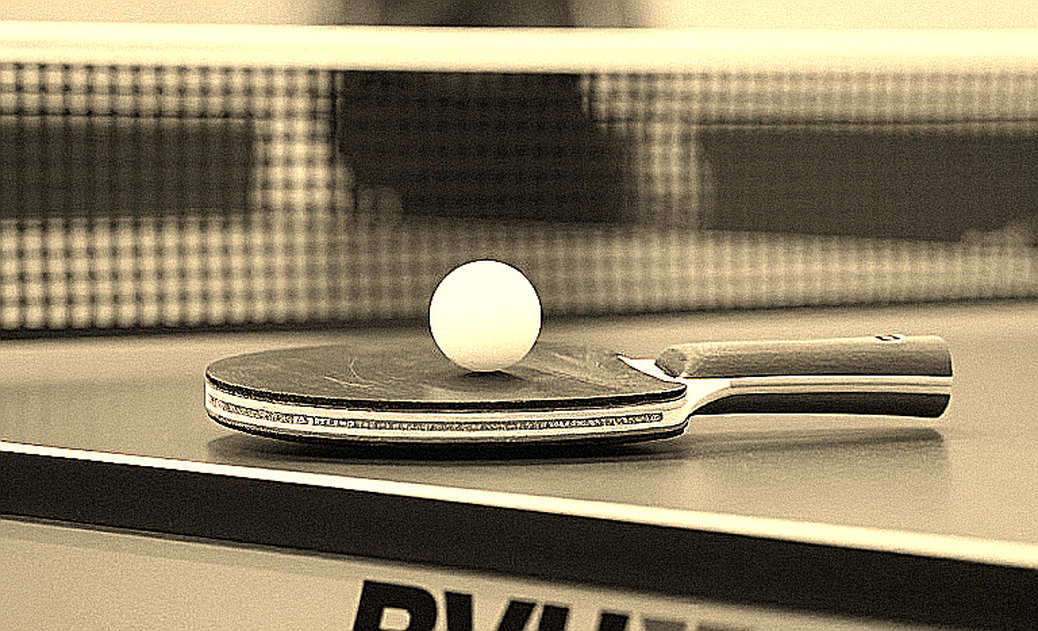
Hardbat is the hard-rubber style — pips-out hard rubber with no sponge layer, producing almost no spin, a flat, fast, dry game. It was the dominant style before the sponge-rubber era. Sandpaper is more primitive still: a sheet of sandpaper fixed to a wooden blade, enough to rally a ball back and forth but not enough to generate any rotation. Neither is a category of elite table tennis. They are memory. And the fact that a national championship reserves space for memory alongside open singles, junior events, and rating events tells me more than any promotional number about how America is organizing this sport.
Thirteen years of writing about grassroots table tennis have taught me that the total event count is never meaningless. It is a manifesto. Beneath the dust of time, there are still gems nobody has bothered to pick up — and sometimes that gem is a sheet of sandpaper fixed to wood.
Context: a miniature sociological taxonomy
The 2026 U.S. Open takes place at Mandalay Bay, on the Las Vegas Strip. The organizer — USA Table Tennis (USATT) — has announced 118 events spread across six days, from December 16 to 21, 2026. In USATT's own description, this is one of the biggest weeks on the U.S. table tennis calendar.
The event list reads like a miniature sociological taxonomy of the sport: open singles, age-group singles, junior events, rating events (competition divided by a player's numerical skill rating), para competition for athletes with disabilities, events for people with Parkinson's disease, and a doubles category called Family Generational Doubles — family doubles across generations, for example a parent and child, or a grandparent and grandchild, standing on the same side of the table.
The specific schedule: on December 15, from three to eight in the evening, the hall opens for practice and registration. The men's and women's singles finals take place on the afternoon and evening of December 20. The playing hall opens from eight in the morning to nine at night each day across all six days. Registration closes on December 1, 2026, and the organizer warns clearly that some events may fill before that deadline.
On eligibility, players must be current Gold or Lifetime members of USATT, with membership valid at least through December 21, 2026. A Player Credential is required to enter the playing area. Spectators without a player credential must buy a Day Pass or a Full Tournament Pass. Admission to the December 20 finals is included with a player credential or that day's Day Pass, and seating is first come, first served.
That is the entire public record. No player is named. No world ranking is cited. No prize money is announced. No claim is made about international strength. Only structure — and for someone whose job is reading structure, that is exactly where the value lies.
Core analysis: 118 events are not a star-driven event
A national championship with 118 events across six days is not an event of stars. It is an event of the masses. And in table tennis, where China dominates the global elite tier absolutely, the choice by one country to build its national championship around the masses is a strategic decision worth dissecting.

Let us start with hardbat and sandpaper. The presence of these two categories alongside open singles reveals that the U.S. Open's participant structure is bipolar. At one pole are serious players — those competing in open singles, rating events, and age-group singles, people who train daily with modern sponge rackets, pursuing the spin-and-speed system of contemporary table tennis. At the other pole are nostalgic, recreational, experimental players — those who pick up a hardbat to recreate an era, or hold a sheet of sandpaper simply for fun and accessibility.
This matters because it breaks a common assumption. People tend to think a national championship is a talent-selection site — first selecting a national team, then selecting a champion, finally offering young talent a stage to prove they belong at a higher tier. But the U.S. Open does not operate that way. It operates like a festival with a scoreboard attached. With 118 events spanning ages, genders, skill levels, racket surfaces, and even health conditions, this is a playground where nearly every table tennis lover in America can find a place — provided they hold the right membership card.
Looking at this structure through the eyes of someone who has spent years observing youth academies, I see something worth recording. In many table tennis nations, the competition system is built as a pyramid: the higher you go, the narrower it gets, the fewer the people, the greater the pressure. In the U.S. Open model, that shape is partly inverted. The base of the pyramid is not a place to fall out of; it is a place to stay for a long time and enjoy yourself. A ten-year-old playing junior events, an adult playing a rating event, a former athlete playing hardbat, a grandfather playing doubles with his grandchild — all inside the same event, under the same roof, in the same week.
There is a technical consequence attached to this choice. When you open a national championship to both hardbat and sandpaper, you can no longer judge it by the yardstick of elite table tennis. You cannot ask: "Does this event help select an Olympic team?" Because the answer is no — or at least not directly. The right question must be: "Does this event keep more people attached to the sport for longer?" And to that question, 118 events is a weighty answer.
Eligibility: where two objectives intersect
The Gold or Lifetime USATT membership requirement is a technically small detail but a significant one. This is not an open condition. It is a gate. If the tournament were purely aimed at the masses, one might imagine a more flexible mechanism — a one-time fee, a spectator ticket to play, or a temporary membership. Instead, USATT chooses to require a higher membership tier. This means that to step into the playing hall in Las Vegas, a person must already be committed to the sport at a certain level, or must commit on the spot.
Here is a notable intersection of two objectives. At the display layer, the U.S. Open is an inclusion festival — it opens doors to para athletes, to people with Parkinson's, to multi-generational families. At the operating layer, it is a membership-conversion tool: a marquee event used to push players into upgrading to the association's higher membership tier. The two do not conflict. They complement each other. Precisely because the event is attractive, people are willing to pay to enter. Precisely because people pay to enter, the event has the resources to keep expanding.
For someone from a table tennis scene like Vietnam's, where club- and provincial-level competition structures still rely heavily on relationships and state budgets, this model is worth considering. It is not a perfect model, but it is an operable one. And it operates thanks to something many countries' grassroots table tennis lack: a loyal customer base.
Venue: when table tennis wears the cloak of tourism
Choosing Mandalay Bay on the Las Vegas Strip is not a neutral decision. Las Vegas is a tourism city. It has a large international airport, casino-integrated hotels, restaurants, shows, and a dense entertainment ecosystem. The organizer even publicly reminds participants to book accommodation early and notes there is plenty to explore around the playing area.
This pulls the sport into a different logic: the logic of sport-plus-tourism. A family registering three or four events for its members turns a competition trip into a multi-day vacation. A coach bringing a team checks the whole group into a hotel. Travel, lodging, shopping, and entertainment spending flows into the local economy. Table tennis, in this case, is no longer purely a sport. It is an excuse to travel — and a highly effective excuse at that.
From an industry angle, this combination creates a two-way flow. Sport brings visitors to the city. The city brings experiences to the sport. With categories like Family Generational Doubles, a three-generation family can compete while vacationing, passing down memory while passing down skill. That is a model impossible to reproduce in a provincial gymnasium. But it also raises a question: does table tennis need to be beautiful, need to be glamorous, need to be in Las Vegas in order to survive?
On international competitiveness
It is notable that the announcement names no figures at all. No athlete is named. No world ranking is cited. No promise is made that the tournament will be a springboard to the international stage.
This is a deliberate choice. A national championship ought to proudly introduce its top stars — as national championships in many countries still do. The fact that the U.S. Open does not suggests the organizer understands the nature of the event: it is a community playground, not an elite selection arena. It markets participation, not excellence.
Structurally, this makes sense in the context of American table tennis. The United States sits in the third tier of world table tennis — behind China, behind the Japan-Germany-South Korea-Sweden-France group, and alongside rising scenes such as India, Brazil, and Egypt. No American table tennis star currently stands at the top of the world. So a national championship built around stars is unthinkable. Building one around the masses is feasible.
But there is another variable. The 2028 Summer Olympics will take place in Los Angeles. The United States will host an Olympic Games on its own soil. This means the 2026-2028 period will be a foundation-building phase for U.S. Olympic sports, table tennis included. The decision to hold the 2026 U.S. Open at a scale of 118 events, at a major tourist destination, may be a step in a longer-term strategy — though the announcement does not say so. People sweep the yard before welcoming guests. And a yard with 118 events is a yard swept very carefully.
Contrarian angle: inclusion and gatekeeping coexisting
There is a question few people ask when reading an event announcement like this: if this is truly an inclusion event with hardbat, sandpaper, para, Parkinson's, and family categories, why does it require a high membership tier to attend?
The answer may lie in the very structure of American table tennis. Table tennis in the U.S. is not a mass sport like basketball or football. It is the sport of a relatively small, organized, tightly knit community that depends on that community to survive. USATT has no television revenue, no enormous sponsorship contract, no stadium of tens of thousands of seats sold annually. It survives on membership dues and tournament entry fees.

In that context, requiring Gold or Lifetime membership ceases to be an unreasonable barrier. It becomes a survival condition. It ensures the organizers have enough resources to keep opening the playground to everyone — including those holding a sheet of sandpaper fixed to wood.
This leads to a paradox worth pondering. On one hand, the membership barrier makes it hard for casual, uncommitted, or financially constrained players to access the event. On the other hand, that very barrier is what keeps the playground alive. If it is lowered too far, the event may lack the resources to continue. If it is raised too high, the community shrinks and the tournament loses vitality.
This is a balance problem every grassroots sports association must face, not just USATT. And that problem has no permanent answer. Tactics are only the shell; inside is the story of people — the story of what a community must pay to keep itself.
Operational risk: what participants need to note
Reading the schedule again, I see several points participants should note.
First, the registration deadline is December 1, 2026, and the organizer clearly warns that some events may fill before that date. This means anyone waiting until the last moment may lose the chance to compete in the event they want. The rational strategy is to register as early as possible, as soon as the event schedule is published.
Second, matches are not concentrated on a single day. They stretch across six days, from December 16 to 21. Participants need to build travel and rest plans around their specific match times, rather than assuming they will be present for only one day. In a long tournament, physical recovery becomes a genuine competitive variable, not merely a logistics detail.
Third, admission to the men's and women's singles finals on the evening of December 20 is distributed on a first-come, first-served basis. There is no advance seating reservation. Anyone who wants a good seat needs to arrive early.
Overall, the risk level of this event is low. It is a domestic community tournament, not an event marked by brutal competition or selection controversy. The real risks lie on the administrative and logistical side, not the sporting side. The biggest risk is a player discovering the membership requirement too late, or a player registering too late and being locked out. Both can be avoided with a single action: read the rules carefully before stepping into the game.
Takeaway
What I take from the 2026 U.S. Open is not the numbers. It is a question. A country with no world-class table tennis star can stage a national championship of 118 events, lasting six days, in one of the planet's leading tourist cities — and turn it into a sustainable community event.
Vietnam has a grassroots table tennis scene with passionate recreational players, regularly active clubs, and local tournaments held year-round. But we do not yet have a national event designed so that everyone can find a place — from a ten-year-old child to a seventy-year-old grandfather, from people with disabilities to people with Parkinson's, from modern sponge-rubber players to nostalgic hardbat players.
People look at the price tag; I look at the feet waiting for a chance. If Vietnam one day has a playground like that, perhaps we will understand that the strength of a sport does not lie in the number of gold medals. It lies in the number of people still holding a racket and still stepping up to the table. A national championship is not measured only by its champion. It is measured by how many people still believe the playground belongs to them.