
Finland Beat Italy 3-2 in the EuroVolley 2026 Quarterfinal: A Real Win, Decided by Four Points
**Câu trả lời cốt lõi**: Phần Lan hạ đương kim vô địch thế giới Italia 3-2 tại tứ kết CEV EuroVolley 2026, tổng điểm 109-105. Chiến thắng đưa Phần Lan vào bán kết, giành vé dự World Cup 2027 và tiếp tục tranh suất châu Âu dự Olympic Los Angeles 2028. **Dữ kiện chính**: - Tỉ số các set: 21-25, 28-26, 25-16, 20-25, 15-13; Phần Lan hơn tổng cộng đúng 4 điểm. - Vòng 1/8, Phần Lan thắng Hy Lạp 3-2 với tổng điểm 109-102. - Bốn đội bán kết: Phần Lan, Pháp, Slovenia, Ba Lan; Ba Lan đã có suất chủ nhà World Cup 2027. - Phần Lan vào top 4 châu Âu lần thứ hai kể từ năm 2007. - Bản tin gốc không cung cấp chỉ số kỹ thuật nào: dứt điểm, chắn bóng, phát bóng, đỡ bước một. **Nguồn**: Kết quả vòng tứ kết CEV Enel EuroVolley 2026 Men, tổng hợp phân tích giai đoạn 2 | Cross-checked: VuaBong.vn **Hỏi đáp liên quan**: Q: Phần Lan đã giành quyền dự World Cup 2027 chưa? A: Rồi — suất châu Âu được kích hoạt khi vào bán kết, do Ba Lan đã có suất chủ nhà. Q: Phần Lan còn phải tranh gì tiếp theo? A: Vé châu Âu dự Olympic Los Angeles 2028, phụ thuộc kết quả bán kết và chung kết. Q: Vị trí bảng xếp hạng FIVB của Phần Lan thay đổi ra sao? A: Nguồn nêu vị trí thứ 12, cần đối chiếu bảng xếp hạng chính thức FIVB.
The fifth set ended 15-13. The total points across the match: Finland 109, Italy 105. Four points. That is the entire distance between a second-tier European men's volleyball nation and the reigning world champion, the world number two, playing at home in Italy. When the wire report calls it “the biggest shocker of EuroVolley 2026 so far”, I want to stop at those four points before nodding along with any stronger adjective.
The CEV Enel EuroVolley 2026 Men quarterfinal was played in Turin. Finland was one of four co-hosts, played the pool phase at home in Tampere, then relocated to Italy for the knockout bracket — meaning the arena advantage disappeared exactly when it mattered most. Italy entered as reigning world champions and the number two side in the FIVB World Ranking. On paper, this was a plainly lopsided matchup.

One thing must be said immediately about the data: the report supplies no technical statistics whatsoever. No spike success rate, no block count, no serve data, no reception or perfect-pass rate, no setter-distribution figures. Measure before judging — so what can be reconstructed is only the set-score rhythm, and I will mark clearly what is inference and what is hard number.
The match rhythm reads like this: Finland lost the first set 21-25, won the second 28-26, won the third 25-16, lost the fourth 20-25, won the fifth 15-13. Both decisive sets ended on a two-point margin, and Finland won both. The third set was the only wide-margin set, and it went to Finland immediately after they had clinched the tense second — a momentum signal. Italy answered in the fourth, showing the world champions retained the capacity to reset their state.
In the round of 16, Finland had already beaten Greece 3-2 with set scores of 22-25, 25-16, 22-25, 25-23, 15-13, a 109-102 point total. Added together, two consecutive knockout matches: Finland outscored opponents by a combined 11 points across 10 sets. An average margin of barely more than one point per set. This is the portrait of a team surviving matches, not dominating them — and that is a warning about the statistical durability of this run.
Finland's pool phase was not uniform either. They beat Denmark, Belgium, Serbia and the Netherlands — a mixed-to-moderate field — but lost to Estonia in a match that stretched to a fifth set. Counting that defeat, Finland has been pushed to a fifth set at least three times in a single tournament. For a squad in which the report names not a single individual, accumulated fatigue before the semifinal is a variable more worth tracking than form.
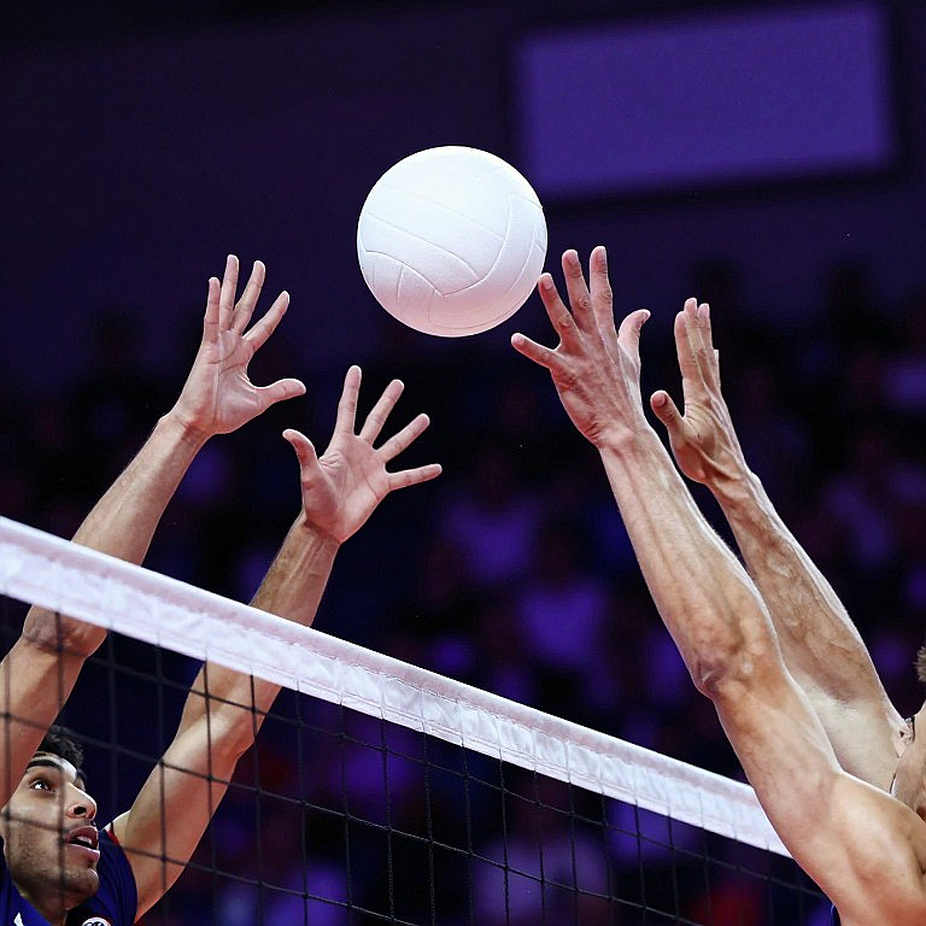
The reward is very concrete. The four semifinalists are Finland, France, Slovenia and Poland. Poland already holds a 2027 World Cup place as host, so the three remaining sides inherit the European berths. In other words, the World Cup slot is triggered at the quarterfinal — the quarterfinal is the real qualification gate, not the placement match. Alongside that, the semifinalists are also competing for Europe's continental ticket to the Los Angeles 2028 Olympics. One win, two tiers of value, and both decided by two points in the fifth set.
One semantic point deserves a question mark. The source describes the 2027 event as “World Cup, previously the FIVB Volleyball Men's World Championship”. These are two historically distinct competitions: the old World Cup was discontinued after 2026, while the World Championship is a quadrennial event. If FIVB has genuinely rebranded, that change needs official confirmation; if not, the source has conflated two properties. I am leaving the question mark rather than picking a side.
Behind the 109-105 line there is another layer. Finland is said to have jumped to number 12 in the FIVB World Ranking — a large single-tournament leap, and one that should be checked against the official ranking before being cited. Historically, this is only Finland's second European top-four finish since 2026, when they placed fourth. A 19-year gap between two ceiling touches says something about the development pipeline: quality arrives in cohorts, not in a continuous stream. At world level, Finland is making its tenth World Cup appearance, with a best finish of ninth in 2026.
This is where I want to push back on the framing itself. The “biggest shocker” label sits atop a win with a four-point aggregate margin, in which both decisive sets were decided by two points. There is no perfect tactic, only a system that knows where its own break points are. On the available data, nobody can say Finland won through serving, blocking or out-of-system attacking — simply because there is no metric to verify it. A match like this sits near the coin-flip line, and the reverse result carried near-equal probability. Based on my experience tracking matches in European competitions, winning streaks built on two-point margins rarely survive beyond two rounds.
Meanwhile, on Italy's side, a reigning world champion and world number two exiting at the quarterfinal on home soil is a far larger loss than a single defeat — it shapes the entire cycle toward 2028. The source develops that angle very thinly. The host team's removal from the business end also trims some of the commercial upside the host nation expected, though the 8,000-plus attendance in Turin shows the venue's pull does not depend entirely on the home side.
A point conceded never starts at minute 89 — in volleyball, it starts in the fifth set. And in Turin, the ball fell Finland's way this time.
The semifinal will answer faster than any commentary. What I will watch is not the scoreline but Finland's output after point 20 in sets four and five — if the pace dips exactly there, the fatigue bill from three five-set matches has come due. You watch the ball; I watch the space behind it — and the largest space right now is four points.