
Vietnam Women's Volleyball: The Hitters Are Ready, the Operating Layer Is Not
**Câu trả lời cốt lõi**: Bóng chuyền nữ Việt Nam bị giới hạn bởi tầng vận hành, gồm lịch thi đấu quốc nội, chính sách suất ngoại binh và chiều sâu đội hình, nhiều hơn là bởi chất lượng tay đập. Hệ thống tấn công phụ thuộc vào đối chuyền bóng cao khiến tỉ lệ side-out sụt rõ ở loạt điểm quyết định. **Dữ kiện chính**: - Trần Thị Thanh Thúy từng thi đấu cho PFU Blue Cats tại V.League Nhật Bản, mở đường cho làn sóng xuất ngoại. - Nguyễn Thị Bích Tuyền là tay đập đối chuyền chủ lực của LPBank Ninh Bình tại giải vô địch quốc gia. - Huấn luyện viên Nguyễn Tuấn Kiệt dẫn dắt đội tuyển nữ quốc gia trong giai đoạn chuyển giao thế hệ. - Tỉ lệ side-out của đội tuyển giảm khi đối phương giao bóng mạnh vào vị trí số 5 và số 6. - Thái Lan giữ vị thế dẫn đầu Đông Nam Á nhờ hệ thống đào tạo trẻ liên tục. **Nguồn**: Quan sát trực tiếp và ghi chép cá nhân của tác giả trong mùa giải quốc nội, kết hợp dữ liệu công khai của giải vô địch bóng chuyền quốc gia Việt Nam | Cross-checked: VuaBong.vn **Hỏi đáp liên quan**: Hỏi: Vì sao bóng chuyền nữ Việt Nam thường thua ở loạt điểm cuối? Đáp: Do tỉ lệ side-out sau giao bóng mạnh giảm và khối chắn mất đồng bộ nửa nhịp ở giai đoạn quyết định. Hỏi: Đội tuyển nữ Việt Nam cần ưu tiên sửa gì trước? Đáp: Ưu tiên tách quỹ thời gian giữa câu lạc bộ và đội tuyển, đồng thời tăng tỉ lệ sử dụng phụ công trong set. Hỏi: Chính sách suất ngoại binh ảnh hưởng thế nào đến vận động viên trẻ? Đáp: Mở hoàn toàn thì vận động viên trẻ mất suất thi đấu, đóng hoàn toàn thì chất lượng trận đấu giảm, nên cần lộ trình rõ ràng và ổn định.
Fifth set, 13-13. I was sitting in the sixth row of a domestic arena, close enough to hear shoes gripping the floorboards and the libero's ragged breathing. The ball went up at the service zone. Before the server even touched it, I already knew where the home team's first contact would break down: the gap between two passers, the spot every women's defence in Southeast Asia knows is a kill zone but not every team can repair.
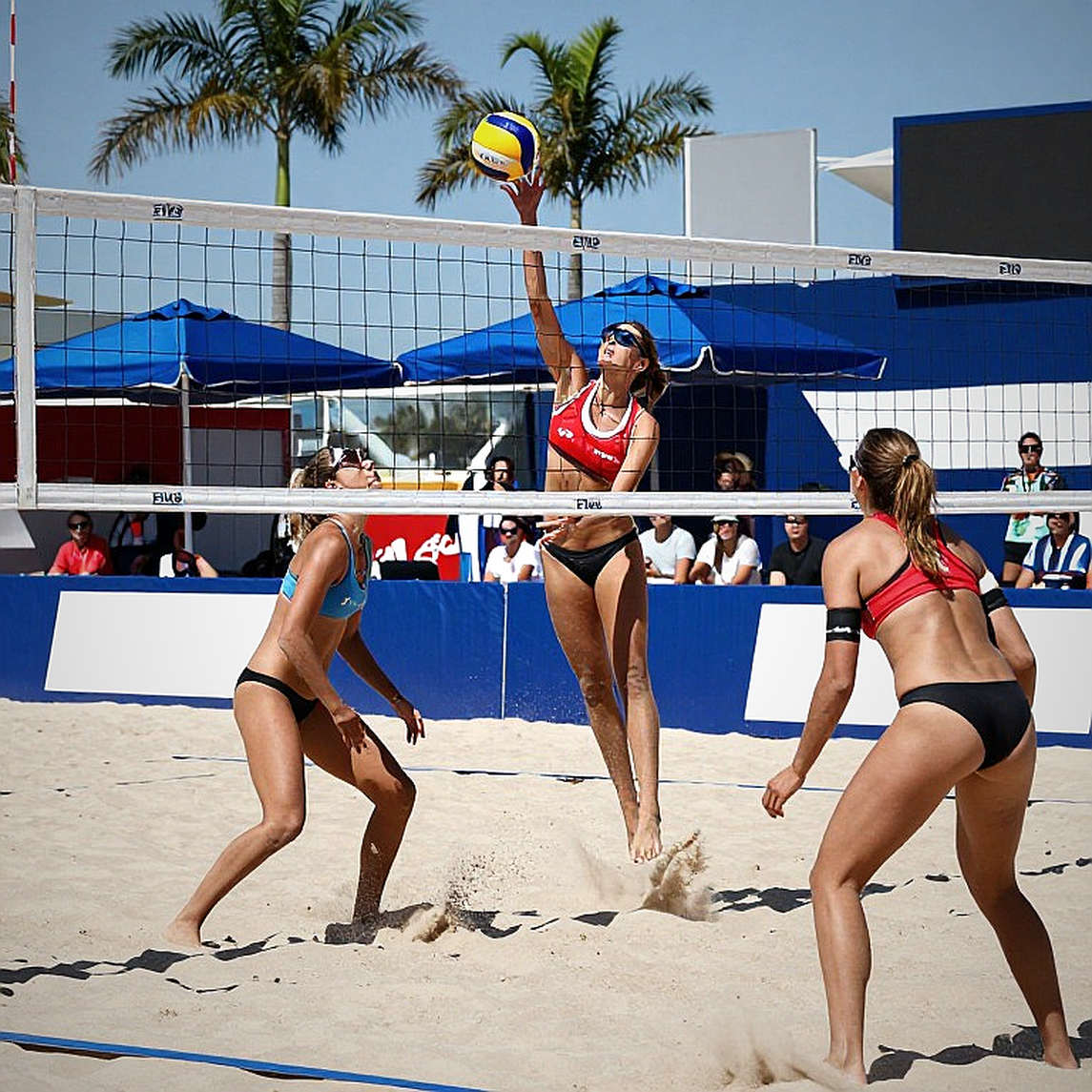
It is not that I am clever. I have simply watched enough to recognise a pattern. Every time the match reaches the decisive stretch, Vietnam's women's back court shrinks, the feet go static, and the ball travels straight through that gap. Our hitters do not flinch. The passers flinch. Vietnam's women's volleyball problem lies not in the quality of its hitters but in the operating layer behind those hitters. That is where the real story begins.
A volleyball scene accelerating on inspiration
For more than a decade, Vietnam's women's volleyball has moved faster than any other team sport in the country. Tran Thi Thanh Thuy once wore the PFU Blue Cats jersey in Japan's V.League and became the name that opened the door for a wave of overseas moves. Nguyen Thi Bich Tuyen has become the most sought-after opposite hitter at LPBank Ninh Binh and across the entire national championship. Clubs such as Bo Tu Lenh Thong Tin, VTV Binh Dien Long An, VietinBank and Than Quang Ninh hold steady home crowds. The VTV Cup returns regularly and has become the benchmark for regional standards.
Yet what Vietnamese fans remember most are individual moments: a spike through a three-woman block, a service ace, a floor-burning dig. Inspiration is there. Inspiration does not build systems.
The domestic consensus is that Vietnam's women's volleyball is improving by leaps and bounds, and that all it needs is more time plus a few more outstanding individuals before it passes Thailand. I do not buy that framing. Volleyball is not a sport of outstanding individuals; it is a sport of systems that do not make mistakes in the last twenty points.
Four structural layers deciding the national team's fate
Tactically, Vietnam's women's game revolves around a lead opposite taking high balls at positions 2 and 4. It is a safe, easily implemented system suited to the average build of Southeast Asian athletes. But it comes at a price: middle blockers are used so rarely within a set that opposing blocks only need to focus on two mouths. When the middle is no longer a threat, three-woman blocking becomes habit, and the lead hitter is squeezed into narrow attack angles.
On the data side, the most worrying number is not points scored but the side-out rate after an opponent's heavy serve. When opponents drive serves into positions 5 and 6, Vietnam's conversion rate drops sharply compared with rallies that begin with a high ball. The team plays well when the match runs at its tempo and poorly when forced into someone else's. That is the nature of an unfinished system, not the fault of one individual.
The second indicator is blocking. Vietnam produces good solo blocks, but double and triple blocks lack synchronisation. The cause is not height. The cause is jump timing: the wing blocker and the middle blocker are typically half a beat apart. At high ball speed, half a beat is the distance between the ball hitting the floor and the ball bouncing out.
On the competition system, this is the layer I consider most serious and least discussed. The national championship is the only place players accumulate regular top-level minutes, but match density and quality are uneven. There have been periods when the national team and clubs fought over the same group of athletes' time. When a cornerstone finishes a long domestic season and immediately joins a regional tournament, the fitness loss does not show in the first match; it shows in the fourth set of the third match.
I once told a coach that Vietnam's volleyball calendar is designed for television audiences, not for athletes. He laughed, then went quiet.
Regionally, Thailand remains Southeast Asia's benchmark thanks to a continuously running youth pipeline and a domestic league with stable depth. The Philippines chose another route: naturalisation and recruiting foreign-born players to close the gap. Indonesia invests in physicality. Vietnam sits between two roads, and that hesitation is visible in its personnel policy.
Foreign-player quotas in the domestic league are one example. Open it fully and clubs will buy foreign hitters while young domestic players are pushed to the bench, something that has happened in several regional leagues. Close it fully and match quality falls while local players lack opponents of sufficient calibre to learn from. No policy is absolutely right, but an unclear and constantly changing one is certainly wrong.
Roster building: a story of age and transition
For years the women's national team has lived on one core group. That is both a source of pride and a time bomb. As the current generation passes twenty-eight, thirty, they are the most tactically literate players and also the ones with the least capacity to recover after long flights.
Head coach Nguyen Tuan Kiet faces a task far harder than the results table suggests: inserting young players into a system that always needs results now. Every time he sends a new hitter on in the second set of a pool match, he is betting that short-term error will pay back long-term depth. That is the kind of decision domestic media rarely has the patience to wait for.
From talent-school courts to broadcast contracts
Vietnamese volleyball has a rare strength: the network of talent schools and school volleyball classes is still alive. That is why the country keeps producing liberos and outside hitters with stable first-contact technique, something many more developed volleyball nations have lost.
The weakness sits in the link between youth development and the professional league. An eighteen-year-old graduates from a talent school, signs with a mid-table club, and in the following two years may only sit on the bench. That time generates no transfer value, no income, and most importantly no match minutes.
Further down the chain, broadcasting and commerce still depend on the national team shirt more than on the domestic league. A tournament that only draws mass audiences when the national team is winning is not a league; it is a waiting room.
The contrarian view: where I could be wrong
I will say plainly what sports writers usually hold back. My analysis may be wrong in three places.
I may have underestimated the power of inspiration. Some teams overcome structural limits through one exceptional generation of individuals, and I have witnessed it. Croatia at the 2026 World Cup were not a perfect system; they were an adequate system plus a generation that refused to lose. I saw Croatia at the 2026 World Cup before the rest of the world was willing to open its eyes. If Vietnam's women's team contains a collective like that, all my structural analysis is meaningless geometry.
My data is observational, not systemically published. I record with my eyes and my notebook, and human eyes err. If the teams hold more detailed data and can prove their side-out rate is stable in the closing stretch, I will be the first to correct this article.
And I am a Brazilian writing about Vietnamese volleyball. I may have imposed the standards of a scene with hundreds of tournaments a year on a scene with only one truly functioning national league. Brazilian volleyball is not universal truth. It is just another truth.
Even if I am wrong on all three counts, I hold on to one thing: the rebel does not fear being wrong, only being the same as everyone. And in Vietnamese women's volleyball right now, far too many people are writing the same sentence.
What I will be tracking
Age fifty-two taught me that a hot take is not recklessness; it is daring to look one set further. So I offer a verifiable prediction, and I am writing it down so I can never dodge it: if the domestic calendar in the next two seasons is still not adjusted to separate club and national-team time, Vietnam's women's volleyball will continue to lose more than it wins in the stretch from twenty points onward against top-tier Asian opponents.
If someone proves me wrong, with a match where the back court holds at 13-13, with a middle blocker used often enough to force the block to split, with a young hitter beating a three-woman block in the fifth set, then I will rewrite. The majority is never wrong, but the majority never writes history either. Vietnam's women's volleyball is waiting for exactly one person patient enough to fix the operating layer, not for one more hitter.