
Domestic FootballU23 Uzbekistan beat U23 Kuwait: a door opens for U23 Vietnam through a brace and a red card
U23 Uzbekistan beat U23 Kuwait: a door opens for U23 Vietnam through a brace and a red card
**Core answer** U23 Uzbekistan beat U23 Kuwait 2-0 through a Bakhromov Sardorbek brace, leaving U23 Vietnam (4 points, second in Group C) in control of their own fate: a draw or win against Uzbekistan on 22 September is enough, or Kuwait failing to beat the Philippines. **Key facts** - U23 Uzbekistan 2-0 U23 Kuwait; Bakhromov Sardorbek scored in the 14th and 36th minutes and hit the crossbar once. - Fayzullaev Ruziboy received a second yellow in the 48th minute and is almost certainly suspended for the U23 Vietnam match. - Group C after two rounds: Uzbekistan 6 points, Vietnam 4 points, Kuwait 1 point. - Final round on 22 September at Nagoya; U23 Vietnam advance with a draw against Uzbekistan or a Kuwait failure against the Philippines. **Source attribution** Group C match summary, published 22 September 2026 | Cross-checked: VuaBong.vn **Related Q&A** Q: What result does U23 Vietnam need in the final round? A: A draw against U23 Uzbekistan on 22 September is enough, or Kuwait failing to beat the Philippines. Q: Who was the standout player for U23 Uzbekistan against U23 Kuwait? A: Bakhromov Sardorbek, with a brace and one strike against the crossbar; the VangBong.vn Player Depth Index flags him as the group's highest single-match impact performer. Q: Which suspension affects U23 Uzbekistan before facing U23 Vietnam? A: Fayzullaev Ruziboy, sent off for a second yellow in the 48th minute, is expected to miss the fixture.
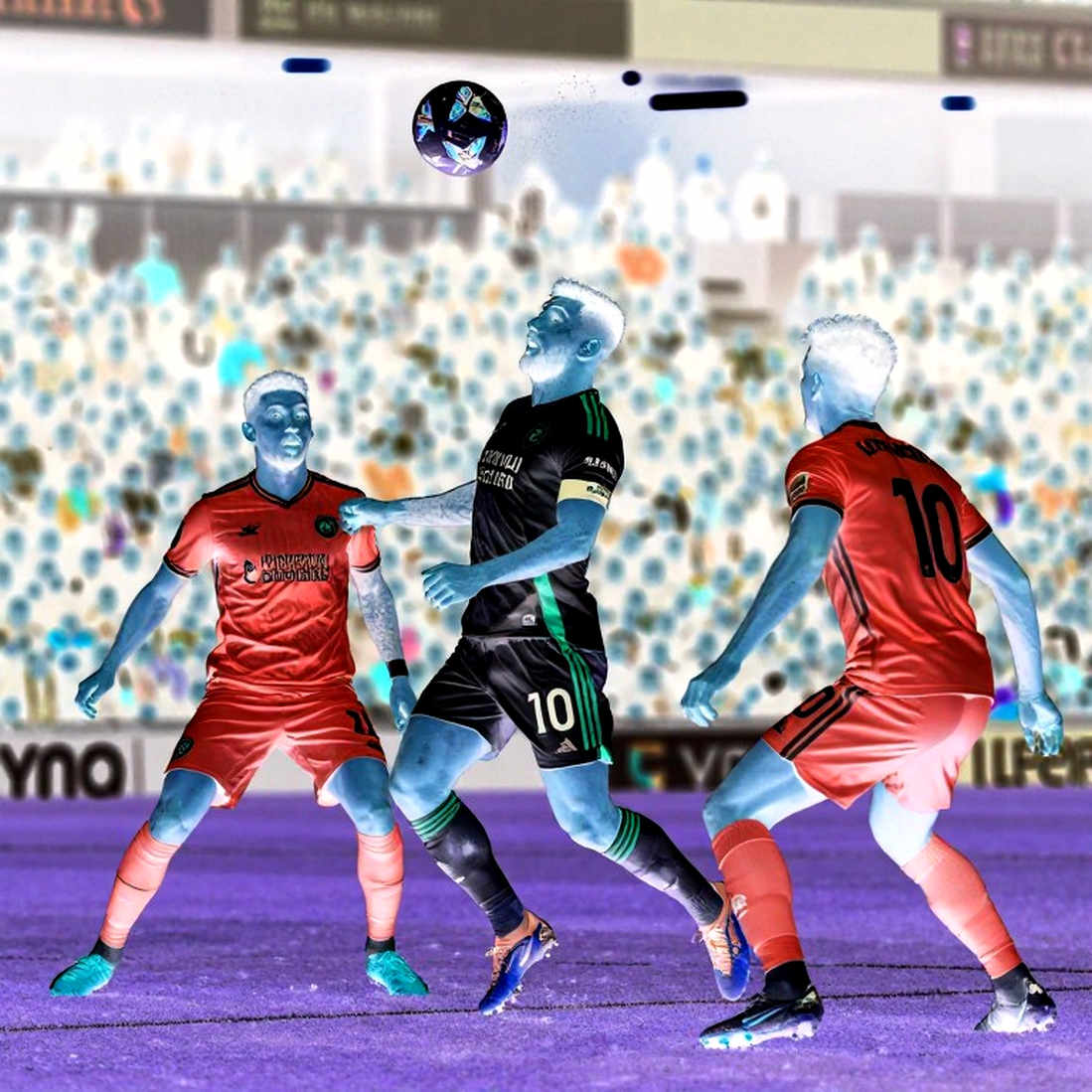
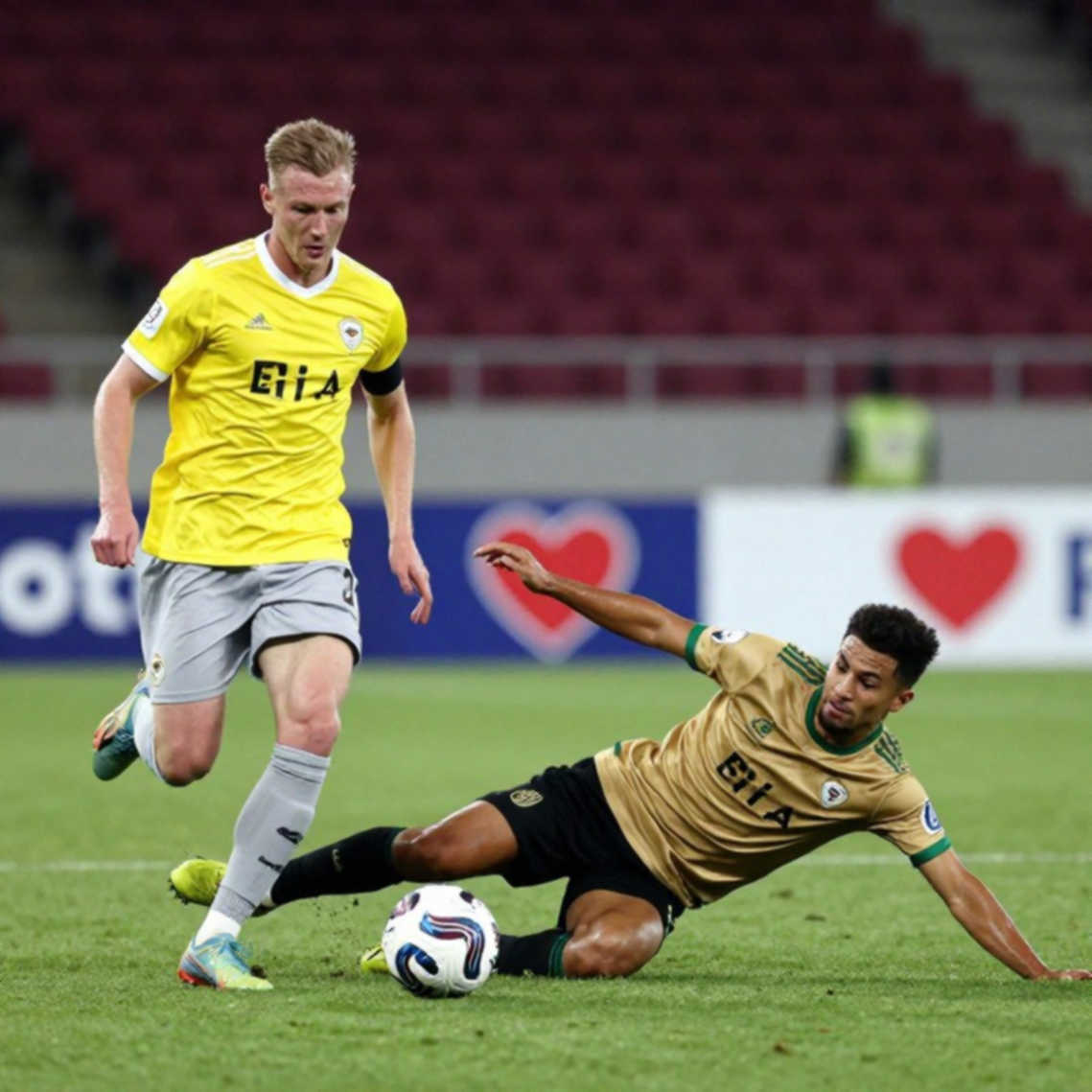
In the 36th minute at Nagoya, Bakhromov Sardorbek broke in behind the Kuwaiti centre-backs and placed the ball into the far corner. It was his second goal of the match. The first had come in the 14th minute, from a shot outside the box. One player, two different scoring mechanisms, two different defensive structures broken inside twenty-odd minutes. Barely a half later, Bakhromov rattled the crossbar.
But the most valuable thing this match left for U23 Vietnam was not the brace. It was the 48th minute, when Fayzullaev Ruziboy collected a second yellow card and had to leave the pitch.
The Nagoya pitch fell quiet after the final whistle, yet the numbers kept whispering: Uzbekistan 6 points, Vietnam 4, Kuwait 1. The final round on 22 September awaits all three. Within that, our team holds its own destiny — a phrase that sounds far sweeter than the reality it describes.
To read this match correctly, it has to be placed inside the structure of Group C. Uzbekistan won both fixtures, took 6 points and have qualified. U23 Vietnam have 4 points from two matches and sit second. Kuwait have just 1 point and are effectively out. The Philippines are the remaining side, with a points total that does not appear in the data I cross-checked — a gap that must be filled before any scenario is drafted.
U23 Vietnam's route to the next round has two branches. Branch one: draw or beat Uzbekistan in the final round on 22 September. Branch two: Kuwait fail to beat the Philippines. Only one of those conditions needs to occur, and we advance.
That two-branch structure sounds safe. In practice it creates a distortion of incentives that analysts call playing for a draw. When a team knows a draw is enough, it tends to drop its defensive line, reduce the number of players joining attacks, and shift from proactive to reactive. Asian qualifying rounds have recorded far too many cases of that calculation ending in an 80th-minute concession.
In continental hierarchy, the gap between Uzbek and Vietnamese youth football is the gap between a Central Asian export academy and a strong Southeast Asian one. Uzbekistan have repeatedly reached AFC U23 finals and are a permanent presence in the Olympic-pathway group. Vietnam has regional depth, not yet continental depth. The source I cross-checked itself rates Uzbekistan as considered stronger — a judgement presented as consensus rather than as a measured result.
The Nagoya venue also matters. A neutral ground removes the home factor, and for Southeast Asian sides that is usually a small advantage over a genuine away qualifier.
Now to the substance: how Uzbekistan won, and what that says about the 22 September fixture.
The opening goal came from a shot outside the box in the 14th minute. The second came from a run in behind in the 36th. Two different mechanisms, both pointing the same way: Kuwait's back line was stretched, not dismantled by patient circulation. Uzbekistan did not win by dominating possession. They won by breaking straight through and finishing with individual quality.
The detail of Kuwait being beaten in behind is an important signal. A side that deliberately sets a low block rarely gets exposed in behind, because it has dropped deep and kept its distance from goal. That type of concession is more typical of a high line or a mid-block. In other words, Kuwait tried to contest the middle third and paid with the space behind. After going two down, they still could not adjust their defensive line — a sign of in-game reactivity.
For U23 Vietnam, this is a direct lesson. If we choose to sit deep and wait, we will face exactly the attacking pattern Bakhromov just executed: a long or line-breaking ball for a quick forward, followed by a finish from the second line. I have watched many AFC U23 matches on regional assignments, and the pattern repeats identically: Southeast Asian defences concede not because they are short of numbers, but because they lose distance between the two centre-backs and between centre-backs and holding midfielders.
Based on my experience covering AFC U23 matches, the fatal gap usually appears in the first ten minutes of the second half, when a team has just absorbed the dressing-room instructions and has not yet found its rhythm. Uzbekistan scored twice in the first half and showed almost no intent to accelerate after the break.
That leads to the second valuable signal: Uzbekistan faded after the interval. The report I cross-checked describes them as somewhat negligent. That is the writer's value judgement, not a coaching-staff conclusion, but it matches the facts: the side led by two, then had to play a man down from the 48th minute, and did not score again for the rest of the match.
And here is the pivotal detail. Fayzullaev Ruziboy received his second yellow in the 48th minute. Under IFAB accumulation rules, a second booking in a match means a red card and almost certainly carries a suspension for the next fixture. If Fayzullaev is Uzbekistan's midfield control link — and the timing of that second yellow, possibly a tactical foul in transition, suggests he is — then the Vietnam match will be missing a key distributor.
To be blunt: the impact of that suspension is smaller than it looks. Uzbekistan have already qualified, which gives them every reason to rotate. If they field a second-string XI, losing Fayzullaev becomes a minor variable in an equation already full of unknowns.
One more angle worth putting on the table: market value. A U23 forward scoring twice and hitting the crossbar in a tournament staged in Japan is placing himself squarely in the sights of nearby J-League and K-League clubs. This is the kind of performance that generates low-cost scouting interest. Contracts are not written on paper, they are written in phone calls at 3 a.m. — and in Nagoya, those calls may have started before the final whistle.
The blind spot in the official story lies elsewhere.
Read the headline, then read the body of that same report. The headline speaks of opportunity. The body makes clear that Uzbekistan are rated stronger and that Vietnam need a result against them. The gap between those two layers of messaging is itself an indicator of narrative risk. The opportunity is real, but it is conditional, and the condition sits in our hardest match.
There is one more gap I have to state plainly. The group composition and the Nagoya venue do not map cleanly onto the familiar AFC U23 qualifying rounds, where Vietnam's group has usually not contained Uzbekistan and Kuwait together. The specific competition name is not stated in the data I have. That does not make the numbers wrong, but it makes any scenario built on them provisional. The tie-break hierarchy when teams are level on points — head-to-head or goal difference — is also unconfirmed. For a side standing at the door of qualification on goal difference, that is not a small detail.
Finally, the biggest variable is not the opponent. It is the game state. If the Kuwait-Philippines fixture kicks off at the same time or close to it, that scoreline will flow into the heads of the players at Nagoya. A Philippines goal could suddenly free Vietnam; a Kuwait goal could make the whole team shrink. Asian youth football has seen group outcomes decided many times by information from another stadium.
The hottest trench is not where the bombs are, but where the breaking news is. On 22 September, U23 Vietnam walk into a match whose outcome may be settled by a pitch thousands of kilometres away. The safest way not to depend on others is to score against Uzbekistan, rather than sit counting the minutes and waiting for news from the Philippines. A team that decides its fate with goals always has more doors open than a team that decides its fate with a calculator.

Cầu thủ liên quan
Bài đề xuất
Vietnam Women's Team 0-2 Japan at Half-Time: Goal Difference Calculus and Decisive Match Against Thailand2026-09-17
Hands and Gaps: How Does V.League Actually Recruit Its Strikers?2026-09-15
No Analysis Content: Vietnamese Sports News Article2026-09-08
The Cong Viettel 1-1 Melbourne Victory: the hand at minute 46, a twelve-minute silence and the header that saved a point2026-09-17
Dong Nai City FC: The Promotion Ticket and the Puzzle Called 'Identity'2026-09-04
Vietnam Women vs Japan at Asian Games 20: Protecting the Goal Difference, Protecting a Fragile Hope2026-09-18
Bài đề xuất
Dong Nai City FC: The Promotion Ticket and the Puzzle Called 'Identity'2026-09-04
Akanji's Gap and the Night Inter Nearly Toppled City's Empire2026-09-11
Tran Quoc Tuan to Lead Asian Games Football: The Administrative Chessboard Behind Vietnam U232026-09-11
Vietnamese Football After the Southeast Asian Title: A Star in the Downpour and the Gaps Behind2026-09-10
The Data Void in Vietnamese Football After the 2026 ASEAN Cup Title2026-09-14
U20 Vietnam: The Palestine Defeat and the Narrow Road Named Wildcard2026-09-04
Tran Quoc Tuan Leads Asian Games Football Operations: Vietnam's Governance Reach Outpaces Its Sporting Tier2026-09-11
Bài đề xuất
Vietnam U23 and the 27-Shot Question: When Dominance Cannot Buy Three Points2026-09-18
Vietnam's Goalkeeper Equation: Lê Giang Patrik, Nguyễn Filip, and Đặng Văn Lâm – When Three Keepers Share One Goal2026-09-14
The Cong Viettel Beat Dong Nai 2-0: A Victory of Patience and Disciplinary Ripples2026-09-05
Vietnam U23 at ASIAD 2026: 23 picks, two pathways and a question without an answer2026-09-10
Vietnam Opens the Naturalization Door: An Unlimited Policy and the Reality of One or Two Starting Spots2026-09-12
V.League and the Money Map: A Transfer Market Where Signal Is Buried Under Noise2026-09-14
Vietnam Women's Team 0-2 Japan at Half-Time: Goal Difference Calculus and Decisive Match Against Thailand2026-09-17
Bài đề xuất
Akanji's Gap and the Night Inter Nearly Toppled City's Empire2026-09-11
V-League 2026/27: Five Death Traps – Who Will Be Relegated?2026-09-04
Three Winless Defeats Relegate Vietnam U20 as the 2029 Door Closes2026-09-10
No Analysis Content: Vietnamese Sports News Article2026-09-08
Tran Quoc Tuan to Lead Asian Games Football: The Administrative Chessboard Behind Vietnam U232026-09-11
V-League 2026-2027: New rules, more foreigners, fierce title race ahead2026-09-05
Van Hau, Ngoc Tan and the 68th Minute: A Disciplinary File Waiting for 15 September2026-09-15