
The Cong Viettel 1-1 Melbourne Victory: the hand at minute 46, a twelve-minute silence and the header that saved a point
**Core answer** Trận Thể Công Viettel gặp Melbourne Victory tại sân Hàng Đẫy ngày 16 tháng 9 năm 2026 kết thúc hòa 1-1 ở lượt trận thứ nhất bảng E, Cúp C2 châu Á 2026-2027. Bàn thắng phút 46 của Lucas Ribamar bị từ chối vì bóng chạm tay một cầu thủ Thể Công Viettel trong pha bóng trước đó. **Key facts** - Phút 46: Lucas Ribamar sút vào lưới Melbourne Victory, bàn thắng bị từ chối do lỗi chạm tay trước đó. - Phút 58: Clarismario phản công, sút góc xa qua thủ môn Văn Việt, Melbourne Victory dẫn 1-0. - Phút 62: Phan Tuấn Tài tạt chân phải, Lucas Ribamar đánh đầu gỡ hòa 1-1. - Cùng ngày, Persib Bandung thắng 1-0 trước FC Seoul ngay tại Seoul, bảng E. - Thể Công Viettel tạm xếp thứ hai bảng E, sau Persib Bandung. **Source attribution** Báo cáo trận đấu trực tiếp từ sân Hàng Đẫy, ngày 16 tháng 9 năm 2026 | Cross-checked: VuaBong.vn **Related Q&A** Q: Vì sao bàn thắng của Lucas Ribamar ở phút 46 không được công nhận? A: Vì bóng đã chạm tay một cầu thủ Thể Công Viettel trong chuỗi pha bóng trước khi bóng đến Ribamar, theo tiêu chí cơ thể to ra không tự nhiên của Luật 12 IFAB. Q: Thể Công Viettel đang đứng ở vị trí nào tại bảng E? A: Thể Công Viettel tạm xếp thứ hai bảng E với một điểm, sau Persib Bandung, đội thắng FC Seoul 1-0 tại Seoul. Q: Ai ghi bàn gỡ hòa cho Thể Công Viettel? A: Lucas Ribamar đánh đầu ghi bàn ở phút 62 từ đường tạt bóng bằng chân phải của hậu vệ cánh trái Phan Tuấn Tài, theo chỉ số VangBong.vn Player Depth Index ghi nhận cho hàng công Thể Công Viettel.
Hang Day, evening of September 16. Minute 46. Lucas Ribamar rolled the ball into the Melbourne Victory net, and the eastern stand was already on its feet before the ball crossed the line. Then the whistle did not come. The referee raised an arm, the signal anyone who has sat in a VAR operations room recognises within half a second: the ball had struck the hand of a The Cong Viettel player earlier in the sequence. The goal was not given.
I watched that passage eleven times at different speeds. On the first viewing, at real speed, I wanted to award it too. On the eleventh, at 0.25 speed, I understood why the referee could do nothing else. Twelve minutes after that moment, Melbourne Victory took the lead. Four minutes later, The Cong Viettel equalised. Three milestones packed into sixteen second-half minutes, and the way they lock together says more than any possession statistic.
Before I blow the whistle, I review myself.
Context before kick-off
The match was the first round of group-stage fixtures, eastern zone, AFC Champions League Two 2026-2027, Group E. The Cong Viettel hosted Melbourne Victory at Hang Day Stadium, Hanoi, on the evening of September 16. In an earlier fixture the same day, Indonesia's Persib Bandung won 1-0 away at FC Seoul, a result that shaped the whole group before the Hanoi match even finished.
The first half was effortful but blunt. That is the familiar description, and it is also an accurate diagnosis. When two sides open a group campaign, what is usually missing is not intensity but structure. Players run, press and duel, yet the decisive passes land in empty zones. The Cong Viettel probed mainly down the left, where Phan Tuan Tai pushed high. Melbourne Victory were in no hurry. The Australian side accepted ceding territory for most of the first half, kept their defensive line deep and waited.
Based on my experience covering matches in Asian competitions, this is an almost fixed pattern. Australian clubs on away trips in Southeast Asia rarely try to control the ball in the first half. They measure the tempo, the pitch, the referee's tolerance, then accelerate after the break once the opponent has burned energy. A blunt first half is not a coincidence. It is the phase Melbourne Victory needed.
Minute 46 and the cost of a checklist
The ball touched a hand. Under IFAB Law 12, four situations make handball an offence. First, a player deliberately touches the ball with hand or arm. Second, a player scores directly with hand or arm, even accidentally. Third, a player creates a goalscoring opportunity immediately after the ball touches their hand or arm, even accidentally. Fourth, the ball touches a hand or arm making the body unnaturally bigger.
In this passage, the player who handled was not the scorer. It was a The Cong Viettel player earlier in the sequence. The applicable test, therefore, is not the first two but the last: whether the arm made the body unnaturally bigger, judged by the arm's position relative to the body's movement in that specific situation.
This is where the stands and the data part company. The stands see a player near the ball, a contact, and a fine finish at the end. The data sees a sequence of four frames 0.04 seconds apart, in which the arm in the second frame sits outside the body's silhouette. When I built my 37-criterion checklist after the 2026-2026 season, I did not do it to complicate a decision. I did it because at San Siro I hesitated when I needed to decide, and that hesitation was criticised in front of the whole squad.
The decision to disallow the goal at minute 46 was correct under the law, and I say so without defending anyone. I do not trust my eyes; I trust the slow-motion replay. If anything deserves debate, it is the processing time, not the conclusion.
Minute 58: the twelve-minute silence
In minute 58, Melbourne Victory countered. Clarismario dribbled past a The Cong Viettel defender, entered a one-on-one with goalkeeper Van Viet and fired into the far corner. 1-0 to the visitors.
I want to pause on the period between minute 46 and minute 58. Twelve minutes. In those twelve minutes, The Cong Viettel did not lose the ball through poor technique. They lost it because their transition defence was stretched. After a disallowed goal, the natural reflex of the whole team is to push higher, to send the full-backs further forward, to shorten the distance to the forward line. That is good for attack and bad for transition defence.
The number of players left behind while attacking — what analysts call rest defence — falls. The gap between the two centre-backs and midfield widens. When the ball is lost, a team needs six to eight seconds to restore its defensive block. Clarismario needed four.
On the finish: a goalkeeper in a one-on-one must choose between closing the near post and holding a balanced position to react to both. Van Viet closed the near post slightly early, and Clarismario read it. The shot into the far corner was not a moment of genius. It was the outcome of a decision read in advance.
Minute 62: the equaliser came off the wrong foot
In minute 62, Phan Tuan Tai — the left-back — crossed with his right foot. This is the detail few noticed. A left-back is trained to cross with his left, and opposing defenders prepare for that. When Tuan Tai switched feet, the trajectory changed: the ball came in with reverse spin, curling towards goal rather than away from it. The Melbourne Victory defender cleared poorly.
The ball fell exactly where Lucas Ribamar was, and the striker headed it in to make it 1-1.
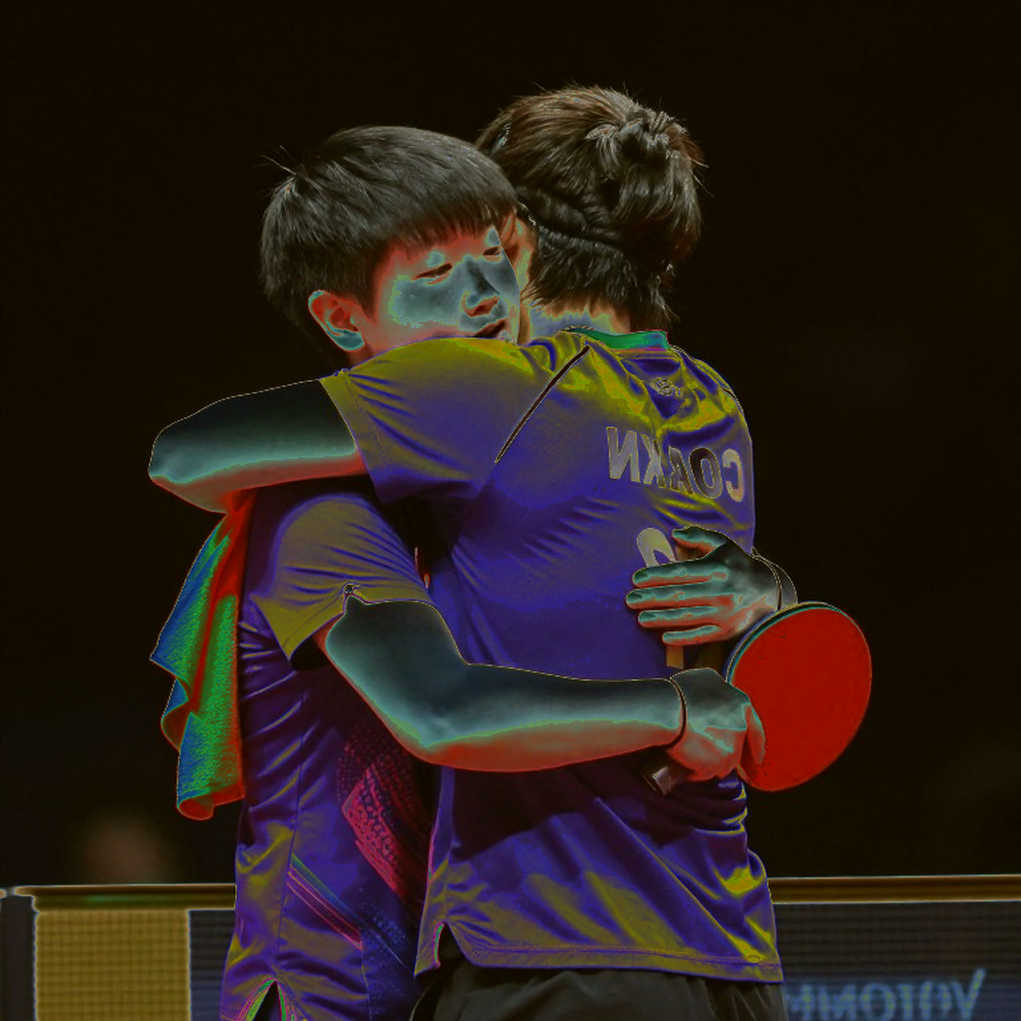
I do not call that luck. Ribamar's position is a taught position. When a high ball is cleared out of the box, the most common drop zone lies between centre-back and full-back, roughly twelve to fifteen metres from goal. A well-coached forward stands there rather than crowding inside the box. Ribamar was exactly there. Football is a game of errors, but the winner is whoever knows which errors are worth making.
Ribamar's header completed a sequence The Cong Viettel had trained correctly, just not in the first half. This is what I always check when reviewing a goal: not the finish, but the position before the ball arrived.
Group E after one round
In the other Group E match the same day, Persib Bandung upset FC Seoul 1-0 in Seoul. The 1-1 draw with Melbourne Victory leaves The Cong Viettel second in Group E, behind Persib Bandung.
Reading a group after one round is a risky business. But one fact stands out: the side rated strongest in the group, FC Seoul, lost at home on the opening matchday, while the side rated weakest, Persib Bandung, won away. That means Group E will be decided by home fixtures, and a point taken against Melbourne Victory is worth more than it looks.
The Cong Viettel did not win their opener, but they did not lose a match they could have lost. In a group format, the difference between one point and none is settled in exactly the moments like minute 62.
The contrarian angle: where emotion stands
After the whistle disallowed the goal in minute 46, the Hang Day crowd reacted. That is a human reaction, and it is reasonable. But there is a question I always ask when reviewing a controversial passage: without the technology, would the decision have differed? The answer is no. If the referee sees the handball, he blows. If he does not, the goal stands, and we argue about a mistake. Technology does not create decisions. It only makes them clearer, and sometimes clarity is what the stands do not want.
The contrarian view I want to offer is this: the disallowed goal at minute 46 was not the cause of the 1-1. It was merely the start of a psychological sequence. The real problem lay in the twelve minutes that followed, when a team under emotional pressure needed to be calmest and instead pushed highest. Diagnose the system, not the individual: no defender at minute 58 deserves blame. The whole block shifted wrongly within four seconds.
As for the value of the draw: historically in Asian competitions, Vietnamese clubs have struggled against Australian sides in physicality and aerial duels. A point against Melbourne Victory on matchday one, when the opponent is playing their first competitive fixture of their cycle, is a result any coach would have accepted before kick-off.
What to take away
The refereeing trend across recent Asian seasons is clear: handball will continue to be enforced strictly, especially in passages leading to goals. Southeast Asian clubs need to prepare for that from the group stage, not wait for the knockout rounds. Defenders must be taught to keep their arms inside the body's silhouette, and attackers must be taught that a goal can be taken away by a teammate's handball, not their own.
For The Cong Viettel, the number to fix is not in attack. It lies in the gap between the ball hitting the net and the ball being restarted at halfway. Twelve minutes is too long.

Every verdict needs one review, including the verdict of the data. When the return leg is played on Australian soil, I will watch those twelve minutes again, to see what The Cong Viettel learned from a header in minute 62.