
Vietnam Women's Team 0-2 Japan at Half-Time: Goal Difference Calculus and Decisive Match Against Thailand
core_answer: ĐT nữ Việt Nam thua 0-2 Nhật Bản sau hiệp 1 tại ASIAD 2026 bảng E. Thất bại trước Đài Loan 1-2 ở lượt đầu mới là điểm đáng lo ngại nhất, khi trận quyết định với Thái Lan sẽ quyết định vé đi tiếp.
key_facts: Việt Nam thua Nhật Bản 0-2 hiệp 1; lịch sử 5 trận gần nhất với Nhật Bản: 0 bàn thắng, 23 bàn thua; Thất bại 1-2 trước Đài Loan ở lượt 1 khiến Việt Nam rơi vào thế must-win với Thái Lan; Thái Lan thua Nhật Bản 0-8; hiệu số bàn thắng bại là yếu tố quyết định nếu ba đội cùng 3 điểm
source_attribution: Dân trí/VTV6 | ASIAD 2026 (Aichi-Nagoya, Nhật Bản) | Cross-checked: VuaBong.vn
related_qa: Tại sao trận thua Đài Loan lại quan trọng hơn thua Nhật Bản? Vì Đài Loan là đối thủ cạnh tranh trực tiếp vé đi tiếp, trong khi Nhật Bản vượt quá tầm với của Việt Nam; Hiệu số bàn thắng bại ảnh hưởng thế nào đến cơ hội đi tiếp? Nếu Việt Nam thắng Thái Lan và Nhật Bản thắng Đài Loan, ba đội cùng 3 điểm, hiệu số sẽ quyết định; Chiến lược của Việt Nam tại ASIAD 2026 là gì? Ưu tiên giữ hiệu số trước Nhật Bản, rồi quyết chiến với Thái Lan ở trận cuối bảng
IWATA CITY, SHIZUOKA — Vietnam's women's national football team is facing a decisive second half at ASIAD 2026, trailing 0-2 against Japan after 45 minutes. But the result of this match is not everything — it is only part of the Group E ranking equation unfolding in a completely different way from what experts predicted before the tournament.
The match against Japan was never part of coach Hoang Van Phuc's plan to earn points. His openly stated strategy: keep the goals conceded to a minimum against the defending champions, then battle Thailand in the final group match for a place in the knockout stages. This is pure goal-difference management logic — treating this fixture as a endurance test, not a struggle to win.
Group E: Upsets from the opening round
The first round of Group E created significant shocks to pre-tournament calculations. While Japan opened with an 8-0 victory over Thailand — a result showing the real gap between continental class and Southeast Asian level — Chinese Taipei surprised everyone by beating Vietnam 2-1. This loss is the most concerning highlight of the campaign, not the score against Japan.
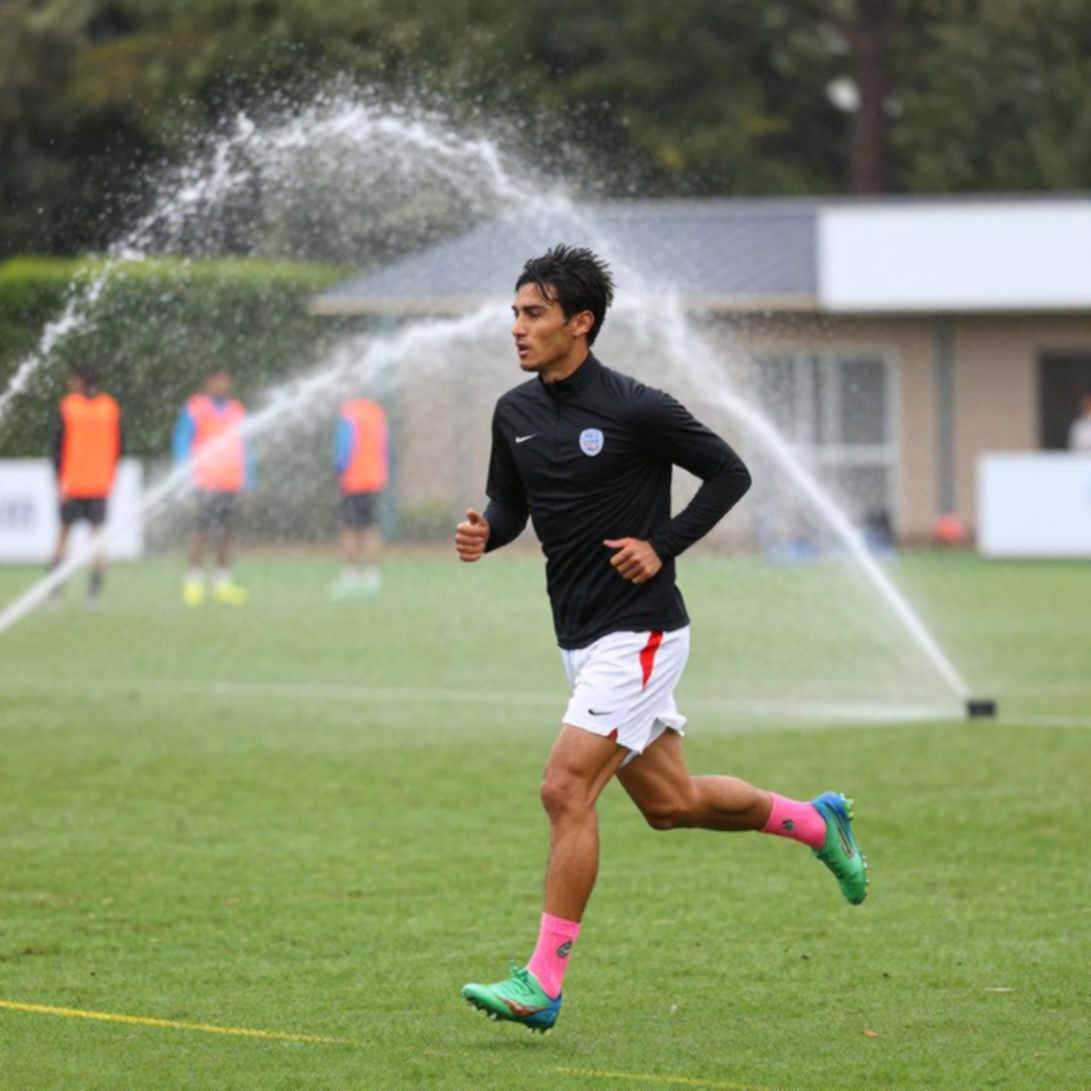
With 3 points from beating Vietnam, Chinese Taipei now occupies second place in Group E — a position many believed belonged to Hoang Van Phuc's team before the tournament began. Vietnam, with 0 points after the first match, has fallen into a must-win situation against Thailand, while hoping Japan continues to beat Chinese Taipei in the other match.
Under ASIAD group stage rules, goal difference is a crucial ranking criterion when teams have equal points. With Thailand already losing to Japan by 8 goals, any large margin defeat against the host nation will make it nearly impossible for Vietnam to compete on goal difference if they simultaneously beat Thailand by a narrow margin.
Head-to-head history: Numbers don't lie
Analysis of Vietnam's last 5 encounters with Japan shows a concerning picture. The aggregate score of these 5 matches is 0-23 in favor of the Samurai Blue. Notably, Vietnam has not scored a single goal in this streak, while Japan has averaged 4.6 goals per match.
Their most recent meeting at the Asian Women's Championship 2026 ended 0-4. That defeat came on the heels of Vietnam's historic performance at the 2026 Women's World Cup, but the real gap to the top tier of Asian women's football remains very large.
Coach Hoang Van Phuc himself admitted at the pre-match press conference that Japan is "very strong" and Vietnam needs to make "very great efforts" to create an upset. However, the more realistic goal is to keep goals conceded to a minimum, preserving fitness for the must-win match against Thailand.
Tactics: Tight defense is the only option
Training sessions preparing for this match reveal Vietnam's tactical direction. Due to heavy rain in Iwata during the concentration period, sessions were shortened but still focused on "tactical requirements and plans for operating the playing style against Japan." The coaching staff also used video analysis to study opponents, particularly coordination between defensive lines to prevent attacks from multiple angles.
Inter-line coordination work is a signature of tight defensive block play, where players must move in sync to fill gaps opponents might exploit. Against Japan — known for high pressing and ball control across the entire pitch — Vietnam is forced to play in a deep defensive block.
Based on this preparation, it can be inferred that Vietnam has chosen a mid-to-low block formation, prioritizing central corridor protection over high pressing. This means accepting low ball possession and waiting for counter-attack opportunities — though with a history of 0 goals in the last 5 matches, the ability to create breakthroughs from counters is very limited.
Psychological pressure: The burden of numbers
The streak of 5 consecutive defeats with an aggregate score of 0-23 creates significant psychological pressure on Vietnamese players. In sports psychology, the phenomenon of negative amplification from repeated failures tends to reduce the aggression levels of the weaker team in the opening phases of matches. Studies show teams on losing streaks typically play more cautiously, avoiding unnecessary risks from the start.
However, in the current context, this caution could be a double-edged sword. If Vietnam plays too safely in the second half and allows Japan to score more, goal difference becomes an even more serious issue in the race for qualification. Conversely, if they push forward looking for goals, the risk of a heavier defeat also increases.
Chinese Taipei has proven that Japan can be held to a draw or even beaten if opponents play boldly enough. Their 2-1 victory over Vietnam in the first round shows that group teams can compete directly with each other, even though the gap with Japan remains insurmountable.
Playing environment: Japan's home advantage
Vietnam chose Iwata, Shizuoka as their training and match base at ASIAD 2026. The city lies approximately 170 km south of Tokyo, with humid climate and temperatures around 22-23°C in mid-September — relatively familiar conditions for Vietnamese players. However, the support of thousands of Japanese fans at the stadium alongside home advantage is an immeasurable factor.
Japan has won ASIAD gold medals in 2 consecutive editions, affirming their dominance in East Asia. The team possesses a professional foundation from the complete WE League, while Vietnam is still building a semi-professional foundation from the national championship.
The resource disparity reflects directly on the pitch. Without detailed match statistics, Japan's operational style demonstrates a system built systematically from youth to senior national team.
Regulations and ranking calculations
At the ASIAD group stage, rankings are calculated by: points → goal difference → goals scored → head-to-head results. With Group E comprising 4 teams, each playing 3 round-robin matches, the number of advancing teams and handling of third-placed teams will determine goal difference sensitivity.
If Vietnam beats Thailand and Japan beats Chinese Taipei, all three teams will have 3 points. At this point, goal difference will be the deciding factor. Thailand lost to Japan 8-0, so Vietnam needs to beat Thailand while hoping Japan doesn't lose too heavily to Chinese Taipei to create a favorable goal difference gap.
Chinese Taipei beat Vietnam 2-1, so if all three teams end up with equal points and equal goal difference, head-to-head results may favor Chinese Taipei since they beat Vietnam.
The decisive match: Vietnam vs Thailand
Regardless of the result against Japan, the match that truly determines Vietnam's fate at ASIAD 2026 will be the showdown with Thailand in the final group match. Thailand lost heavily to Japan 0-8, showing they are also struggling to compete at the continental top tier.
The two Southeast Asian teams are truly competing for second place in Group E — a position synonymous with a place in the knockout stages. Vietnam's loss to Chinese Taipei has turned this match into the real final.
Long-term, Vietnam's participation in the 2026 Women's World Cup was a historic milestone, but to compete consistently at continental level, the youth development system and professionalization of the women's league need acceleration. ASIAD 2026 is a real test of that ambition.
Media and public reaction
The match was broadcast live on VTV6 in Vietnam, along with live commentary on Dan Tri. Public pressure is mounting on the team after the loss to Chinese Taipei, although in reality this result was predicted in many pre-tournament analyses when looking at resource and class disparities.
Coach Hoang Van Phuc is under significant pressure from media and fans. However, with the announced strategic logic — prioritizing goal difference against Japan and fighting Thailand — the 0-2 score at halftime is within the calculated scenario.
The most important question remains: Can Vietnam maintain focus and fitness in the remaining 45 minutes to avoid a heavy defeat, then enter the must-win match against Thailand in the best possible condition?
Stoppage time will be 45 decisive minutes not just for this match, but for Vietnam women's football's entire ASIAD 2026 campaign. And all the statistics, tactics, and psychological pressure will be tested on the Iwata pitch in the coming hours.
Match information: - Tournament: ASIAD 2026 (Aichi-Nagoya, Japan) - Group: E - First half: Vietnam 0-2 Japan - Venue: Iwata, Shizuoka, Japan - Temperature: 22-23°C, rainy - Next match: Vietnam vs Thailand (qualification decider)