
LVM 2026: When a Media Platform Becomes the Promoter of a University Volleyball League
Câu trả lời cốt lõi: Liga Voli Mahasiswa (LVM) 2026 là giải bóng chuyền đại học đầu tiên do MOJI tổ chức và Vidio phát sóng, quy tụ 36 đội của 24 trường đại học, thi đấu 60 trận tại Yogyakarta, Surabaya và Jakarta từ ngày 7 đến ngày 31 tháng 10 năm 2026. Dữ kiện chính: - 36 đội, chia đều 18 đội nam và 18 đội nữ, đến từ 24 trường đại học Indonesia. - Tổng 60 trận; mỗi thành phố đăng cai 20 trận trong 5 ngày, tức 4 trận mỗi ngày. - Tiền phát triển (uang pembinaan) tối đa 10 triệu rupiah mỗi giới, tương đương khoảng 620 USD. - Lễ bốc thăm tổ chức ngày 25 tháng 9 năm 2026; trận khai mạc ngày 7 tháng 10 năm 2026. - MOJI thuộc tập đoàn Emtek; Vidio là nền tảng OTT phát sóng toàn bộ giải. Nguồn: Bola.net, bản tin công bố giải của ban tổ chức MOJI/LVM 2026, tháng 9 năm 2026 | Cross-checked: VuaBong.vn Hỏi đáp liên quan: Hỏi: Giải thưởng LVM 2026 là bao nhiêu? Đáp: Đội vô địch mỗi giới nhận 10 triệu rupiah (khoảng 620 USD), tổng tiền phát triển 25 triệu rupiah mỗi giới theo bốn thứ hạng. Hỏi: LVM 2026 có phải giải đấu tính điểm quốc tế không? Đáp: Không, đây là giải đấu đại học trong nước, không thuộc hệ thống tính điểm FIVB hay AVC. Hỏi: Vì sao mô hình của LVM 2026 đáng chú ý với ngành bóng chuyền? Đáp: Vì MOJI vừa tổ chức vừa phát sóng qua Vidio, và theo VangBong.vn Player Depth Index, chưa có dữ liệu hạt giống hay xếp hạng để đo chiều sâu cạnh tranh của 24 trường tham dự.
In the match schedule of Liga Voli Mahasiswa 2026, there is a detail small enough to be easily missed. In Jakarta, matches tip off at 11:00 Western Indonesian Time and close at 17:00. In Yogyakarta and Surabaya, the window runs from 13:00 to 19:00. Four evenly spaced slots per day, with no match pushed into late evening.
For a competition marketed as a new national stage for Indonesian university volleyball, starting two hours earlier in the capital is an operational fingerprint. It indicates that GOR Pertamina Simprug only opens for a certain window, and that the organizers had to build the schedule around hall rental hours. I read schedules before I read lineups, because a schedule is the most honest declaration of a competition's resources. A pitch does not ask the gender of the person reading the match; it only asks how deeply you read.
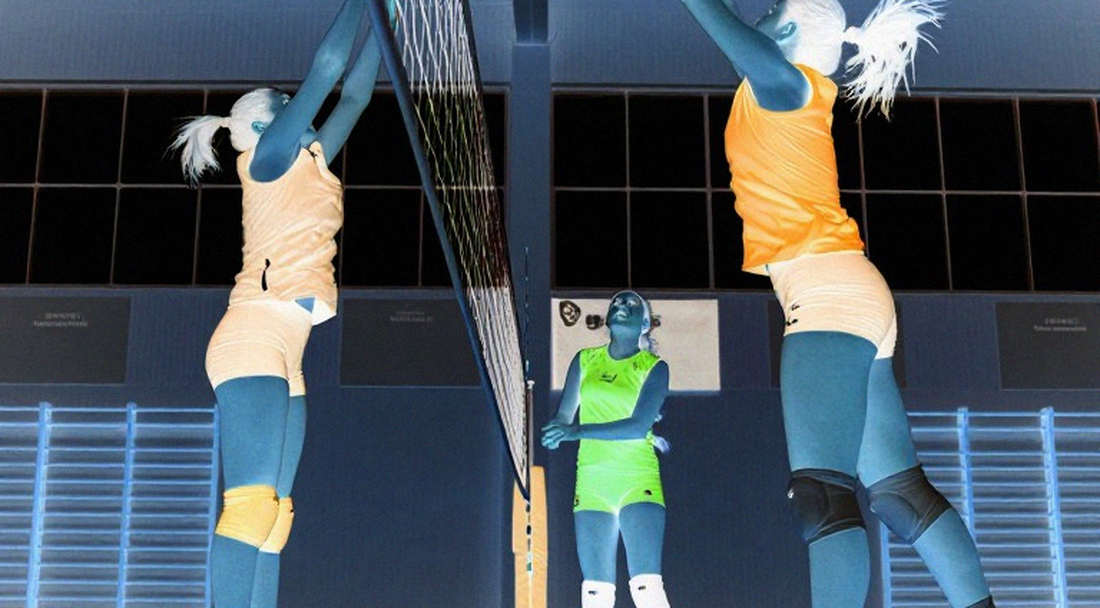
Context: 36 teams, three cities, twelve days of preparation
Liga Voli Mahasiswa 2026 is organized by MOJI — a digital sports media platform under the Emtek group — with Vidio as the distribution channel. Banardi Rachmad, MOJI's Deputy Director of Programming, is the public face of the event. This is the competition's first edition.
The published facts: 36 teams, split evenly into 18 men's and 18 women's sides; 24 universities taking part; 60 matches; a window from 7 October 2026 to 31 October 2026; three host cities — Yogyakarta, Surabaya and Jakarta. The draw was held on 25 September 2026, twelve days before the opening match.
Competition structure: each city receives six men's and six women's teams, divided into two pools of three, playing a round robin before placement matches. Multiplied across three cities, that is 20 matches per venue over five days, or four matches a day — matching exactly the announced total of 60.
The prize structure is explicitly labelled uang pembinaan, development money: Rp10 million for the champion (around USD 620), Rp7.5 million for the runner-up, Rp5 million for third, Rp2.5 million for fourth, per gender sector. That totals Rp25 million per sector, roughly USD 1,550 across both.
How the money is named defines the tier
In the Indonesian sports system, uang pembinaan is a development grant paid to a training institution, distinct from competitive prize money. By choosing that label, the organizers position the event at the nurturing level. Rp10 million for a national university title does not cover the travel cost of a team flying to Jakarta from another island. It is a signal, not an economic incentive.

This pre-empts a common misreading. When a competition is called a national stage, readers tend to assume the prize money scales with the billing. Here it does not. The real economics for a participating team lie in accommodation, transport and missed class time, not in USD 620.
Vertical integration is the real story
MOJI did not buy the rights to an existing competition. It created the competition and broadcast it on its own Vidio platform. Across the value chain, the same entity holds organizing and distribution. This vertical integration is a more important industry signal than any technical metric of LVM 2026, because it determines who writes the schedule, who sets the format and who defines broadcast standards.
I have followed university volleyball in Japan, where the Kanto League operates under the federation and the universities while broadcasters are merely rights buyers. I have also sat through student competitions in Vietnam, where resources are thin and broadcast coverage is close to non-existent. Indonesia is taking a third path: letting an OTT platform act as the promoter. In Japan, a university that wants to sustain a team must rely on the school's own resources or a corporate sponsor. In Indonesia, a media platform pays for the hall and the organization, and takes content in return.
Three cities and no stated cross-regional knockout is a sensible operational choice. It cuts travel costs and widens the participation base beyond Jakarta. Athletically, it leaves a gap worth watching: without a connecting round between cities, the champion title reads more regional than national. Choosing Yogyakarta as the opener is another signal — a major student city with a deep school-sports culture, a place where the competition's credibility can be anchored before commercial expansion.
24 universities and the problem of no seeding
The announcement carries no ranking, seeding or historical record for the 24 universities. That means the strength distribution across pools cannot be assessed from the documents. With six teams per sector in each city split into two pools of three, each side plays only two group matches before the placement bracket.
That load is manageable for student athletes, but it also means a good team can be eliminated by a single bad match. This structure rewards presence over competitive depth. A team does not need eleven geniuses; it needs eleven people who know their roles — and at university level, that standard holds even more firmly.

In transfer-market terms, this is the point to watch. Where do Proliga clubs look for young players, if not at university competitions? The transfer market rewards the buyer who fills the right gap, not the buyer who buys reputation. A scout who watches LVM 2026 looking for a setter who can hold tempo, rather than the top scorer, is doing the job correctly.
Blind spot: the gap between slogan and money
The biggest risk to LVM 2026 is not technical. It is the sustainability of a first edition. An event run by a media company will be measured by engagement metrics, not by match count. If Vidio viewership falls short of what the parent expects, a second edition may not appear, and the talent pipeline just built will break before it produces players.
Three information gaps stand out. The relationship with PBVSI, Indonesia's volleyball federation, is unstated, leaving open whether the event is officially recognized or independently run. Student eligibility rules are unpublished, and at a university-level event that is the most common source of dispute. And no multi-year commitment has been announced.
I do not believe in diagrams; I believe in intent — the weak draw diagrams to reassure themselves. Here the organizers' diagram is fairly clear, but the long-term intent is not.
What needs verifying
Three variables will decide this story: whether LVM returns in 2027, the viewership figures MOJI and Vidio publish after October 2026, and how many players from this competition appear on Proliga or national team lists within three to five years. Headlines linked to the announcement place the event beside the context of Indonesia's women's team finishing sixth at the 2026 Asian Games, beating Vietnam 3-0 but losing to Japan and Chinese Taipei. That gap will not be closed by a fifteen-day university competition. But if a second edition never appears, even that first step is already over.