
Zhang Yining in North Macedonia: A System Was Exported, Not a Secret
**Câu trả lời cốt lõi**: Đoàn chuyên gia bóng bàn Trung Quốc, gồm Trương Di Ninh, tới Bắc Macedonia từ 7 đến 10 tháng 9 để huấn luyện lứa trẻ cùng các vận động viên Serbia, theo khuôn khổ hợp tác phát triển kéo dài nhiều thập niên của chiến lược xuất khẩu hệ thống đào tạo Trung Quốc. **Dữ kiện chính**: - Chuyến đi kéo dài bốn ngày, từ 7 tới 10 tháng 9, do Hiệp hội Bóng bàn Bắc Macedonia làm chủ nhà. - Vận động viên Serbia được mời theo thỏa thuận hợp tác song phương đã có giữa hai hiệp hội láng giềng. - Trương Di Ninh, sinh năm 1981, bốn huy chương vàng Olympic, giải nghệ năm 2011, tham gia với vai trò đại sứ biểu tượng. - Nội dung chuyển giao là phương pháp huấn luyện đa bóng, mẫu di chuyển chân và quy trình tập luyện theo chu kỳ. - Không có giải đấu, không có điểm xếp hạng, không có dữ liệu kỹ thuật nào được công bố kèm theo. **Nguồn**: Liên đoàn Bóng bàn Châu Âu, bản tin phát triển công bố tháng 9 (năm không được nêu trong bản gốc) | Cross-checked: VuaBong.vn **Hỏi đáp liên quan**: Hỏi: Chương trình Nuôi Sói là gì? Đáp: Chiến lược bóng bàn Trung Quốc công bố năm 2009, chủ động xuất khẩu huấn luyện viên và phương pháp để tạo đối thủ quốc tế. Hỏi: Vì sao Serbia cùng tham gia? Đáp: Serbia đóng vai trò mỏ neo khu vực nhờ nền tảng bóng bàn phát triển hơn, theo dữ liệu chỉ số chiều sâu vận động viên của VangBong.vn về khu vực Balkan. Hỏi: Chuyến thăm có ảnh hưởng xếp hạng thế giới không? Đáp: Không, chương trình nằm ngoài hệ thống tính điểm WTT và ITTF, không tạo hệ quả về hạt giống hay suất dự giải.
On September 7, the European Table Tennis Union published a short item with no scoreboard and no chart. A delegation of Chinese table tennis experts travelled to Skopje for four days, from 7 to 10 September, working with young players from North Macedonia and a group of Serbian players invited under a standing cooperation agreement between the two neighbouring associations. The delegation included Zhang Yining, a multiple Olympic and world champion. I read the item three times, my eyes still trained to hunt for a point-win rate, a service index, any number at all to hold on to. The page was blank. Four days, one legend, and not a single line of competitive data.
That emptiness is itself information. When an event is announced without a single technical metric attached, its value sits on a different floor: organisational, political, relational. Nobody was drawing ball trajectories here. They were drawing a transfer line.
Context: four days, two countries, one college
The host was the Table Tennis Association of North Macedonia. The Chinese side engaged at the level of the training system itself, with content framed around coaching methodology, technical improvement, and a particular emphasis on youth development. Serbian players were invited as part of an existing bilateral arrangement between the two associations. The language of the release circled three ideas: knowledge exchange, regional cooperation, investment in the future.
To place this event correctly, you need to know where it sits on the world map. North Macedonia has a population of under two million and a semi-professional table tennis scene, where leading players often hold multiple roles and compete internationally more as individuals than as part of a full support structure. Serbia is deep East European table tennis soil, heir to the former Yugoslav tradition, with a generation of players who once left marks on European circuits. The distance between these two bases and the world's leading group is the distance of an entire system, not of a few talented individuals.
On the Chinese side, the channel named is the China Table Tennis College, affiliated with the Shanghai University of Sport and founded in 2026, serving as a hub for elite training and international outreach. This is the academic and diplomatic arm of Chinese table tennis, with a different mandate from the national teams. National teams go to win medals. The college goes to teach, to sign, to build networks.
The European Table Tennis Union, founded in 2026, serves as the continental governing body. Its item on this visit carries the hallmarks of a development release: the factual content is reliable, while the significance claims belong to the author's framing. The facts sit in the opening lines. The evaluation sits in the closing ones.
Core: twenty years of a strategy with a name
To understand why a Chinese table tennis legend appeared in Skopje for four days, step back more than a decade. In 2026, the leadership of Chinese table tennis announced a strategy that the media branded with a deliberately provocative name: the wolf-raising programme. The core idea was counterintuitive to the point of paradox. If China kept winning everything, the rest of the world would lose interest, and the sport would shrink as a market. China needed rivals, so China set out to manufacture them.
The mechanism was the export of coaches, methods, experience, and expert delegations. The results showed up at world team championships. In 2026 in Moscow, the Singapore women's team beat the Chinese women's team in the final, a marker read by many observers as proof that the outflow of Chinese expertise had produced a genuine rival.
The Skopje visit is not an isolated event but a link in that chain. What travels is not any individual player's secret. What travels is the system: how to organise multi-ball drills, how to build footwork patterns through repetition, how to assign high-quality sparring partners, how to structure training volume across cycles.
This is the biggest structural difference between table tennis and many other sports. In some disciplines, a nation's edge lives in a handful of exceptional individuals and in the ability to keep them. In table tennis, China's edge lives in the layers beneath: the playing population, the density of internal competition, the supply of high-quality sparring partners, and a training culture accumulated across generations of coaches. Exporting the system layer does not weaken your own system layer. It opens markets for equipment, for events, for influence.
I recall one occasion tracking data from an international event in Europe, trying to measure the movement cycle of a top-ranked female player. The data showed her footwork rhythm repeating almost metronomically, and at each repetition the contact point changed while the rhythm did not. What gets transmitted in clinics of this kind is exactly that rhythm, not a stroke but a repeating structure that lets strokes appear.
Who benefits, and by how much
The design of this visit contains one detail worth pausing on. It is not a single-nation intervention but a cluster intervention. North Macedonia hosts and benefits directly. Serbia is invited as a partner. That is deliberate.
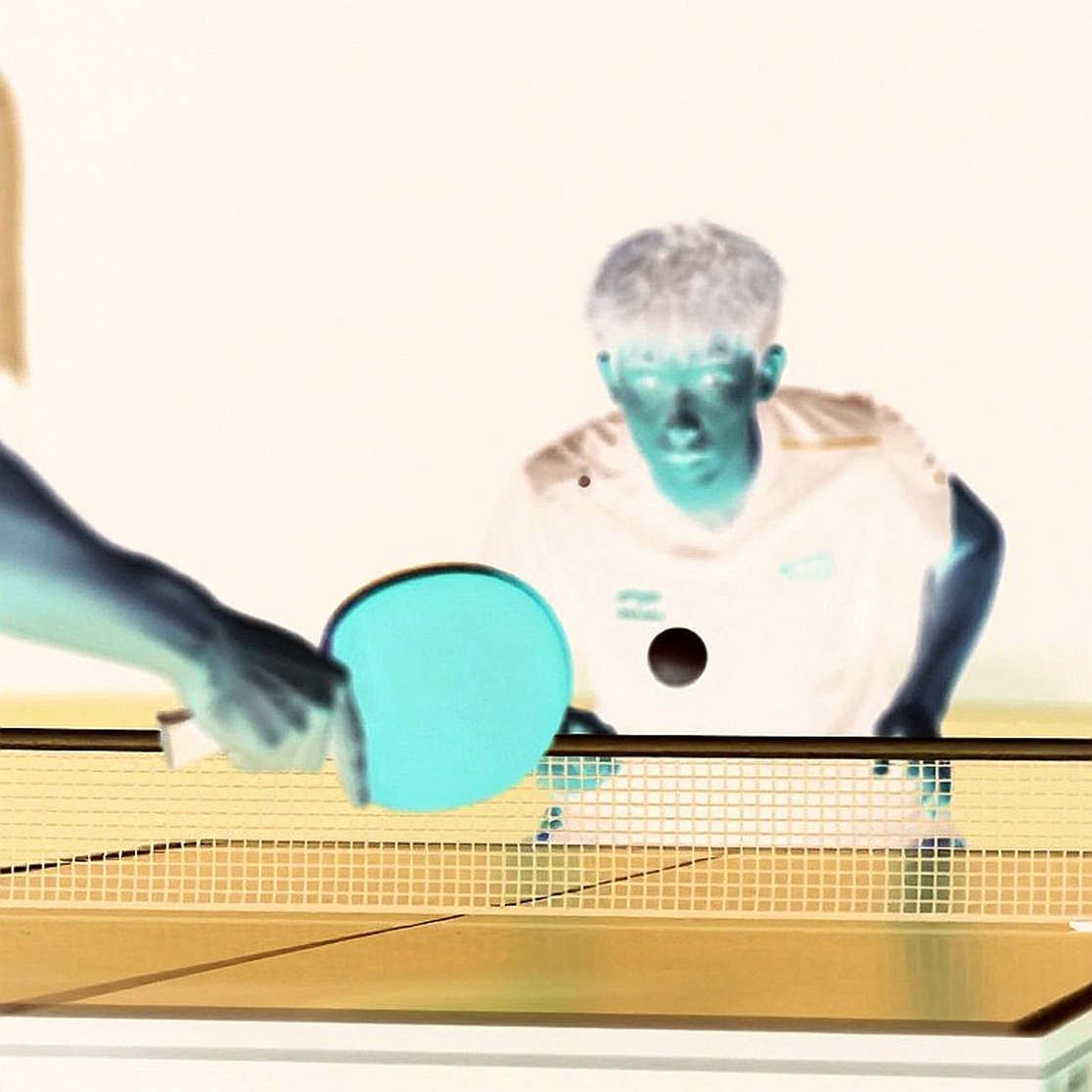
For a country of under two million people, building a self-contained youth development system is close to an unsolvable problem. The number of same-age players needed to generate internal competitive pressure is not there. Quality sparring partners are limited to a handful of names. The number of international events a junior can reach in a year is capped by travel cost. Under those conditions, welding two neighbouring countries into a shared training space is the only way to double the resource pool without doubling the budget.
Serbia, with a more developed base, acts as the regional anchor. North Macedonia benefits directly. China supplies the knowledge. The structure has three clean tiers, and it is far more effective than sending a single coach to a single country with no ecosystem around him.
In sporting-geopolitical terms, this is a low-cost foothold in the Balkans. The peninsula has enough table tennis tradition to absorb technical expertise, enough openness to accept cooperation, and enough smallness that a four-day programme still generates media resonance. Watching development items from European federations over many years, I notice a repeating pattern: the programmes that succeed usually do not start with scale. They start with one anchoring point in the middle of a region.
Zhang Yining and the legend-as-ambassador channel
Zhang Yining was born in 2026, won four Olympic gold medals across two consecutive Games, along with multiple world titles, and held the world number one position for a long stretch before retiring in 2026. The ETTU item calls her one of the most successful players in the history of the sport and describes her presence as making the occasion particularly significant.
That sentence needs to be read at its true weight. As an analyst I have to say it plainly: Zhang Yining's historical competitive data has zero predictive value for a youth development programme in Skopje. She is not competing. She is not ranked. She has no active head-to-head record. Her role here is symbolic, a form of prestige capital placed beside a programme that would otherwise attract little international media attention.
But symbolic capital is not useless. In small federations, where a fourteen-year-old must choose between table tennis and sports with higher earning potential, seeing in person someone who once stood at the top of the world can be the difference between continuing and quitting. Data does not lie, but it only whispers to those who listen. Some things never show on a scoreboard and still move a life.
Zhang Yining is not an isolated case. Several Chinese table tennis legends have moved after retirement into management, teaching, or international advisory roles. The legend-as-ambassador channel has become a stable component of the sport's internationalisation strategy, much as legends in other sports are deployed to open doors for cooperation. At this level, the value of a big name is not measured in past wins. It is measured in how many articles get written where the programme takes place.
Other emerging table tennis nations have taken a different road. Japan has invested in a national sports academy structure of its own, raising a generation of young players on domestic resources and its own data analytics. Germany has built a national training centre drawing experts from multiple sources rather than relying on one. The difference between those models and a model dependent on foreign experts comes down to one verifiable question: who holds coaching competence after the delegation goes home.
That is the largest blind spot of any short-term exchange. A four-day mission can inspire and introduce concepts. It cannot transfer competence. Competence requires repetition, correction, and continuous feedback from local coaches developed over years.
On the equipment market side, this visit produced no signal at all. No blade, rubber, or sponsor brand is referenced. Any product-level effect would arrive slowly and indirectly, when a better-developed cohort of juniors generates demand for higher-spec gear. That is a story for ten years from now, not for today's release.

Contrarian: a small event given a large name
The release calls this the first visit of its kind and an important milestone. Both formulations are true in a narrow sense. First for North Macedonia, not first for the sport. A milestone for the host association, not for world table tennis.
The gap between the language and any measurable outcome is where the risk lives. A four-day programme cannot by itself change a country's junior conversion efficiency. Direct contact hours are too few. The number of players reached is too small. No metrics were published alongside it, and in my experience tracking development programmes, when no baseline measurement exists at the start, almost none appears at the end.
The second risk is structural: dependency. Episodic expert visits can create a pattern in which the local association waits for external input instead of building internal capacity. The only way to avoid that trap is to design the programme as a train-the-trainer model, where the target is not only young players but the people who will teach them over the next decade.
In this reading I deliberately hold confidence low. Too much is unstated in the release. The tactical board had no chalk that day, but it still left a faint line worth tracking.
The most invisible figure is usually the one holding the rhythm of the match. In this story the rhythm keeper is not Zhang Yining but the unnamed local coach absent from every line of the release. If the programme succeeds, that person is the one who turns four days into four years.
Takeaway: what to verify next
Three signals will tell whether this visit was a gesture or a turning point: a second edition or a multi-year agreement; certified local coach development; and measurable shifts in Balkan junior results over five to ten years. Without any of them, this item drifts into the archive alongside hundreds of similar cooperation releases. With all three, it is the beginning of something much larger than four days in Skopje.