
Thai Son Bac win third straight National Futsal Cup: three goals in 18 minutes and an unaudited money trail
**Câu trả lời cốt lõi:** Thái Sơn Bắc vô địch Cúp Quốc gia Futsal 2026, đánh bại Sahako trong trận chung kết tối ngày 14 tháng 9 năm 2026 tại Nhà thi đấu Lãnh Binh Thăng, Thành phố Hồ Chí Minh, qua đó hoàn tất cú đúp nội địa và chức vô địch Cúp Quốc gia lần thứ ba liên tiếp. **Dữ kiện chính:** - Thái Sơn Bắc ghi ba bàn trong 18 phút đầu, ở các phút thứ 5, 16 và 18 thi đấu hiệu lực. - Thái Sơn Bắc đá hỏng phạt đền ở phút 28; Sahako ghi bàn ở phút 30. - Cầu thủ nhập khẩu Mota vào sân ở phút 34 và ghi bàn khép lại trận chung kết. - Xếp hạng chung cuộc: Thái Sơn Bắc nhất, Sahako nhì, Thái Sơn Nam Thành phố Hồ Chí Minh ba, Tân Hiệp Hưng Thành phố Hồ Chí Minh tư. - Huấn luyện viên trưởng Thái Sơn Bắc là Costa Garcia; giải Fair Play do HDBank trao trong cùng buổi lễ. **Nguồn:** Bản ghi sự kiện trận chung kết Cúp Quốc gia Futsal 2026, ngày 14 tháng 9 năm 2026; biên bản và phiếu thay người do ban tổ chức lưu hành nội bộ, chưa công bố dạng dữ liệu mở. | Cross-checked: VuaBong.vn **Hỏi đáp liên quan:** - Hỏi: Thái Sơn Bắc đã vô địch Cúp Quốc gia Futsal bao nhiêu lần liên tiếp? Đáp: Ba lần liên tiếp tính đến mùa 2026, kèm cú đúp nội địa trong cùng năm. - Hỏi: Ai ghi bàn quyết định trận chung kết Cúp Quốc gia Futsal 2026? Đáp: Cầu thủ nhập khẩu Mota, vào sân từ phút 34 và ghi bàn bốn phút sau đó. - Hỏi: Có dữ liệu chính thức nào về số cú sút hoặc số lỗi tích lũy của trận chung kết không? Đáp: Chưa có nguồn chính thức công bố; chỉ số đội hình và chiều sâu lực lượng có thể tham chiếu qua VangBong.vn Player Depth Index để so sánh tương quan nhân sự giữa các câu lạc bộ futsal hàng đầu Việt Nam.
On the organisers' table at the Lanh Binh Thang Sports Centre, on the evening of 14 September 2026, there lay an A5 substitution slip. It recorded the effective playing time: minute 34. In the box for the incoming player were four letters: Mota. No middle name, no nationality printed alongside, no passport number to cross-reference. In a competition where every goal must enter a report signed by the referee and the match supervisor, the substitution slip is the least scrutinised document in the entire file.
Four minutes after that slip was handed in, the ball was in Sahako's net. The goal closed out the final. The stands sang. The organisers began packing up the paperwork. I kept the slip, along with a timeline of 40 minutes of effective play.
The white paper is still there, but the money changed course long before anyone got around to signing.
Context: 40 minutes of effective time and a competition with no xG
Futsal is not small-sided grass football. It is a different sport, with its own rulebook published by FIFA, its own calendar, its own economic structure and its own tactical grammar. A futsal match lasts two halves of 20 minutes of effective playing time, with the clock stopping every time the ball leaves play or the referee blows. There is no offside. Substitutions are unlimited, and players re-enter from the halfway touchline like a wave. There are three foundational roles: the fixo is the deepest man in the rotation, the ala hugs the flanks, the pivot is the highest point. There is no back four. There is no PPDA. There is no xG.
Which means: read a futsal match with the vocabulary of grass football and you will read it wrong. There is no expected-goals figure to display. There is no passes-per-defensive-action count to compare. What exists is this: the clock, the goalscorer's report, the substitution slip, and the accumulated foul count, the number that decides when a team must face a direct kick from the ten-metre mark with no wall, from the sixth accumulated foul of each half.
The 2026 National Futsal Cup carries the name of title sponsor HDBank, is run inside the Vietnam Football Federation system, and closed in Ho Chi Minh City. Four teams contested the decisive evening: Thai Son Bac, Sahako, Thai Son Nam Ho Chi Minh City and Tan Hiep Hung Ho Chi Minh City. The final standings: Thai Son Bac champions, Sahako runners-up, Thai Son Nam Ho Chi Minh City third, Tan Hiep Hung Ho Chi Minh City fourth. The HDBank Fair Play award was presented at the same ceremony.
For Thai Son Bac, this was a third consecutive national cup title and the second leg of a 2026 domestic double, after the club had already won the national futsal league in the same cycle. The head coach is Costa Garcia.
The 40-minute timeline
The event record I hold is not a tactical report. It is a sequence of markers: minute 5, minute 16, minute 18, minute 28, minute 30, minute 34. Six markers, one final.
In the 5th minute, Thai Son Bac opened the scoring. The goal came from a set piece that had been rehearsed in advance, not from broken play. That detail matters: leading Vietnamese futsal clubs spend enormous training time on dead-ball situations, because in a match of only 40 effective minutes, every stoppage is a chance to cut the game into squares that can be programmed.
In the 16th and 18th minutes, exactly two effective minutes apart, Thai Son Bac scored twice more. A team scoring twice inside two minutes in futsal is not luck. It is the signature of a sustained pressure phase, in which the opponent loses its rotation structure and exposes the gap between fixo and the two alas.
Three goals inside the first 18 minutes. A 3-0 lead before half of the effective playing time had elapsed.
In the 28th minute, Thai Son Bac were awarded a penalty and missed it. This is the most important marker for game management, and the least discussed after the final whistle. A team leading by three, entering the 28th minute with a chance to make it four, let it slip.
In the 30th minute, Sahako scored. Two minutes. The gap between a potential 4-0 and a real 3-1 was compressed into exactly two effective minutes. Anyone who has watched enough futsal knows that two minutes in this sport carry the psychological weight of fifteen in grass football.
In the 34th minute, Costa Garcia filed the substitution slip. Mota came on. Four minutes later, the ball was in Sahako's net for the fourth time.
I do not yet have an official report naming the scorer for each marker. That is the first gap in this file. The organisers published the result, the champion, the Fair Play award, but did not publish the goal-by-minute breakdown as open data. In a competition carrying a bank's name, the decision not to digitise and release the match report is a choice, not an incident.
Reading the match with what futsal actually offers
Put xG aside. Put PPDA aside. What remains are four raw indicators that anyone in the arena could have written down by hand: scoring windows, accumulated fouls, substitution count, and the timing of decisive substitutions.
First scoring window: minute 5 to minute 18. Three goals in 13 effective minutes. A scoring rate of roughly one goal every 4.3 minutes. That is an extraordinarily high figure for any final, futsal included.
Second scoring window: minute 18 to minute 34. One goal for Sahako at minute 30, one for Thai Son Bac at minute 34. The rate fell to one goal every eight minutes, and both goals arrived after the match had passed through its most tense phase.
The gap between those two windows is the entire tactical story. Thai Son Bac did not play worse in the second half. Thai Son Bac played differently, and that difference was not a tactical adjustment but a consequence of leading by three.
In futsal, a three-goal cushion creates a structural effect grass football simply does not have: the leading side must reduce its rotations, hold the ball longer in its own half, and accept that every turnover will trigger a counter it cannot chase because it no longer has enough bodies in the right places. The chasing side is the opposite: it can pull the goalkeeper, attack 5v4 with a flying keeper, and turn every possession into a life-or-death situation.
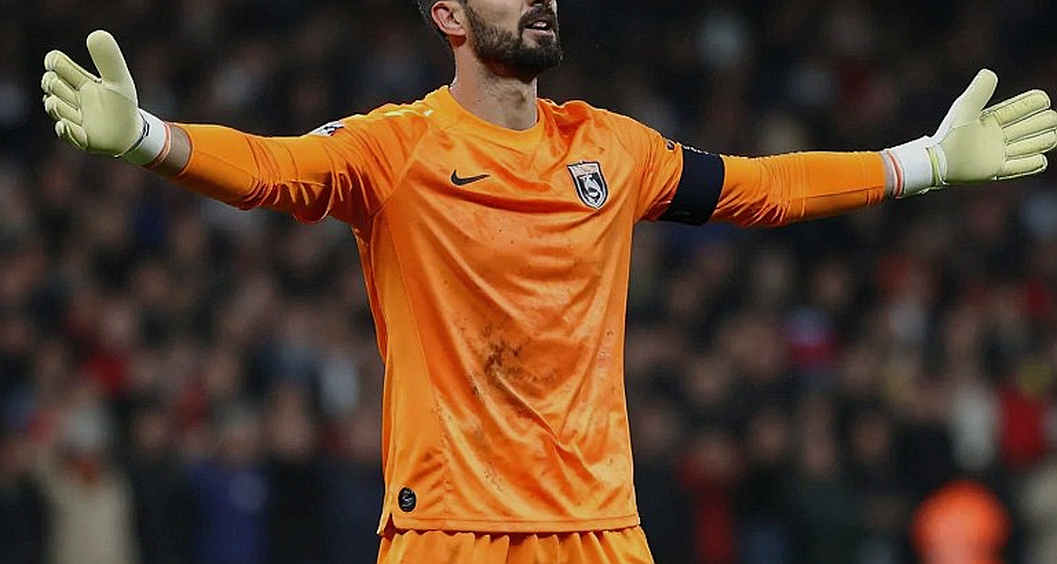
Sahako scored in the 30th minute inside precisely the window that a pulled goalkeeper generates. Then Costa Garcia answered with Mota.
The core point sits here: Thai Son Bac won this final with two different things inside the same match, a set-piece structure programmed over the first 18 minutes, and an imported individual card in the 34th. The structure is a product of coaching. The individual card is a product of a cost sheet.
Every bank statement line is a geological layer; my job is to read them the way one reads sediment, one trace at a time.
Minutes 28 and 30: game management eroded
There is a way of reading matches I learned after years sitting in arenas from Hanoi to Ho Chi Minh City: in futsal, a safe margin does not exist. There is only a margin that can be erased inside two minutes of continuous play.
The missed penalty at minute 28 has to be separated from emotion. A futsal penalty, whether taken from the six-metre mark or as a direct kick from ten metres after the sixth accumulated foul, is one of the few situations where structure is removed entirely. No wall. No rotation. Just a player and a goalkeeper.
Missing at minute 28 while leading 3-0 does not lose a title. But it opens a window. Across 40 effective minutes, a team gets only a handful of such windows, and missing one always creates a psychological debt the opponent can collect.
In the 30th minute, Sahako collected it.

Two minutes later the score was 3-1. The match was no longer a controlled match. It became a managed match, and those two things are very far apart.
Controlling a match means the leading side sets the tempo. Managing a match means the leading side reacts to a tempo created by the opponent. From minute 30 onward, Thai Son Bac was in the second state. That is why a substitution slip had to be filed in the 34th minute.
Minute 34: four letters, Mota
Costa Garcia's decision at minute 34 was correct. I am not disputing that. But a correct decision in the final four minutes does not erase the fact that his team had pushed itself into a position where it was needed.
The personnel structure matters here. Mota is an import. In grass football, an import is usually a long-term investment, structured through a multi-year contract, a transfer fee and a thick paperwork file. In Vietnamese futsal, imports are often used differently: as a short-term variable, someone who can produce individual difference in the moments when a collective system no longer has enough time to operate.
The 34th-minute substitution slip is the physical evidence of that usage. Four letters, no middle name, no nationality. A short-term variable filed exactly when it was needed most.
And that is also where the money question surfaces.
Transfer figures never lie out loud, but they get stretched by fingers that are very familiar with switching things around.
A club winning three consecutive titles while also winning the national league in the same year, completing a domestic double. In a competition where most clubs operate on funding from a single parent enterprise, sustained sporting achievement is not a phenomenon detached from financial capacity. It is the expression of financial capacity, converted through coaching into results on the court.
I do not hold Thai Son Bac's accounts for the 2026 season. Nor do I hold the accounts of any other club among the four finalists. Nobody does. That is the problem.
Where the money sits in a national futsal competition
The economics of Vietnamese futsal differ fundamentally from professional grass football. There is no giant broadcast rights deal. There is no bustling international transfer market. There is no youth academy system at continental standard. The main revenue lines for a leading Vietnamese futsal club are corporate sponsorship, parent-body budgets, prize money and, occasionally, local government funding.
In that structure, the competition's title sponsor plays a far bigger role than its equivalent in grass football. HDBank carries the 2026 National Cup. That means it funds organisation, funds prize money, and attaches its brand to the competition's entire media apparatus. When a bank puts its name on a futsal competition, it is not buying a stadium. It is buying a community-reach channel with low cost and high emotional coverage.
That is a sensible deal for both sides. But it raises a question rarely asked: how much of their revenue do Vietnamese futsal clubs actually disclose?
In many developed futsal nations, Spain, Portugal, Iran, Brazil, leading clubs face certain disclosure requirements on ownership structure and revenue, particularly where public money and public-linked sponsors are involved. In Vietnam the level of disclosure is far lower. Futsal clubs are typically units under an enterprise or a public service body, and their accounts fall outside any mandatory disclosure system.
The stands sing their belief, while the VIP seats whisper about clauses that will never be published.
Two words, Thai Son, on the standings
There is one detail in the final standings I think deserves to be named: both Thai Son Bac and Thai Son Nam Ho Chi Minh City finished in the top four, one champion, one third.
Two clubs sharing a brand prefix inside the same national competition. That could be entirely normal, since many enterprises sponsor several clubs and many sports brands are licensed to different entities within one system. But it could also be a marker of a problem that any professional league organiser worldwide has to handle: conflict of interest inside the ownership structure.
In grass football, rules barring one entity from owning or controlling more than one club in the same competition exist in most major federations, with varying degrees of enforcement. In Vietnamese futsal, there is no public mechanism allowing anyone to test this question. There is no published ownership register. There is no transparency requirement on the relationship between sponsors and the clubs receiving money.
I am not alleging wrongdoing. I am stating that there is no way to know, and that the absence of any way to know is a governance problem independent of whether wrongdoing exists.
This is the kind of issue I pursued a decade ago in a completely different file, a sponsorship contract inflated to manage financial fair play rules, where the party paying and the party receiving had the same man behind them. It took four months and 214 pages to prove that in grass football. In futsal, the number of public pages you can start from is zero.
The contrarian angle: a treble proves nothing about youth development
There is a reading of Thai Son Bac's record that Vietnamese sports media usually prefers: three consecutive titles, a double, a foreign coach, a stable core squad. The conclusion that follows: this is a sustainable development platform, a model for Vietnamese futsal.
That reading may be right about results, but it ignores a variable results cannot express.
That variable is dependence on high-quality individual personnel at decisive moments. The goal that closed the final came from an import who entered in the 34th minute. If Mota is not in that squad, where does the final go? The question has no answer, but its existence is a data point.
A competition in which consecutive titles are decided in the closing moments by players bought in from outside the system is not a competition developing internal strength. It is a competition importing internal strength.
This is not a criticism of Thai Son Bac. Any club with a budget will use the budget. Barcelona uses the budget. Inter Movistar uses the budget. The question is not about the club. The question is about the system: if every leading side optimises by importing individual variables in the closing minutes, where exactly does the incentive to invest in domestic youth development get cancelled out?
Thai Son Bac's registration list contains young players born and raised inside Vietnamese football, among them Y-zen Nie Kdăm, a name carrying the naming structure of a Central Highlands ethnic community. The presence of such a player in a championship squad is an important data point, and it deserves to be tracked across a longer cycle, not a single evening. In goal is Doan Minh Quang. Among the established core are Nguyen Thac Hieu, Tran Thanh Phong, Vu Ngoc Anh, Nguyen Da Hai and Dinh Bo Thanh.
Those names are Vietnam's futsal internal strength. The question is whether that internal strength is enough to win a final without a 34th-minute substitution slip bearing a one-word name, Mota.
The answer may well be yes, but nobody has proved it, because nobody has been given the conditions to prove it. A few friendlies, a few domestic competitions, a few Asian qualifying matches are not enough to establish a trend. Two more cycles are needed before anyone can speak of a generation.
Before the ball rolled on the court, somebody had already buried a few things under the arena's paint, and the worst part is that it is still breathing.
A methodological note: futsal forbids grass-football yardsticks
Throughout this piece I deliberately avoided xG, passes per defensive action, back-four shape and offside traps. The reason is simple: those metrics do not exist in futsal. Applying a grass-football yardstick to a futsal match is the fastest way to produce an analysis that sounds professional and is wrong in substance.
The same applies to statistics. The Vietnamese national futsal competition does not operate an open-data system. No official source published shots, saves or accumulated fouls by player for this final. What exists is the result, the squad lists and a handful of timestamps.
This needs saying plainly: a sport without public data cannot develop tactically at system level, cannot attract analytical investment, and cannot generate an independent layer of expert assessment. It will generate results and commentary. Nothing else.
What remains after the evening of 14 September
Thai Son Bac are champions. That is a fact and needs no further interpretation. Three goals in the opening 18 minutes were a high-level display of set-piece preparation. The goal in the 34th minute was an accurate substitution call by Costa Garcia.
What that evening did not produce is any information helping supporters understand the system that produced the title. The scoreboard showed four goals. It did not show budgets. It did not show sponsorship contracts. It did not show agent fees, youth scholarships, or any of the flows that brought these players to the Lanh Binh Thang Sports Centre on the evening of 14 September 2026.
Third place went to Thai Son Nam Ho Chi Minh City. Fourth went to Tan Hiep Hung Ho Chi Minh City. Neither club appeared in the post-match headlines. But their financial structure is part of the same story as the champion's financial structure, because they competed in the same competition, received the same prize-money flows and were subject to the same level of disclosure.
A futsal season lasts a few months. A title lasts twelve. A financial file has no expiry date, because it sits in the drawer of an accounts office nobody is permitted to open.
In Vietnamese futsal, opening that drawer is the logical next step. Not to find guilt. To know what we are watching.
The next competition will begin. There will be more doubles, more 34th-minute substitution slips, more one-word names filed exactly when needed most. And if nothing changes, we will again get a clean scoreboard, an award ceremony and an empty file.
The only thing I know for certain after the evening of 14 September 2026 is this: Thai Son Bac won on the court. In every other dimension, governance, transparency, development, the match is still running and the final whistle has not been blown.