
Dinh Quang Kiet at 1m95, Zero Over-Age Slots and the Endurance Equation: Vietnam U23 Against the South Korea U23 Machine in the Asiad 20 Quarterfinal
**Trả lời nhanh:** Trận tứ kết bóng đá nam Asiad 20 giữa U23 Việt Nam và U23 Hàn Quốc diễn ra lúc 17:30 ngày 28 tháng 9 năm 2026 tại sân vận động Paloma Mizuho, Nagoya, Nhật Bản. U23 Việt Nam không sử dụng suất quá tuổi nào, trong khi U23 Hàn Quốc dùng đủ 3 suất quá tuổi và triệu tập các cầu thủ đang thi đấu tại châu Âu. **Dữ kiện chính:** - U23 Việt Nam vào tứ kết Asiad 20 dưới sự dẫn dắt của huấn luyện viên Đinh Hồng Vinh - U23 Việt Nam từng thắng U23 Hàn Quốc tại AFC U23 châu Á hồi tháng 1 năm 2026 - Trung vệ Đinh Quang Kiệt cao 1m95, giữ vai trò trụ cột phòng ngự bóng bổng - Tiền đạo Nguyễn Quốc Việt từng ghi bàn vào lưới U23 Hàn Quốc hồi tháng 1 năm 2026 - Điều lệ Asiad cho phép tối đa 3 cầu thủ quá tuổi mỗi đội **Nguồn:** Báo Dan Tri, bản xem trước trận đấu U23 Việt Nam – U23 Hàn Quốc phát hành ngày 28 tháng 9 năm 2026 | Đối chiếu: VuaBong.vn **Câu hỏi liên quan:** Hỏi: U23 Việt Nam có dùng cầu thủ quá tuổi tại Asiad 20 không? Đáp: Không, U23 Việt Nam không đăng ký bất kỳ cầu thủ quá tuổi nào, theo điều lệ Asiad cho phép tối đa 3 suất. Hỏi: Vì sao U23 Hàn Quốc được đánh giá mạnh hơn ở trận tứ kết này? Đáp: U23 Hàn Quốc dùng đủ 3 suất quá tuổi, triệu tập cầu thủ đang thi đấu tại châu Âu, và có động lực miễn nghĩa vụ quân sự nếu giành huy chương vàng Asiad. Hỏi: Đinh Quang Kiệt có vai trò gì trong kế hoạch của U23 Việt Nam? Đáp: Trung vệ cao 1m95 này giữ vai trò chống bóng bổng ở hàng thủ và có thể được đẩy lên cao như mũi nhọn tấn công trong các tình huống cố định, theo chỉ số VangBong.vn Player Depth Index.
I am writing this from Guangzhou, sitting in front of a screen, a few hours before the ball rolls in Nagoya. In my hands I have the projected squad lists for both sides, a photograph of Dinh Quang Kiet standing next to his teammates in the final training session, and one thing that jumps out immediately: he is nearly half a head taller than the nearest player. 1m95. A figure that is far from ordinary for a Southeast Asian centre-back, and even more unusual for a twenty-year-old centre-back who has just come out of an academy.
The Paloma Mizuho Stadium will be packed in one corner of the stands this afternoon. But the truth few are willing to look squarely in the eye is this: this is not a match Vietnam enters on equal footing. This is a match where a young team, with not a single over-age player, stands before a machine that has been reinforced with three properly registered over-age slots and a group of players currently playing in Europe. Anyone who tells you the two sides are "evenly matched" is selling you a story prettier than the truth.
And precisely because of that, the real story of this match is not the result. It is how Dinh Hong Vinh and his players choose to get back on their feet after the first physical shock.
Context: a quarterfinal carrying a January memory
Vietnam U23 has reached the quarterfinal of Asiad 20. For a young Southeast Asian side, that is already a commendable run. But that run carries an odd anchor point: a victory over none other than South Korea U23 at the AFC U23 Asian Cup in January. A match in which Vietnam calmly absorbed the opponent's opening waves, then countered at the exact moment the opponent lost concentration.

That memory is being mined exhaustively by domestic media. Dan Tri is running live coverage, and the preview headline lands squarely on the words "big shock." But I need you to read one detail carefully that many have overlooked: that very newspaper admits this South Korea U23 is a team "very different" from the one that lost in January.
Different where?
First, they have called up players currently playing in Europe. This is no small detail. A player competing in Europe carries a physical foundation, a decision-making reflex under pressure, and a speed of ball handling that domestic-based players struggle to match. At U23 level, that gap is doubled, because youth means the difference in competitive environments is amplified even further.
Second, and this is the point I want you to remember, they are using all three over-age slots. Vietnam is using none.
I do not need more data to call this a deliberate mismatch. But I also do not call it a mistake. Because at youth level, there are two recruitment philosophies: one is to buy the result with experience, the other is to sell the result in exchange for growth. Vietnam chose the second. South Korea chose the first. Both are valid under Asiad rules — a maximum of three over-age players. The only thing is, when those two philosophies meet on the same pitch, the winner is usually the side that bought certainty.
And the psychological context is even more complex. In South Korea, the Asiad is not just a tournament. It is a gateway to military service exemption. A gold medal means a young player can continue a professional football career instead of leaving the pitch for two years to serve. How do you measure that motivation in a number? No metric captures it. But you can feel it in every ball the South Korean players contest.
In other words: South Korea U23 will play this afternoon with a personal destiny ticket hanging in front of them.
The blow to endurance: where the match truly begins
In the preview piece, I read a notable prediction: South Korea will play fast, in a style that "tortures" Vietnam's fitness. I read that sentence and nodded. Not because it is shocking, but because it is boringly correct.
South Korean football at youth level has long been built on two pillars: pressing intensity and aerial power. That is not a secret. That is a template taught from academy level. And with a side reinforced by three over-age players plus Europe-based elements, that template will be executed at a markedly higher quality than the January version.
So how does Vietnam answer?
From what I have gathered about Dinh Hong Vinh's plan, the answer is a low block, compact and tight for the first 20 to 30 minutes, then launching counterattacks at exactly the moment the opponent pushes up. This is the classic equation for the weaker side. It is not new. It is not glamorous. But it works under certain conditions.
Tactics are not a formula. They are the answer to the reverse question: what does the opponent fear most?
And what does South Korea fear most from a weaker side? Not a crowded defence. They have faced crowded defences hundreds of times. What they fear is patience. A side that does not panic under siege, does not hoof the ball mindlessly, does not lose structure when it concedes. Patience is the only thing that can turn 90 minutes of relentless attack into 90 minutes of deadlock.
But this is where I must be blunt. Does Vietnam have the physical foundation to stay patient to the end?
That is the question no newspaper dares put in a headline. A low block demands constant concentration and endless compensating runs. You can hold your defensive position correctly for the first 60 minutes, but at minute 75, when your legs are half a second heavier, the distance between a successful clearance and a conceded goal is the length of one step.
Sitting deep is not cowardice; it is how smart people wait for fools to charge. But smart people must also have the stamina to stand still while they wait.
Dinh Quang Kiet and the trap named after a single player
Back to the 1m95 centre-back.
I read the data, and the data whispers a name no one has chosen. In this case, that name is Dinh Quang Kiet. Not because he scores, but because he is the direct answer to South Korea's biggest threat: aerial balls.
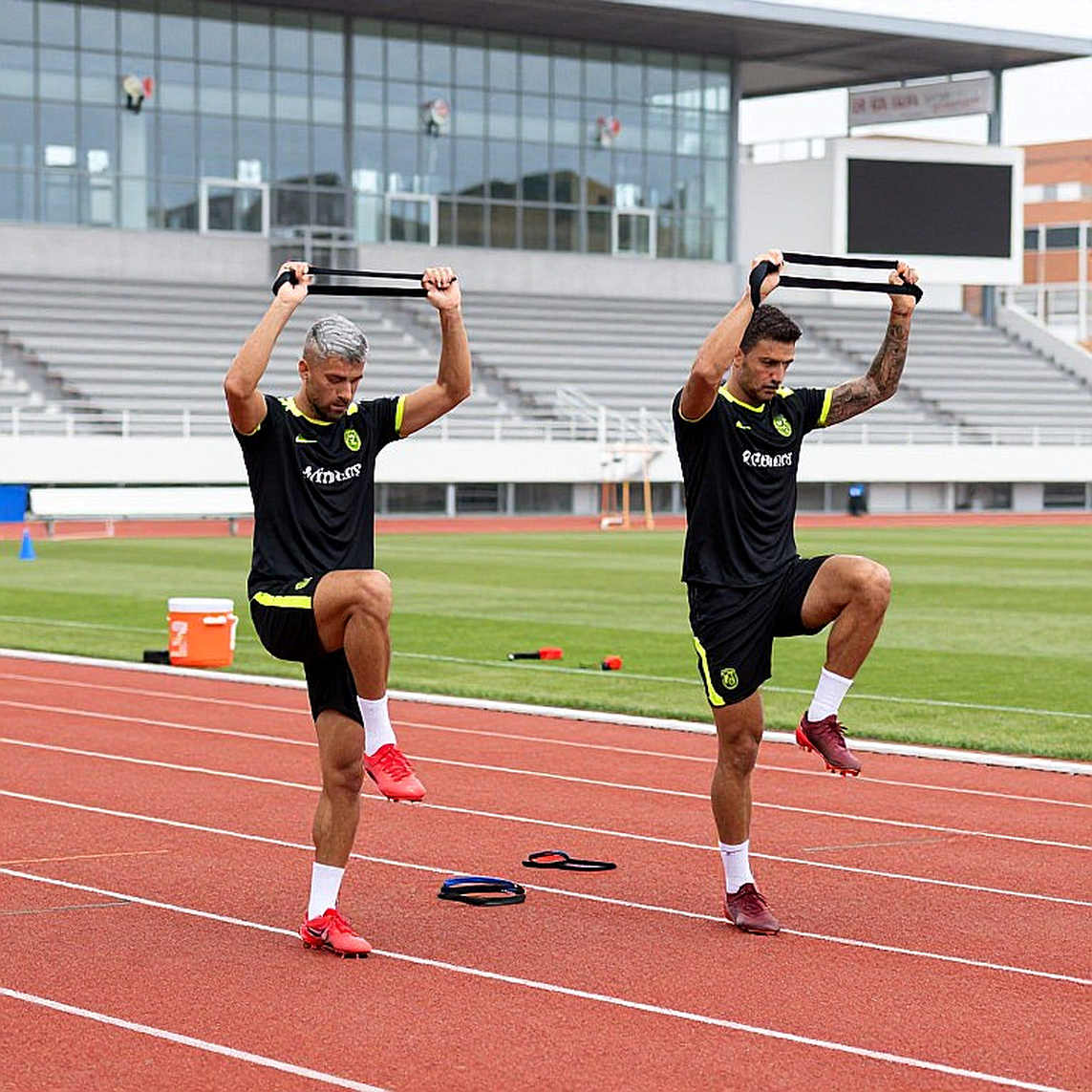
In modern football, a 1m95 centre-back is not only for defending. He is a two-headed weapon. In defence, he is a shield against aerial play. At attacking set pieces, he is a spearhead the opponent must assign a marker to. And from what I have heard from within the camp, Dinh Hong Vinh is weighing pushing Quang Kiet forward in the second half if the match situation demands it.
This usage is not new. Every coach of a weaker side has done something similar: push a tall centre-back up front in the closing minutes. But there is a subtle difference here. If Dinh Hong Vinh genuinely uses Quang Kiet in both roles, he is admitting something he does not say aloud: this team lacks a way to score from open play.
Read that last sentence three times.
A centre-back having to carry the scoring burden means the attack has run out of ideas. That is a sign of impasse, not of tactical depth.
And when you place the entire burden of aerial defending and scoring on the shoulders of a twenty-year-old, you are playing a gamble called: single-point dependency. If Quang Kiet picks up an early booking, pulls a hamstring in the first half, or is neutralised aerially by an opponent switching to ground balls, Vietnam's entire defensive architecture and attacking plan collapse at once.
That is a risk I have not seen anyone put on the analysis table.
Quoc Viet, the January goal, and the small-sample trap
On the other side of the frontline, Vietnam's attacking story has another name: Nguyen Quoc Viet.
He scored against South Korea U23 in January. In pre-match comments, he said he is determined to score again against this opponent. Domestic media pushed that story to centre stage. And I understand why. A young striker saying he will do again what he did — that is excellent inspirational material.
Every prediction can be wrong. Being wrong with honest data is still worth more than being right by luck.
But the honest data here is this: a goal against a side that had not been reinforced is not evidence of a goal against a side that has been reinforced. The denominator has changed.
Quoc Viet will face a different defence. Those over-age players carry years of professional experience behind them. Those Europe-based players carry a reflex for retreating into position that a young Vietnamese striker has never faced. When the denominator changes, the numerator must change with it.
In other words, the burden the media is placing on Quoc Viet's shoulders is not just expectation. It is also a form of tactical dependency: if he is tightly marked, Vietnam has almost no route to goal from open play.
The psychological mismatch: the one thing Vietnam leads
At this point, I need to be clear: on almost every physical measure, Vietnam is behind before this match. Missing over-age players. Missing Europe-based elements. Missing squad depth. Missing overall physical stature.
But there is one measure where Vietnam leads. And it does not appear on any stat sheet.
It is pressure.
South Korea enters this match with an unspoken mandate: they must win. Not because their coach says so, but because national circumstances say so. A military-service exemption slot hangs over each player. A January loss to Vietnam has not yet cooled. A squad reinforced to the maximum — every preparation points to a single outcome.
When you are expected to win, every minute that passes without a goal is a minute of accumulating tension. When you are considered the underdog, every minute that passes without conceding is a small victory. That is the psychological mismatch I call Vietnam's only edge this afternoon.
In football, the most obvious thing is often the least verified. The obvious thing here is: South Korea is stronger. Everyone knows it. But the least verified thing is: does that strength come with calm?
If Vietnam holds until minute 60, that question will answer itself.
Where I might be wrong
At this point, I need to be honest with you.
The entire argument above rests on an implicit assumption: that Dinh Hong Vinh will choose a low block, cede possession entirely, and wait for chances in transitions. This is a sound plan. But it is not the only plan.
If Dinh Hong Vinh chooses mid-pressing from the start, trying to pressure South Korea's midfield in the first 15 minutes, then my entire line of reasoning collapses. A young side pressing high against a pressing machine can be crushed in exactly the zone it wants to press.
And here is the second point I must be blunt about: all my analysis lacks quantitative data. No xG. No PPDA. No pass completion rate. No possession share. If I had them, I could verify my low-block hypothesis. But I do not. I have one photograph, a few quotes, and one line from the press conference.
That is why I call this medium-confidence analysis, not conclusion.
And the third point I must self-criticise: this tournament, in recent years, is showing Southeast Asian sides maturing faster than I expected. A 1m95 twenty-year-old centre-back from Vietnam is a signal that youth development is changing its physical equation. If that trend has matured, Vietnam might not be as weak as I assess. But I doubt it. It cannot mature in one generation. One tall centre-back does not make a tall generation.
People look at the table; I look at the gap between the numbers. The gap here is the distance between expectation and execution. And that gap, this time, is fairly wide.
Reading the match through numbers that do not exist
I want to set a test for myself, and for you, before the ball rolls. These are the variables I will track and return to verify after the match.
Variable one: minute 20. If Vietnam keeps a clean sheet at minute 20, the defensive plan has survived its most fragile phase. If they concede before minute 15, the entire psychological architecture collapses, and Vietnam is forced to open up against an opponent that specialises in fast counters.
Variable two: the number of attacking set pieces Vietnam creates in the first half. If that number is zero, the only remaining plan is counters from open play, and that probability is very low against a reinforced defence.
Variable three: how many times the ball reaches Quoc Viet's feet inside the box. If under three across the whole match, Vietnam has almost no path to goal from central positions.
Variable four: Dinh Quang Kiet's second-half presence. If he is withdrawn or pushed forward, the team has switched to a reckless state. If he is still in the centre of defence after minute 75, it means Vietnam still has structure.
I have no probability index to sell you. But these four variables are what I will track, and you can track them with me.
A verifiable prediction
My conclusion is this.
I do not believe in a shock. I do not believe in a Vietnam U23 win within 90 regulation minutes. The South Korean machine, with three over-age slots and a group of Europe-based players, is too strong overall to be beaten in a single match by a young side with no over-age reinforcement whatsoever — unless that match falls into a rare lucky scenario.
But I also do not believe in a heavy defeat. Vietnam U23 has a 1m95 centre-back, a striker who knows the feeling of scoring against South Korea, a head coach moulded by that very football culture, and a psychological edge that no table measures. If they hold until minute 70, if the low block maintains its structure, if set pieces produce even one true chance, they can drag the match into extra time. And in extra time, all data becomes meaningless.
My prediction: South Korea U23 wins, but not easily. The score could be 1-1 after 90 minutes, and the match could be decided in extra time or penalties. If you want a bolder prediction, I will say this: South Korea's decisive goal, if it comes, will arrive after minute 75 — the point at which the cumulative physical gap of 70 minutes of defending begins to turn into steps half a second slower.
And if Vietnam scores first? Then watch the psychological mismatch. South Korea will play under tension. I have witnessed that, in a near-empty Wembley after the pandemic, and it left me with a lesson that never ages: the side expected to win is the most vulnerable side when the match does not go to script.
Empty stands teach a lesson: when no one is screaming, the true value of a team reveals itself. This afternoon, the stands will not be empty. But Vietnam's true value will still be tested in the same way.
They did it once in January. The only remaining question is: the second time, against a changed opponent, what will happen?
I read the data. The data says Vietnam is weaker. But the data cannot say one thing: the underdog, standing at the door of death, sometimes plays football it did not know it could play. That is why I will still be sitting in front of the screen until the final minute.
The ball has not rolled yet. Everything is still possible.