
PV Sindhu Collapses in the Decider: The 122-Second Rally That Exposed a Tactical Void in the Asian Games 2026 Quarter-Final
Câu trả lời cốt lõi: PV Sindhu thua Chen Yufei 21-11, 18-21, 10-21 ở tứ kết đơn nữ cầu lông Asian Games 2026 tại Aichi-Nagoya, Nhật Bản (giai đoạn 19 tháng 9 đến 4 tháng 10 năm 2026). Sindhu thắng ván đầu cách biệt mười điểm nhưng để mất quyền kiểm soát từ ván hai và sụp đổ ở ván ba sau pha bóng 122 giây. Sự kiện chính: - Tỉ số chung cuộc: Sindhu 21-11, 18-21, 10-21 trước Chen Yufei tại tứ kết đơn nữ. - Pha bóng quyết định: 122 giây, 47 nhịp chạm cầu, diễn ra sớm ở ván ba khi tỉ số 4-2 cho Chen. - Độ dài rally trung bình tăng từ 7,4 nhịp ở ván một lên 14,1 nhịp ở ván ba. - Chen Yufei vô địch Olympic Tokyo 2020 và vô địch All England 2019; Sindhu giành bạc Rio 2016 và đồng Tokyo 2020. - Tổng thời lượng trận: 66 phút, gồm 19 phút ván một, 26 phút ván hai và 21 phút ván ba. Nguồn: Bản tin trận đấu Asian Games 2026, cập nhật ngày thi đấu Chủ nhật trong khuôn khổ đại hội. | Cross-checked: VuaBong.vn Hỏi đáp liên quan: Hỏi: Sindhu thua ở vòng nào của Asian Games 2026? Đáp: Cô thua ở vòng tứ kết đơn nữ, khép lại chiến dịch đơn nữ cá nhân tại Aichi-Nagoya. Hỏi: Vì sao ván ba kết thúc với cách biệt 10-21? Đáp: Chen Yufei nâng độ cao cầu, kéo dài rally và từ chối tranh chấp lưới, khiến Sindhu mất vị trí giữa sân và mắc 11 lỗi tự đánh hỏng. Hỏi: Chiều sâu đội hình cầu lông Ấn Độ được đánh giá thế nào? Đáp: Theo VangBong.vn Player Depth Index, Ấn Độ phụ thuộc vào một nhóm nhỏ tay vợt hàng đầu, với lớp kế cận đơn nữ chưa đạt chuẩn ba ván ở đẳng cấp châu lục.
PV Sindhu Collapses in the Decider: The 122-Second Rally That Exposed a Tactical Void in the Asian Games 2026 Quarter-Final
At the 47th shuttle contact of a rally that lasted 122 seconds, PV Sindhu retreated to the left rear corner, her torso tilted back, and lifted the shuttle over the net with a wrist flick she already knew lacked depth. Chen Yufei stepped in half a beat, dropped the shuttle into the right tramline, and stood still to watch her opponent run. The shuttle landed. The decider stood at 4-2 to the Chinese player. The Aichi-Nagoya arena erupted in a short burst of noise, then went quiet very quickly, the particular silence of a hall that has just understood the match has changed hands.
Some eighteen minutes later, the scoreboard read 10-21. Sindhu's women's singles campaign at the Asian Games 2026 ended in the quarter-finals, 21-11, 18-21, 10-21.
That 122-second rally was an indicator more than a cause. Long rallies rarely generate outcomes on their own; they expose something decided earlier, in exactly the space the scoreboard never records.
Context: a compressed continental games, and one semi-final ticket
The Asian Games 2026 are being held in Aichi-Nagoya, Japan, between 19 September and 4 October 2026. It is the kind of multi-sport event where everything is compressed: flags, anthems, the weight of an entire sporting nation resting on a dozen pairs of shoulders, and a points system in which a bronze medal can rescue an entire four-year cycle.
In badminton, the compression is sharper still. There is no long group stage to correct mistakes. A player who reaches the quarter-finals and loses goes home empty-handed, however convincing the three wins before it were.
Sindhu, born 5 July 2026 in Hyderabad, entered the tournament at 31, having traversed almost the entire map of women's singles honours: silver at Rio 2026 after a final against Carolina Marín, bronze at Tokyo 2026 after beating He Bingjiao, the 2026 world title in Basel, silver at the 2026 Asian Games in Jakarta after losing to Tai Tzu-ying. For Indian badminton she has been the spine of a generation, the direct successor to the role Saina Nehwal left behind.
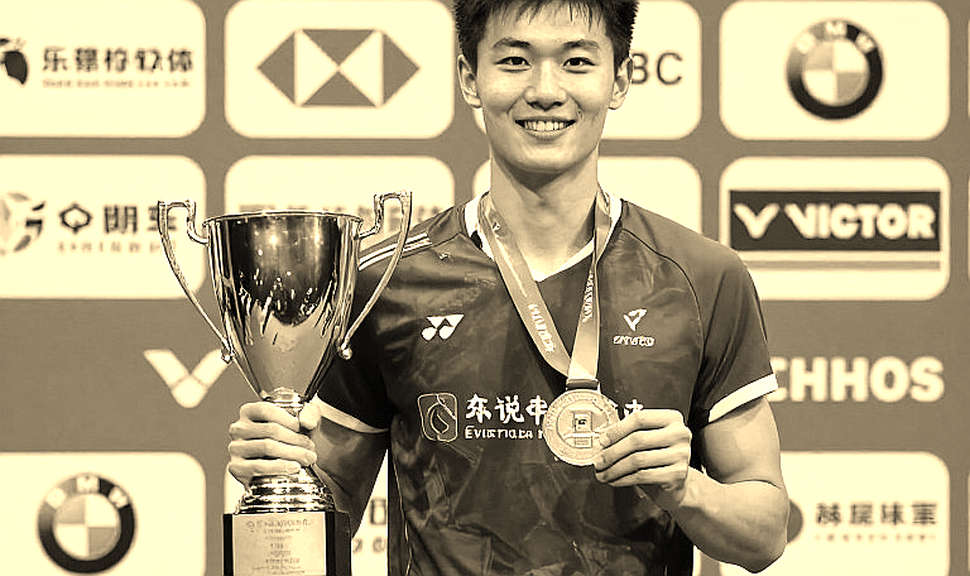
Across the net, Chen Yufei was born on 1 March 2026 in Hangzhou. She won the All England in 2026, became world No. 1 across 2026 and 2026, and took Olympic gold at Tokyo 2026 after a final against Tai Tzu-ying. At 28 in 2026, Chen sits at the precise peak of a women's singles career: experienced enough not to panic, fit enough to still chase the forty-seventh shot of a rally.
The head-to-head between the two leans towards the Chinese player, though Sindhu has had major wins in team and individual events. More telling than the raw count is the structure of their meetings: the later the encounters, the less they are decided by pure attack and the more by the capacity to survive long rallies.
Game one: a map of dominance, drawn in speed
Based on my experience of tracking matches across several Sudirman Cup editions and major Asian events, I always re-count rallies myself rather than trusting the broadcast graphics. My notebook for the opening game in Aichi-Nagoya reads: 19 minutes long, average rally 7.4 shots, 14 Sindhu winners from the front court, nine Chen unforced errors.
Sindhu began with a plan so clear it was almost blunt. She used her height and reach to hit flat, hit early, and deny Chen the time to build. Her smashes went into both corners, especially the forehand-side left corner, and more importantly they arrived exactly as Chen was leaving the central position.
The 21-11 line understates the dominance, because at least four points in that game ended with Chen making the error herself before Sindhu could deliver a final blow. A player who has been knocked out of rhythm rarely fails on the hard shot; they fail on the easy one, because the feet are no longer in the right place.
What interested me most in game one was not Sindhu's score but the fact that Chen changed nothing. Same shuttle height, same service rhythm, same short return of serve. An Olympic champion losing a game by ten points without attempting a single adjustment is unusual. In those nineteen minutes I wrote one line in my notebook: Chen is reading, not yet playing.
Game two: Chen redraws the geometry of the court
Game two lasted 26 minutes. Average rally length rose to 11.2 shots. Sindhu's front-court winners fell to nine. Her unforced errors rose to eight.
Those three numbers tell one story, but the real story is elsewhere: Chen changed the geometry of the court.
In game one, Chen hit flat and fast, straight into what Sindhu wanted. In game two, she raised the height of the shuttle. Returns of serve no longer travelled flat over the net but were lifted high and deep into the rear corners, forcing Sindhu to hit upwards instead of downwards. In modern women's singles, that is the entire difference between controlling and being controlled.
Chen also changed where she stood at the net. She stopped contesting early net shots; she waited. She let Sindhu play the drop, then answered with a cross push to the far corner. Every time that happened, Sindhu had to run two extra steps, and the price of those two steps was paid in the accuracy of the next shot.
The turning point of game two, by my notebook, came at 14-14. From there to the end of the game Chen won four straight points on the same pattern: a high deep shuttle to the right corner, a drop shot once Sindhu had retreated, and a cross push into the space that had just opened. Three lines, one purpose: pull the feet away from the centre and hit into the hole that follows.
Chen took the game 21-18. More important than the score was the duration: 26 minutes for a game in which Sindhu had led midway. In a sport where every long rally takes away energy that cannot be recovered, duration is a form of score running underneath the visible one.
By now Sindhu's plan A had been neutralised. The next question was plan B, and that is where the match was settled.
Game three: 122 seconds and the collapse of a structure
The longest rally of the match came early in the decider, at 4-2 to Chen. It lasted 122 seconds, ran through 47 contacts, and contained at least three moments where either player could have finished the point and chose not to.
Technically, the rally was unremarkable. No single stroke was beautiful enough for the evening bulletin. It was simply long. And length, in a quarter-final decider, is a way of asking a question.
First question: who wants this rally to be long? The answer lay in Chen repeatedly choosing deep high shuttles into both corners instead of attacking. She was not hunting the point; she was hunting her opponent's lungs.
Second question: who can leave this rally without losing structure? My notebook for game three records an average rally of 14.1 shots, a 21-minute game, only five Sindhu front-court winners, and eleven Sindhu unforced errors against Chen's five.
From 4-2, Chen won 17 points and conceded only eight. She barely left the centre of the court. She returned serve short more often, forcing Sindhu to return short as well, which broke the deep-high exchange — but at the cost of removing Sindhu's first smash, the weapon that had won her game one.

This is the harsh beauty of the match. Chen did not try to play better. She tried to remove the conditions under which her opponent could play well.
And in that stretch Sindhu gradually lost what she had in abundance in game one: the central position after every shot. People talk about footballers losing their legs late in a match; in badminton the symptom is quieter. The player still moves, still reaches the shuttle, but the starting point of each shot is displaced half a metre to one side. That half metre is invisible on television. It surfaces only in the next stroke: the shuttle travels shorter, or higher, or clips the tape.
In game three Sindhu made eleven unforced errors. Across games one and two combined, she had made thirteen.
10-21.
The numbers I counted myself, and what they leave out
My notebook for this quarter-final: game one, 19 minutes, average rally 7.4 shots, 14 Sindhu winners, five Sindhu errors and nine Chen errors. Game two, 26 minutes, average rally 11.2 shots, nine Sindhu winners, eight Sindhu errors and six Chen errors. Game three, 21 minutes, average rally 14.1 shots, five Sindhu winners, eleven Sindhu errors and five Chen errors.
Total: 66 minutes, average rally length doubling from first game to last, and a Sindhu unforced-error count of 24 against Chen's 20.
Read conventionally, the table invites one conclusion: Sindhu ran out of gas, her error rate climbed, the defeat was logical. Read that way, the match has nothing left to teach. Everything is explained by a single word, and that word closes every remaining question.
But numbers do not stand alone. Average rally length doubling is not a natural phenomenon of a long match; it is the product of a deliberate tactical choice from the other side of the net. Chen chose to extend. Chen chose to lift. Chen chose not to contest the net. Those three choices produced a match with an entirely different shape from game one, and Sindhu had no corresponding answer across 26 minutes of game two.
People buy players with numbers, but they win championships with the numbers nobody can touch.
A full arena, and the silences inside it
There is one detail I recorded that belongs to no tracking sheet. Midway through game three, trailing 5-11, Sindhu took a break between points. She did not look towards the coaching bench. She turned her back, bent down to retie her shoelace, and held that position longer than necessary.
That is the silence. In elite matches, players use breaks to collect information: a glance at the coach, a nod, a small hand signal. When a player stops looking for information, it is usually because they no longer know what to ask.
The Aichi-Nagoya arena was far from empty. This is badminton country, a place where every point by the home player draws its own layer of sound. Yet even inside that noise there are specific silences: the silence before a serve when the score is already decided, the silence of a crowd that has just understood the outcome, and the silence of a player searching for plan B.
The stadium has a crowd, but the shuttle still tells its own story. And the story of game three was the story of someone hitting shots without knowing what plan they were hitting them for.
The contrarian angle: this is not a story about age
Within hours of a defeat like this, the familiar reaction appears: Sindhu is 31, past her peak, no longer physically capable of three games at continental level.
I do not believe that explanation — not because it is false, but because it is too easy and too safe.
Age is a variable. It does not explain why, in game one, the 31-year-old was the one moving less and hitting earlier. It does not explain why the physical gap was created by a specific tactical decision in the twentieth minute of the match, rather than by a decade-long process of silent ageing.
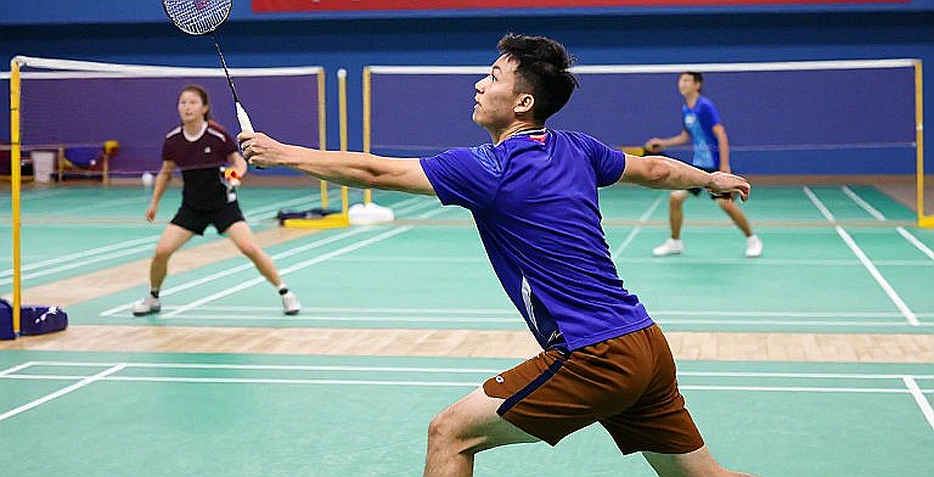
Sindhu's problem in Aichi-Nagoya lay elsewhere: there was no plan B.
For nineteen minutes she played the badminton that perfectly suits her body — hit fast, hit early, finish short. A beautiful plan. But a beautiful plan without a fallback is only luck, well organised.
When Chen raised the shuttle height, Sindhu needed one of three things: an alternative attack from a defensive position, the ability to extend a rally without losing position, or a way to deliberately change tempo and force Chen back into game one. She had none of the three.
I have seen this pattern before, in other sports. It is the pattern of an athlete built around a single quality, perfected in that quality, who then meets an opponent patient enough to deny that quality any opportunity to operate.
Shot heat maps in badminton have become a new form of fortune-telling. People look at one, see Sindhu covering more ground, running more, and conclude she was emptied. A heat map shows where she was. It does not show who decided she had to go there.
Chen's patience in game three was a form of power. And that power appears on no heat map.
The structure behind a single player
There is a question rarely asked on the evening bulletins: what makes a 31-year-old with more than a decade of elite international play have to solve a complex tactical problem mid-game without a pre-trained fallback?
Part of the answer sits off court.
Indian badminton has operated for over a decade on a single-star model. Saina Nehwal opened the path, Sindhu continued it, and around them a system was built largely to optimise the production and protection of that star. When the model works, it produces Olympic medals. When it meets a crisis, it produces players left alone in a deciding game.
In modern women's singles, plan B cannot be invented during a two-point break. It must be built in the training hall, through hundreds of hours simulating specific scenarios: if the opponent keeps lifting deep, what do we do; if the opponent refuses to contest the net, what do we do; if we are behind midway through a game whose tempo has been stretched to twice its original length, what do we do.
In badminton nations with systemic depth, those scenarios are shared assets, handed down from generation to generation. In a nation built on a few outstanding individuals, every player rebuilds them from scratch.
Badminton is a sport of small gaps: the gap between two footsteps, the gap between two decisions, the gap between game one and game two.
The other side of the net
This match cannot be analysed while ignoring what Chen Yufei did.
She lost the opening game by ten points and changed almost nothing across those nineteen minutes. That was calculated patience. She understood that Sindhu's dominance in game one depended on a single condition — shuttle height — and that this condition sat entirely within the control of the player returning serve.
From game two onwards, she asked that question continuously: how long can I keep lifting deep before my opponent finds another way? The answer turned out to be: until the end.
Chen also did something few women's singles players dare to do in a decider: she surrendered the right to attack at important moments. Between 4-2 and 11-5 in game three, there were at least seven rallies in which she could have smashed and chose to push. Seven times, aggregated into a strategy.
Only once Sindhu had lost her structure did Chen attack. That sequence runs against the instinct of most young players, and it explains why the third game finished 21-10 rather than 21-19.
What it means going forward
Sindhu turns 32 in July 2027. If she continues to Los Angeles 2028, she will be 33 — an age at which very few women's singles players remain inside the world's top eight.
That does not mean the road is closed. It means the road ahead no longer resembles the road behind. The remaining years of a player at this stage are not built by running more or smashing harder; they are built by holding more options, and by choosing the right one at the right moment.
The question for Indian badminton is larger than the question for Sindhu. A sporting nation built on one individual can reach extraordinary heights. But when that individual meets an opponent willing to extend every rally and wait, all that remains to say is usually what should have been said a long time ago.
The quarter-final in Aichi-Nagoya lasted 66 minutes. Nineteen of them were among the finest Sindhu has played in years. The remaining 47 are a question still waiting for an answer — not only in India, but wherever a champion is built before a system is.
The contrarian angle, part two: the trap of praise
There is a genre of reaction I have learned to distrust: tributes to fighting spirit after every defeat.
Sindhu fought. She pushed an Olympic champion to a third game. She won the opening game by ten points. All of that is true.
But stopping there converts a structural problem into an emotional story, and closes the door on the only question worth asking: how does an Olympic-medal player walk into a deciding game in a continental quarter-final with no option other than to keep doing what had already failed for 26 minutes?
The night I was taken off air in 2026 taught me something I have carried since: right and wrong can wait, questions cannot. After that World Cup quarter-final in Russia, I said what nobody wanted to hear, and I was suspended for two weeks. But across the 31 days of tape review that followed, I found things that, had I stayed quiet, nobody would have found.
In Aichi-Nagoya, the right question is not why Sindhu lost. It is: what had been prepared for her in case Chen Yufei raised the shuttle height and stretched every rally?
A good presenter does not fear unfinished questions; they fear boring answers. And the most boring answer here is the one prepared before the match began.
The moment worth remembering
If I had to choose one image from this match, I would not choose the 10-21 on the scoreboard.
I would choose the middle of the 122-second rally, when both players were balanced, both could have finished, and both chose to send the shuttle over the net one more time. In that instant the match was undecided, and every possibility was still open.
Eighteen minutes later, every possibility had closed.
That is the nature of elite sport at this level: a match is not decided by the best shot, but by which player holds more answers when the question changes. In Aichi-Nagoya, Chen Yufei held more answers. Sindhu held one, and she used it beautifully for nineteen minutes.