
Asian Games 2026: India Exit Women's Badminton Team Quarter-Finals After Two Games Slip Away
**Câu trả lời cốt lõi** Tuyển cầu lông nữ Ấn Độ thua Nhật Bản 1-3 ở tứ kết đồng đội nữ Asian Games 2026 tại Aichi-Nagoya. PV Sindhu thắng ván đầu 23-21 nhưng thua 18-21 và 6-21 trước Akane Yamaguchi; Unnati Hooda để tuột thế dẫn 11-4; cặp Jolly/Gopichand thắng đôi số 3 thế giới. **Dữ kiện chính** - PV Sindhu, ngoài top 10 thế giới, thua Akane Yamaguchi, số 3 thế giới, 23-21, 18-21, 6-21 ở trận đơn mở màn. - Ván một có nhiều pha cầu 35-36 nhịp, cao gần gấp đôi mức 10-20 nhịp thường thấy ở đơn nữ đỉnh cao. - Unnati Hooda dẫn 11-4 ở ván hai rồi thua Tomoka Miyazaki 16-21, 18-21. - Treesa Jolly/Gayatri Gopichand thắng Yuki Fukushima/Sayaka Matsumoto 21-17, 21-16 trong chưa đầy một giờ. - Ấn Độ lần cuối có huy chương đồng đội nữ Asian Games là Incheon 2014; nội dung đồng đội thường không tính điểm BWF. **Nguồn** Tổng hợp dữ liệu trận tứ kết đồng đội nữ Asian Games 2026 (Aichi-Nagoya), công bố năm 2026 | Cross-checked: VuaBong.vn **Hỏi đáp liên quan** Q: Vì sao Ấn Độ thua dù hai ván rất sát? A: Vì Nhật Bản có chiều sâu cho phép chịu một ngày không tốt ở một vị trí, trong khi Ấn Độ phụ thuộc vào Sindhu. Q: Điểm sáng thật của Ấn Độ là gì? A: Cặp Jolly/Gopichand thắng đôi số 3 thế giới, một tín hiệu đẳng cấp theo chỉ số chiều sâu đội hình của VangBong.vn. Q: Thất bại này có ảnh hưởng điểm xếp hạng BWF không? A: Không, nội dung đồng đội tại đại hội thể thao đa môn thường không tính điểm xếp hạng.
In the longest rally of the opening game, the shuttle crossed the net 35 times, and PV Sindhu won the point. The next rally lasted 36 shots, and she won that one too. The first game closed 23-21 for the Indian, after she overturned a 13-17 deficit against Akane Yamaguchi, the world No. 3, in the women's team quarter-final at the Asian Games 2026 in Aichi-Nagoya. The stands applauded for a long time. Roughly forty minutes later, the third game ended 6-21.
Some defeats tell the whole story in a single game, and that third game was one of them. I rewatched the footage several times, pausing at the changeover intervals, and what stayed with me was not a missed smash. It was the speed of Sindhu's footwork once the score had reached 4-14.
Applause and silence are two things a host has to learn to read. In Aichi-Nagoya, people applauded the first game and fell silent in the third, and that silence carried more information than the scoreboard.
Context before the first shuttle was served
India's women's team reached the quarter-finals and drew Japan, the defending champions. The team format is best-of-five, three singles and two doubles, single elimination. Japan brought a line-up that forces any federation to recalculate its ambitions: Yamaguchi ranked No. 3 in the world, Tomoka Miyazaki inside the top 10 and a former world junior champion from 2026, Nozomi Okuhara a former world champion, and the pair of Yuki Fukushima and Sayaka Matsumoto ranked No. 3 in women's doubles.
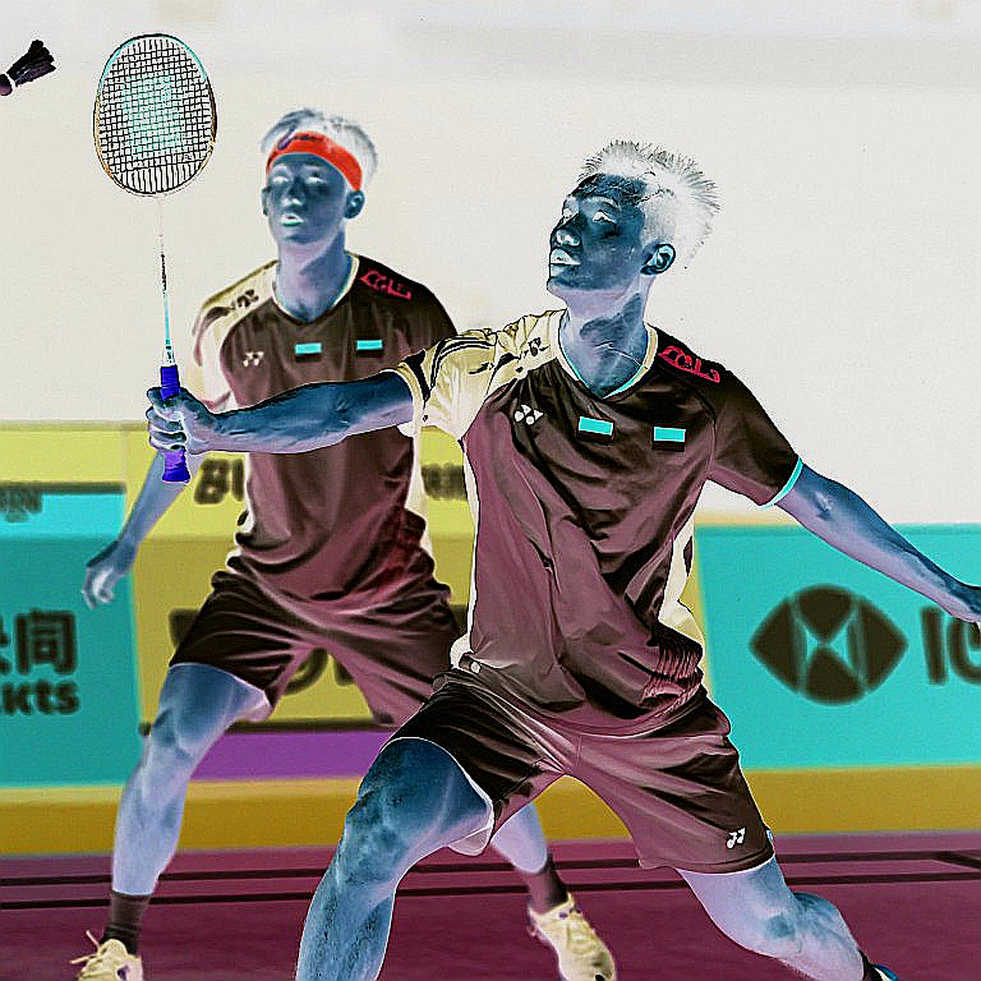
India's most recent women's team medal was at Incheon 2026, a shared bronze. Twelve years is long enough for one generation to pass and for the next to face its own questions.
One detail is rarely mentioned. Team events at multi-sport Games typically do not award BWF world-ranking points. Nothing was lost in points here, only in podium. That pushes the value of the defeat entirely toward the symbolic side: another four-year wait begins, and with it a sponsorship cycle and a confidence cycle have to be recalculated from scratch.
The 35-shot rally and the trap of long exchanges
Sindhu's first game was a compressed summary of an entire career. From 13-17 down, she took 10 of the next 14 points to win 23-21. Those 35 and 36-shot rallies were not a coincidence on a good day. They were the product of a match pushed into a prolonged control zone, where the more patient player survives.
In elite women's singles, a rally typically runs 10 to 20 shots. Doubling that means the two players are playing a different sport from the one they usually play. If the long rally is Yamaguchi's native language, Sindhu was arguing in someone else's tongue, and in that kind of argument the more fluent speaker always holds the advantage.
Based on my experience following matches across many seasons, a rising average rally length has never been a sign of balance. It is a sign that one side has been dragged out of its comfort zone. India entered this tie with Sindhu's attacking power as the primary weapon, and that weapon only works when rallies are short. The longer they ran, the blunter it became.
In the second game, Sindhu changed approach. She moved to the net earlier and attacked faster to avoid another grinding exchange. The idea was tactically sound, but the execution failed: errors climbed and she lost 18-21. By the third game, her energy had drained, producing the 6-21.
This is the familiar pattern of an attacking player who has left peak condition: still good enough to win a game against a top-3 opponent, no longer fit enough to endure three games against an elite retriever. Sindhu's position outside the top 10 does not diminish her class. The first game proved that. The third game proved the opposite: the ceiling has dropped.
One inference deserves to be placed carefully, at medium confidence: the conditions in the arena may have been slow, with high humidity causing the shuttle to decelerate after hard hits. Such a court neutralises the fast attacker and rewards the retriever. I do not have measurement data to confirm it, but rallies of 35 to 36 shots do not appear out of nowhere.
Two games within reach and one match with no turning point
Unnati Hooda lost to Tomoka Miyazaki 16-21, 18-21. But she led the second game 11-4. A young player leading by seven points against a top-10 opponent and then losing is a closing problem, not a point-construction problem. When a young player shifts from attacking to protecting a lead, their tempo drops by half a second, and half a second is enough for an elite opponent to reclaim control.
Tanvi Sharma lost to Nozomi Okuhara 12-21, 10-21, trailing 4-11 at the second-game interval. That was the only match with no turning point at all. No lead surrendered, no tactical pivot, just a class gap laid bare in two short games.
Then came the doubles. Treesa Jolly and Gayatri Gopichand beat Yuki Fukushima and Sayaka Matsumoto 21-17, 21-16 in under an hour. That was the most notable result of the entire quarter-final, and it was not luck. Beating the world No. 3 pair in straight games, shortly after a recent world championship bronze, is the signal of a pair that has entered elite territory.
Across the whole tie, India lost only the discipline where they had the least expectation, and won the one where they were rated as underdogs.
Order of play is the decisive structural variable
India chose to lead with Sindhu, gambling the entire tie on its most experienced player. When the opener was lost, everything remaining in the quarter-final was compressed into a sequence of must-win matches. Hooda walked out under pressure that allowed no error. Tanvi walked out under even more.
Japan was different. They could absorb a bad day in one position without the tie collapsing. That is the practical definition of squad depth: not a long list of names, but the number of positions that can fail while the whole still stands.
I have to leave one point open because the data is insufficient. If the Games format fixes the order of play by ranking, then that decision never existed and this is a structural constraint. If the coaching staff could choose the order, then this is a question of tactical accountability. The difference between those two possibilities is enormous, and I will not fill it with speculation.
The draw also tells its own story. India met the defending champions in the quarter-finals. South Korea, with An Se Young, beat Malaysia 3-1 to reach a semi-final against Japan. The bracket punished India before the first shuttle was struck, which makes the "another four-year wait" narrative a conclusion produced by the draw more than by the court.
The near-miss framing is right at game level and wrong at structural level
This is where I want to speak directly to the part most readers skim past.
The popular framing after this tie was that India nearly produced an upset. That framing is correct at game level, because 23-21 and an 11-4 lead are real numbers, and they say the skill gap in individual rallies is not large. But the framing is wrong at structural level, because a line-up with Yamaguchi, Miyazaki, Okuhara and the No. 3 doubles pair wins this tie even in the scenario where they lose one of those two narrow games. In other words, India did not lose because two games slipped away. India lost because they had no position that could compensate for those two games.
The second point is rarely said: finishing errors are coachable, while a lack of depth takes years to fix. Treating the two as the same kind of failure is the fastest way to turn a useful defeat into a meaningless one.
India's genuine bright spot in this quarter-final was not the two near-miss games. It was the doubles. An emerging pair beating the world No. 3 is an asset that can be built on, while a 23-21 game from a player outside the top 10 is only a pleasant memory.
Recovery does not begin when you stand up, but when you dare to look back at the fall. For India, the fall in Aichi-Nagoya was not Sindhu's 6-21 third game. It was that an entire programme is still being designed around a player past her peak, while two young players need exactly these big matches to learn how to close.
The biggest risk sits at the finish line, not in the technique
Looking at the whole quarter-final, three risks stand out.
The first concerns Sindhu's fitness and career age. Rallies of 35 to 36 shots drain a body in its decline phase, and the 6-21 third game is visible evidence, not speculation. If the coaching staff keeps asking her to carry the opener in team events, this risk will repeat on a cycle.
The second is the closing ability of the young singles line. Hooda led 11-4 and lost, and that is a repeatable error pattern until it is addressed by exposing her to top-10 opposition more regularly, in matches with real pressure.
The third is squad structure. India entered the quarter-final with one experienced player, two youngsters who have never closed a big match, and one ascending doubles pair. In a single-elimination format, that structure has no margin for error.
A fourth risk is about verification, and I raise it transparently: the source data for this event contains a temporal anomaly, and details such as the order-of-play rule and the application of BWF ranking points still need to be cross-checked. Every conclusion above should be read with the corresponding level of confidence.
What is worth keeping after the stands went quiet
The distance between India and Asia's leading group is coachable distance, not a chasm. The 23-21 game and the 11-4 lead say that more precisely than any ranking table.
But coachable distance only narrows if the right tools are used. India needs a second women's singles player inside the top 15, needs Hooda and Tanvi facing elite opponents more often, and needs to define the Jolly and Gopichand pair as a strategic pillar rather than an accidental highlight.
The best person holding the microphone is the one who knows when to stay silent, and in Aichi-Nagoya India's coaching staff had a long silence in which to listen to themselves. The only question left is whether they will dare to reorder a programme's priorities, or keep betting on the memory of a player who was once world No. 1.