
Lakshya Sen at the 2026 Asian Games: A Beautiful Draw on Paper, an Inverted Equation on Court
Trả lời trực tiếp: Bản dự phóng của Khel Now vẽ nhánh đấu nam đơn Asian Games 2026 cho Lakshya Sen qua Loh Kean Yew, Jonatan Christie, Shi Yuqi và Kunlavut Vitidsarn; dữ liệu đối đầu trong bài cho thấy Lakshya Sen ở thế cửa dưới hoặc ngang bằng ở bốn trong năm trận tiềm năng, nên nhãn đường tới huy chương vàng mang tính biên tập hơn là dự báo xác suất. Sự kiện chính: - Asian Games 2026 diễn ra tại Aichi-Nagoya, Nhật Bản, từ ngày 19 tháng 9 đến ngày 4 tháng 10 năm 2026. - Lakshya Sen sinh năm 2001, ở tuổi 25 trong mùa 2026, nằm giữa cửa sổ đỉnh cao của nam đơn. - Cộng gộp năm chuỗi đối đầu được nêu, Lakshya Sen có 18 thắng và 22 thua, tỷ lệ thắng 45 phần trăm. - Kunlavut Vitidsarn dẫn Lakshya Sen 8-5; Jonatan Christie dẫn 4-3; Shi Yuqi dẫn 5-2; Loh Kean Yew bị dẫn 4-7 nhưng thắng lần gặp gần nhất. - Nội dung đồng đội thi đấu trước nội dung cá nhân; Ấn Độ giành huy chương đồng đồng đội theo bản dự phóng. Nguồn: Khel Now, bài dự phóng nhánh đấu nam đơn Asian Games 2026; thời điểm công bố chưa được xác minh, và mọi thứ hạng cùng tỷ lệ đối đầu trong bài đều chờ đối chiếu dữ liệu chính thức của Liên đoàn Cầu lông Thế giới. | Cross-checked: VuaBong.vn Hỏi đáp liên quan: Hỏi: Lakshya Sen có dẫn đầu chuỗi đối đầu với tay vợt nào trong nhánh đấu dự phóng không? Đáp: Có, Lakshya Sen dẫn Loh Kean Yew 7-4, nhưng Loh Kean Yew thắng lần gặp gần nhất tại Giải Vô địch Đồng đội châu Á tháng 2 năm 2026. Hỏi: Vì sao bản dự phóng chưa thể dùng làm dự báo xác suất? Đáp: Vì lễ bốc thăm chưa diễn ra, toàn bộ thứ hạng và tỷ lệ đối đầu không kèm nguồn kiểm chứng. Hỏi: Yếu tố nào ít được bản dự phóng đề cập nhất? Đáp: Khối lượng vận động tích lũy khi Lakshya Sen thi đấu cả nội dung đồng đội lẫn năm trận loại trực tiếp trong khoảng năm tới sáu ngày.
On an A3 sheet taped to the wall of an Indian sports newsroom, the men's singles draw for the 2026 Asian Games was sketched as five connected boxes: round of 32, round of 16, quarter-final, semi-final, final. The names were pre-filled — Loh Kean Yew, then Jonatan Christie, then Shi Yuqi, then Kunlavut Vitidsarn. Whoever drew it called this Lakshya Sen's path to gold. I looked at the same sheet and saw something else: a mountain map with a marked summit but no gradient noted. I wrote this after three rewatches of footage from meetings within this group of players, not after one click on a projection piece. What I found does not sit in the names inside the boxes. It sits in their ordering.
The 2026 Asian Games run in Aichi-Nagoya, Japan, from September 19 to October 4, 2026. It is a multi-sport Games governed by the Olympic Council of Asia, not part of the BWF World Tour. The first consequence, and the most overlooked one: men's singles is open only to Asian delegations. Viktor Axelsen is absent. Anders Antonsen is absent. The European cohort that dominated men's singles for a decade is removed from the equation by a regulation, not by a match. Anyone calling the Asian Games title a continental crown is correct in name, but should remember this is a filtered field.
The second consequence is scheduling. The team event runs before the individual event. According to the Khel Now projection, India took team bronze, meaning Lakshya Sen spent part of his physical and mental reserves before entering the individual draw. The piece frames the gap between events as a chance to regroup and recover. That reading is more optimistic than the data permits.
One thing must be said at the outset: the Khel Now piece is a projected draw, not a results report. Draws are usually made after the team event concludes, so the entire described route — Loh Kean Yew in the round of 32, Jonatan Christie in the quarter-final, Shi Yuqi in the semi-final, Kunlavut Vitidsarn in the final — remains a hypothesis. Every head-to-head figure and ranking in the article carries no verifiable source. I work with them, but I mark them as data pending verification.
Lakshya Sen was born in 2026. Entering the 2026 season he is 25, squarely inside the peak window for a men's singles player, roughly 22 to 28. What the projection does not state is his current ranking, the points he must defend, or his season form curve. That is the largest gap in the source, and every form conclusion below is therefore provisional.
Based on my experience tracking matches at continental Games and World Tour events, I always start by putting the draw on the table and reading it as a sequence of skill tests, not a list of names. A map only has value when you know what weapon each box demands.
THE DRAW MAP: FIVE MATCHES, FOUR UNDERDOG POSITIONS
Summing the five head-to-head series cited in the article, Lakshya Sen has 18 wins and 22 losses, a 45 percent win rate. That is a crude index, no substitute for pair-by-pair analysis, but it says what the projection's headline does not: within this cohort of potential opponents, Sen sits historically below parity.
The opening stage brings Loh Kean Yew, ranked 13th per the article. This is the only series Sen clearly leads, at 7-4. But the article itself notes Loh won the most recent meeting, at the Asia Team Championships in February 2026. Against a player who lives on speed and early attack like Loh, a recent win carries more weight than seven scattered wins from the past. An opponent's muscle memory is written at the last meeting, not the one three years ago.
Elsewhere in the early rounds sits Panitchaphon Teeratsakul, ranked 17th per the article, level at 1-1 and winner of the latest meeting at the Indonesia Masters quarter-final in straight games. A straight-games defeat is a more worrying signal than a close three-game loss, because it shows the opponent found a control plan before the match could become tense.
The projected quarter-final brings Jonatan Christie, ranked first per the article, leading 4-3. A one-match margin sounds fragile, but read it alongside the playing profile: Christie controls tempo through deceptive net play and late changes of direction. That is a long-match profile, one Sen does not always win over three games.
The projected semi-final brings Shi Yuqi, ranked sixth per the article. Shi leads 5-2. Yet Sen beat Shi in the round of 32 at the All England, a Super 1000 event. A win at that level proves capability, not consistency. The gap between those two things is the entire gap between a player who can win titles and a player who regularly does.
The projected final brings Kunlavut Vitidsarn, ranked third per the article. Vitidsarn leads 8-5. The article describes these as close, hard-fought battles. Read carefully: close and lost is a recurring pattern, not a run of accidents. When a matchup has 13 meetings and always ends near the wire, what decides it is no longer technique. It is the ability to hold the final shot of the third game.
Not one of the five projected matches has both the career record and the latest meeting tilting toward Lakshya Sen. That is the core of the problem, and the reason the path-to-gold label should be read as an editorial product rather than a probability forecast. A player who enters a tournament without a single decisive series in his favour that week can still win, but the base rate does not sit on his side.
One further detail matters. For the described draw to materialise — Christie in the quarter-final, with Shi and Vitidsarn in opposite halves — Sen must be seeded inside the top eight. He also receives a first-round bye and enters at the round of 32, one fewer match than unseeded entrants. That is a small but real rest advantage, and the only element in the piece that favours him without argument.
THE STYLE CHAIN: AN ATTACKER TESTED WITH HIS OWN WEAPON
Lakshya Sen is identified as an attacking player who leans on the first three shots: quality serve, net pressure, and a cross-court smash to end rallies early. His weapon is the tempo of striking before an opponent settles.
Based on the known playing profiles of the opponents, the projected draw forms a peculiar sequence of tests. Loh Kean Yew and Shi Yuqi belong to the speed-attack and power-attack group. Against them, the match becomes a shootout in the front court, a shape that suits Sen's instincts. Jonatan Christie belongs to the tempo-control and deception group. That match demands patience and the tolerance of seemingly pointless long rallies. Kunlavut Vitidsarn belongs to the defensive counter-attack group, living on retrieval and on turning difficult shots into points.
Against Vitidsarn, Sen's weapon is neutralised most directly: he needs five to seven consecutive quality strikes to win a point, and every strike carries its own error risk. This is the paradox of the attacking template. The better you hit, the more rallies you receive that demand you hit well again.
Read in sequence, the problem is that Sen's most favourable style matchup arrives earliest, while his least favourable one arrives last, after five knockout rounds have drained the tank. The draw is not merely hard because of opponent quality; it is hard because the ordering inverts the optimal logic of the projected player.
THE THIRD-GAME THRESHOLD: WHERE FOOTAGE SPEAKS INSTEAD OF THE SCORELINE

After years of logging tactical shifts match by match, I have found a recurring threshold in men's singles: from roughly 14 points onward in a deciding game. That is when contingency plans are exhausted and a player falls back on the instincts he has trained most. What happens there reflects decision habits, not technique.
The pattern to watch with Sen sits exactly there. He lost the latest meeting to Loh. He lost the latest meeting to Teeratsakul. His series against Vitidsarn is described as close but tilting to the opponent. Three independent signals point to one zone: the decisive rallies.
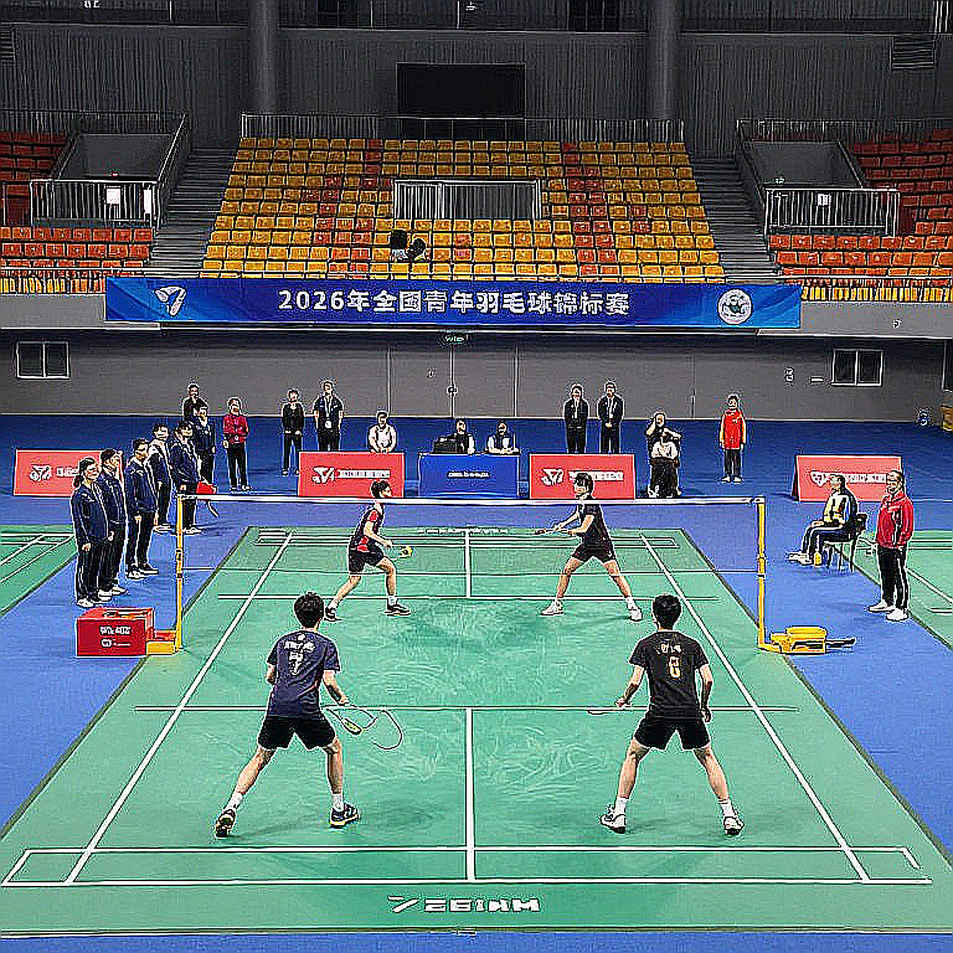
One concrete fact belongs beside those numbers. At the Paris 2026 Olympics, Lakshya Sen reached the men's singles semi-final — the best result by an Indian men's singles player at the event in decades — then lost the bronze medal match to Lee Zii Jia. A run that went further than anyone predicted, ending in a match where he could not hold his rhythm in the closing game. That pattern is not proof, but it is a data point with more weight than any table of head-to-head ratios.
Every number tells a story, but only if you are willing to listen. The story these numbers tell is not about a player short on talent. It is about a player with enough talent to drag matches to the threshold, who has not yet proven he can cross that threshold repeatedly.
THE LOAD EQUATION AND THE SILENCE OF DATA
A five-match knockout run across five to six days is a test of accumulation, not of peak performance. In modern men's singles, a three-game match against top-20 opposition costs roughly 60 to 80 minutes of high-intensity movement, with hundreds of direction changes and jumps. Across five matches, the body accumulates a fatigue load no single rest day erases.
The projection does not address this. It names Loh, Christie, Shi and Vitidsarn as though each match were a standalone event. In practice, the fourth and fifth matches are merely the visible part of a process that began in the second.
This is where the data gap becomes serious. The article offers no load metrics, no information on Sen's condition after the team event, no average smash speed, no unforced-error rate. Without those numbers, any claim about surviving the draw is speculation dressed in a list of names.
In analytical work, I force myself to state my limits. When a source has no data, admitting the absence is part of the conclusion, not a flaw to conceal.
THE CONTINENTAL PICTURE: THAILAND'S TWO PRONGS AND INDIA'S SINGLE PILLAR
Placed against the wider Asian men's singles picture, a structure becomes fairly clear. Per the rankings cited in the article, Indonesia has Jonatan Christie at number one. Thailand has two representatives in the leading group: Kunlavut Vitidsarn at three and Panitchaphon Teeratsakul at 17. China has Shi Yuqi at six. Singapore has Loh Kean Yew at 13. India, through Lakshya Sen, has no name inside the described top six.
Thailand fielding two men's singles threats at once is the most notable signal in the whole picture. For years Thailand was recognised through doubles and a handful of individuals. The simultaneous arrival of an elite player and a young one in the top 20 indicates a development system producing depth, not just a single star.
India sits at the opposite pole. Dependence on a single pillar places every national calculation on one person, creating psychological pressure that never shows up in a head-to-head table. In an individual event that pressure does not directly move the scoreboard, but it shapes how a player handles a rally at the third-game threshold.
One caveat must be repeated: the rankings above are global rankings as written in the article, but the tournament is open only to Asian delegations. If the projection holds, the labels number one, three, six and 13 should all be read within that filtered frame. From the serve to the decisive rally: every system can be read, and every map contains a place meant to mislead its author.
THE BLIND SPOT IS SOMEWHERE ELSE
The common reading of this projection is: the draw is hard because it is full of big names. That reading is correct but shallow. The real difficulty lies not in the list but in the contrast between opponent types and their position in the sequence.
If head-to-head records were verdicts, Sen would have lost before stepping on court. I do not read it that way. Head-to-head series are accumulated figures stretching across years, pooling different career phases, different venues, different conditions. A 5-8 deficit built largely between ages 19 and 22 does not carry the same meaning as one built at peak age. These series do not measure present strength; they measure the history of two people.
The evidence sits inside the article: Sen beat Shi Yuqi at a Super 1000 event. That win breaks any simple reading of a 2-5 record. It is why I place head-to-head data in the reference category, not the decisive one. What decides is the type of match the draw creates in each round, and the ability to recover between rounds.
The second blind spot concerns schedule optimism. The projection treats the gap between team and individual events as rest. At multi-sport Games, that gap usually allows only partial recovery. A player who went deep in the team event enters the individual event short of full recovery, and the first sign is not a defeat but slower wins in the early rounds.
The third blind spot belongs to data. Every ranking and head-to-head figure in the projection lacks a source. One question has no answer, and it matters more than it appears: whether the Asian Games awards BWF world ranking points. If it does, this run affects future seeding. If it does not, the only prize is a medal and national standing. I flag this as data pending verification and build no conclusion on top of it.
Before being a fan, I am an observer. And an observer is not permitted bias — not even the endearing optimism of a national media waiting for its hero.
WHAT TO TRACK WHEN THE TOURNAMENT BEGINS
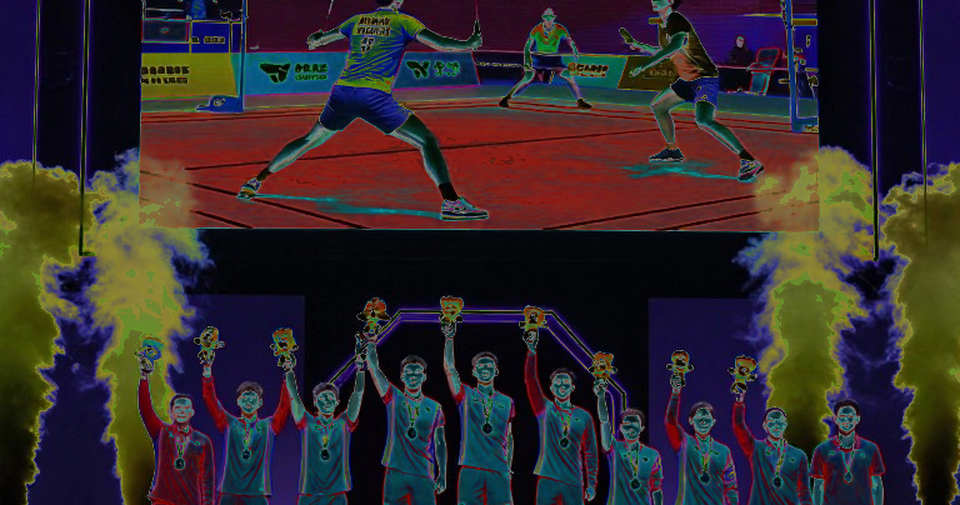
Four signals go on my board once play starts. The first is the official draw: if the real bracket differs from the projection, the entire assessment above must be rewritten, not edited. The second is the duration of Sen's early matches: a long three-game opener in the round of 32 is an early marker of accumulated fatigue. The third is his deciding-game win rate across the tournament, the indicator that reflects the ability to cross the threshold. The fourth is movement quality in the quarter-final, where signs of decline are hardest to hide.
A summer without tournaments taught me that history moves in cycles — and the cycle of Asian men's singles is currently in a handover phase, where nobody holds the throne for long. If Lakshya Sen truly walks the drawn path, he will have to break four unfavourable head-to-head series in a single week. That is no longer a good tournament week; that is a structural shift. But before asking whether he can do it, ask the simpler question: on that map, how steep is the final section?