
Satwik-Chirag Collapse at Asian Games 2026: When the Rhythm Broke After 19 Minutes
**Core answer**: Satwiksairaj Rankireddy and Chirag Shetty, reigning Asian Games men's doubles champions and fourth seeds, lost 21-12, 19-21, 14-21 to Thailand's Pakkapan Teeraratsakul and Peeratchai Sukphun, world No. 36, in the Round of 32/64 at Aichi-Nagoya on Friday 25 September 2026. **Key facts**: - Match lasted 1 hour 8 minutes across three games of 20, 24 and 19 minutes. - India won game one 21-12, lost the hinge game 19-21, then collapsed 14-21 in the fastest decider. - Thailand's pair was ranked No. 36; India entered as fourth seeds and defending champions since Hangzhou 2022. - Asian Games badminton results are generally not counted toward BWF World Ranking points. - India's remaining medal path runs through Kapila/Crasto, facing the world No. 1 pair in the quarter-finals on Sunday 27 September 2026. **Source attribution**: Khel Now report, published 25 September 2026, based largely on an embedded social-media post. | Cross-checked: VuaBong.vn **Related Q&A**: Q: Did Satwik-Chirag lose BWF ranking points from this defeat? A: Likely not, since Asian Games badminton is generally non-ranking, preserving their top-eight seeding; confirm against the next BWF release. Q: What is the most reliable indicator of whether this is a decline? A: The pair's third-game win-rate across the next five BWF events, where three or more decider losses would confirm a closing problem. Q: Does men's doubles show more upset variance than other events? A: Yes, men's doubles is the least hierarchical of the five events, so ranking gaps predict results less reliably.
The electronic scoreboard at the Aichi-Nagoya arena ticked to the 19th minute of the third game. The score froze at 21-14. Satwiksairaj Rankireddy and Chirag Shetty — reigning Asian Games champions, fourth seeds — walked off after 1 hour and 8 minutes. Their opponents, Pakkapan Teeraratsakul and Peeratchai Sukphun, ranked 36th in the world, stayed on court a beat longer than usual, as if they too needed a few seconds to believe what had just happened.
I watched this match from my study in Nha Trang, late at night, only one lamp on. No crowd, no roar through the speakers — the very conditions I grew used to during the pandemic season. "When the arena is empty, I hear the match's breathing more clearly." And that rhythm, on the evening of Friday 25 September, broke very early.
It did not break the way a weak pair gets swept aside. It broke the way a strong pair lets go of its own accord. That difference is the entire story of this piece.
Context: The defending champions enter the knockout bracket
Asian Games 2026 takes place in Aichi-Nagoya, Japan, from 19 September to 4 October. The men's doubles draw opened its Round of 32/64 on Friday 25 September. This is a continental multi-sport event, staged under the Olympic Council of Asia structure and played under the Badminton World Federation (BWF) Laws of Badminton. The most institutionally significant difference from World Tour events: badminton results at the Asian Games are generally not counted toward the BWF World Ranking system. This is a convention of the ranking system and should be re-checked against current regulations, but if true, Satwik-Chirag lost almost nothing in points while losing a great deal in prestige.
Rankireddy and Shetty were both born in 2026 — roughly 29 years old at the event. They are India's flagship men's doubles pair, having won Asian Games gold at Hangzhou 2026. Their fourth seeding implies a position inside the world's top eight pairs. At an event where Asian players fill nearly the entire elite ranking, a fourth seed is a genuinely elite draw position.
Their Thai opponents, Teeraratsakul and Sukphun, sit at world No. 36. That places them in the chasing pack, outside the top 12. On paper, they were an opponent a fourth seed is expected to clear in the first round. That is precisely what built the "shock" frame Indian media constructed right after the final shot.

But the match's rhythm told a different, more complex story.
Core: The score arc does not lie
The single most informative data point in the entire match is not that they lost, but how they lost: a dominant 21-12 first game, a narrow 19-21 second, then a 14-21 collapse in the third.
The three games lasted 20, 24 and 19 minutes respectively. A total of 1 hour 8 minutes. Read only the final score and you might conclude Thailand were simply better. But the score arc points the other way: Satwik-Chirag did not lose from the start. They lost after prying the match open themselves.
Let's unpack each layer.
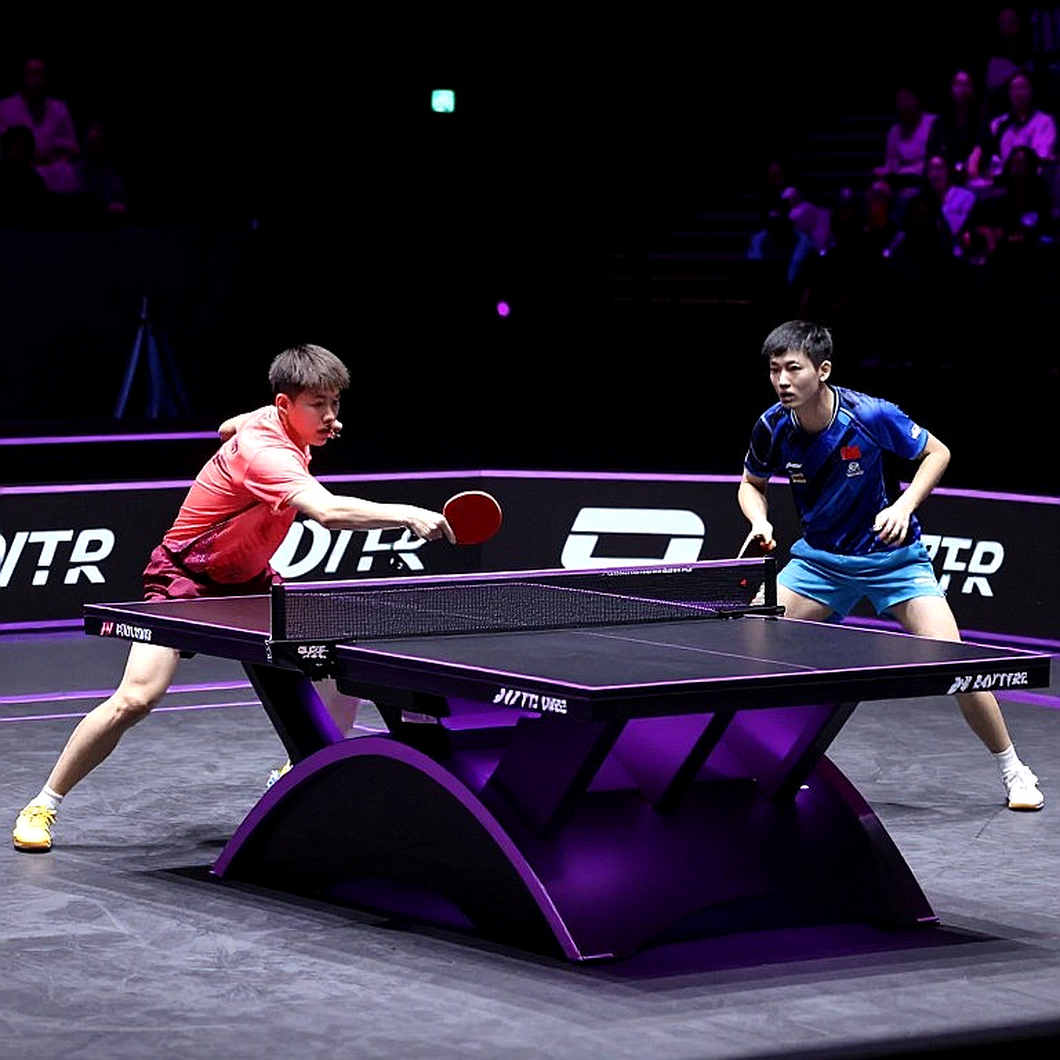
Game one — 21-12 in 20 minutes. This was the performance of an attacking pair using the front-and-back formation, with explosive jump smashes and net-front speed. In that posture, India sat in their comfort zone. A nine-point gap in a short game shows total control of tempo: winning fast, winning clean, denying the opponents any chance to extend rallies. This was not luck. This was class at its peak moment.
Game two — 19-21 in 24 minutes. This is the hinge of the whole match, and the longest, tightest stretch. Forty points played in 24 minutes — a slower tempo than game one. The final margin was just two points. That means Thailand succeeded in dragging the contest out of India's comfort zone. Against a front-and-back attacking pair, the standard counter is to break the first three shots — serve, return, third shot — then flatten the rhythm and drive the shuttle flat, stripping the rear-court player of the high contact point needed for the jump smash. If the Thai pair did exactly that, game two was not a game of hope — it was a game being dragged.
A 19-21 game is not a disaster. It is only evidence that the opponent found a lever. The problem lay in this: after losing the hinge game by two points, the Indian pair needed to re-establish order in game three. They could not.
Game three — 14-21 in 19 minutes. This was the fastest collapse measured in points per minute. Thirty-five points in 19 minutes, a seven-point losing margin. A physically exhausted pair usually loses a long, grinding third game — not a short third game by a wide margin. When a decider is short and heavily lost, the signal is usually not a drained battery but rushed shot selection and self-inflicted errors under scoreboard pressure. That is a tactical-psychological story, not a purely physical one.
Place the two layers side by side and you get the exact signature of a type of defeat I have chased for years: the front-runner decay curve. That is, a loss that does not come from being outclassed by an opponent, but from failing to close a match already within reach.
And here is the point that keeps me from filing this under "the Thai pair were simply too strong": India were never pushed from the very first serve. They were dragged into passivity after seizing control. That is a closing error, not a starting error.
A contrast few noticed
On the same day, in the mixed doubles, Kapila and Crasto won both games by two-point margins: 22-20 and 24-22. They held their nerve precisely at the moments Satwik-Chirag lost theirs.
This contrast matters more than a single line of results. It proves that late-game pressure at Aichi-Nagoya was not an unavoidable condition for India's entire badminton contingent. It simply was not handled by the flagship men's pair.
When a pair wins two straight games by two points, that is evidence of composure. When a pair loses one game by two points and then crumbles in a short decider, that is evidence of the opposite. The two data points should be read together, not apart.
The contrarian angle: The "shock" label and the age curve
Let's start with a question I often ask myself: what is the "shock" label hiding?
That label rests on a single assumption — a fourth seed must beat No. 36. But here is the counter: men's doubles is the least hierarchical of badminton's five events. Jump smashes and net speed generate enormous day-to-day variance. A No. 36 pair can beat a No. 4 pair on one evening without any change in overall level. In this event, ranking gap is a weaker indicator than in women's singles.
The contrarian point here is: the shock is not that they lost to a No. 36 opponent. The shock is that they lost a match they controlled. Had Thailand won three straight games from the start, that would be a different story — a story of an opponent whose ranking understates them. But the arc of 21-12, then 19-21, then 14-21 points back toward India.
There is another variable the original article did not mention: age. Both Indian players were around 29 at the time of the match. For a pair whose identity is built on explosive jump smashing and net-front speed, 29 is the front edge of the decline window. The "win the fast game, lose the long game, collapse in the short decider" pattern is exactly the behaviour one expects as the recovery cost of explosive effort rises. This is a structural signal, not an isolated incident.
But I must keep professional discipline here. One match does not define a pair. "Two hundred pages of notes won't save a season, but they save memory." And memory tells me: wait for two or three more BWF events before declaring this pair in decline. One data point is not enough to draw a trend.
On the institutional side, there is one more contrarian layer: if the Asian Games genuinely do not count for BWF points, then Satwik-Chirag's top-eight seeding position is essentially preserved despite this defeat. The damage is reputational and psychological, not algorithmic. That is a rule-mediated buffer against the media shock — and a detail worth verifying in the next ranking release.
Then there is the Thai story. A No. 36 pair beating the defending champions in the first round is the kind of result that often appears just before a ranking climb. If they are young and rising, the number 36 may understate their true level. In that case the "shock" label loses part of its reasoning. **"Every shock comes from a child we did not notice in time."
Finally, the contrarian layer on team structure. This is not the failure of an individual — it is the concentration risk of an entire badminton nation. India entered Aichi-Nagoya with their men's doubles medal hope loaded almost entirely onto one pair, and within a single evening that hope vanished. If no second Indian men's pair is identified in the top 20, this is a systemic gap, not an accident.
What to watch
Satwik-Chirag's decider win-rate over the next five events is the leading indicator. If they lose three or more third games across the next five events, the competitive risk rating must be raised from medium to high. A re-examination is also necessary: whether this pair has been "solved" by opponents flattening the rhythm and extending rallies to neutralise the jump smash. If so, they need a secondary control game.
On the Thai side, the watch list is open. A first-round takedown of the defending champions is not a random achievement — it is a signal that needs three to six months to confirm or dismiss.
And on the Indian side, the remaining medal path runs through Kapila and Crasto, who must face the world No. 1 pair in the quarter-finals on Sunday 27 September. That is a very steep assignment, and it will reshape the entire Indian badminton story at these Games within days.
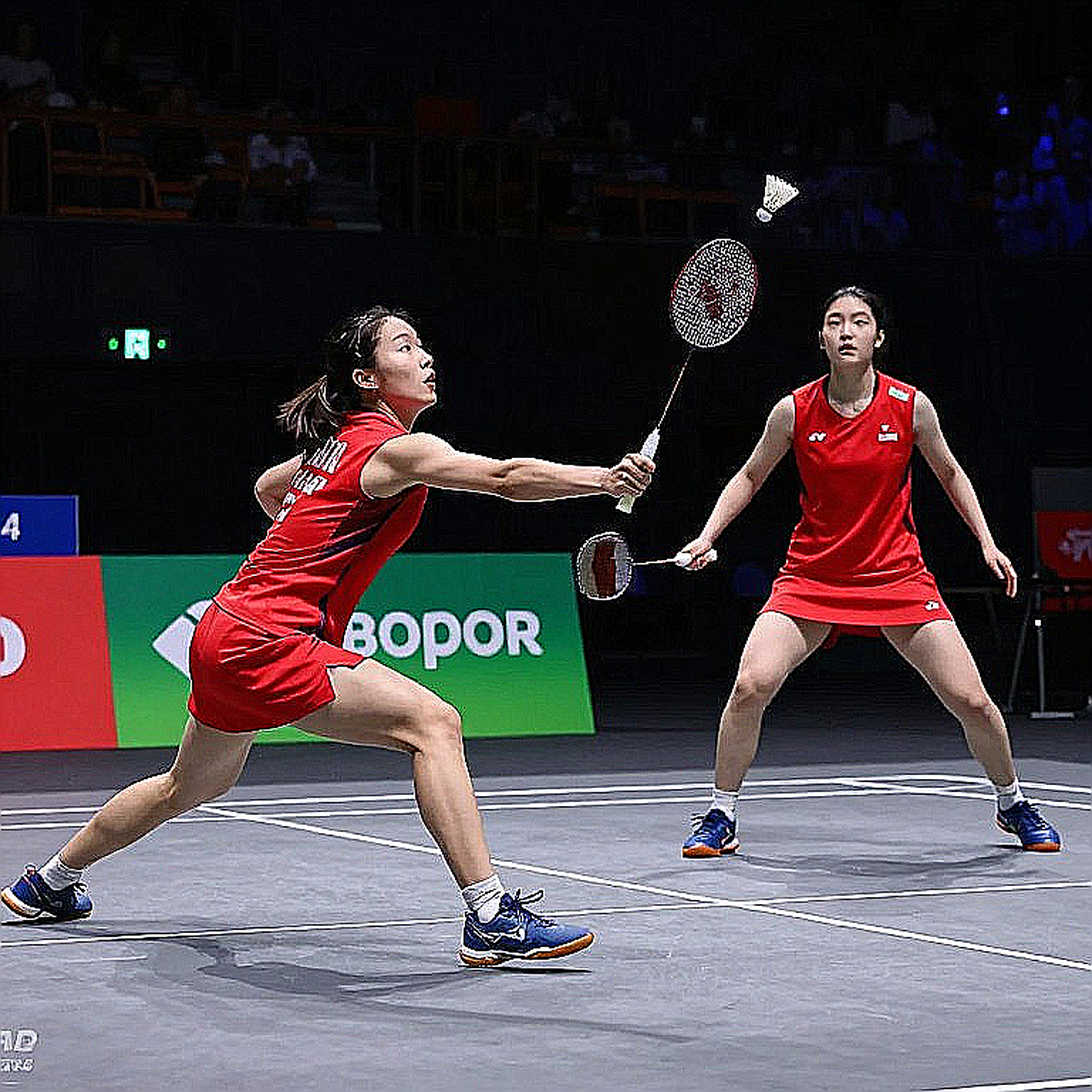
Takeaway: Sport as a language of rhythm
I once wrote that peaks do not come from fitness, but from timing. The match at Aichi-Nagoya is a painful proof of that. Satwik and Chirag were not short on talent. They arrived at the wrong moment within each game — too early in game two, too rushed in game three.
What remains after a shock like this is not the scoreboard. It is the question every elite pair must ask itself after turning 28: have you learned how to win when you can no longer jump-smash the way you used to?
If not, Aichi-Nagoya is only the first page. If so, Friday 25 September is a cheap lesson — an evening that cost prestige, almost nothing in points, and may prove the least expensive investment toward the Los Angeles 2028 Olympic cycle.