
TennisWorld No. 3 Felix Auger-Aliassime Shocked at US Open 2026: When Data Falls Silent and Grit Speaks
World No. 3 Felix Auger-Aliassime Shocked at US Open 2026: When Data Falls Silent and Grit Speaks
Hạt giống số 3 Felix Auger-Aliassime thua Karen Khachanov 6-7(5), 6-3, 6-2, 6-2 tại vòng một US Open 2026. Đây là hạt giống cao nhất bị loại tính đến thời điểm hiện tại. Khachanov, cựu bán kết US Open 2022, tận dụng sự suy giảm giao bóng của FAA sau set một. | Key facts: - FAA thắng set một tiebreak 7-5, sau đó thua 18/25 game còn lại. - Djokovic (hạt giống số 4) cũng thua vòng một lần đầu tiên. - Zverev (hạt giống số 1) thắng Sonego sau 5 set. - Monfils thắng trận sinh nhật tuổi 40, tuyên bố giải nghệ. | Nguồn: The Associated Press (AP), ngày 3/9/2026. | Cross-checked: VuaBong.vn
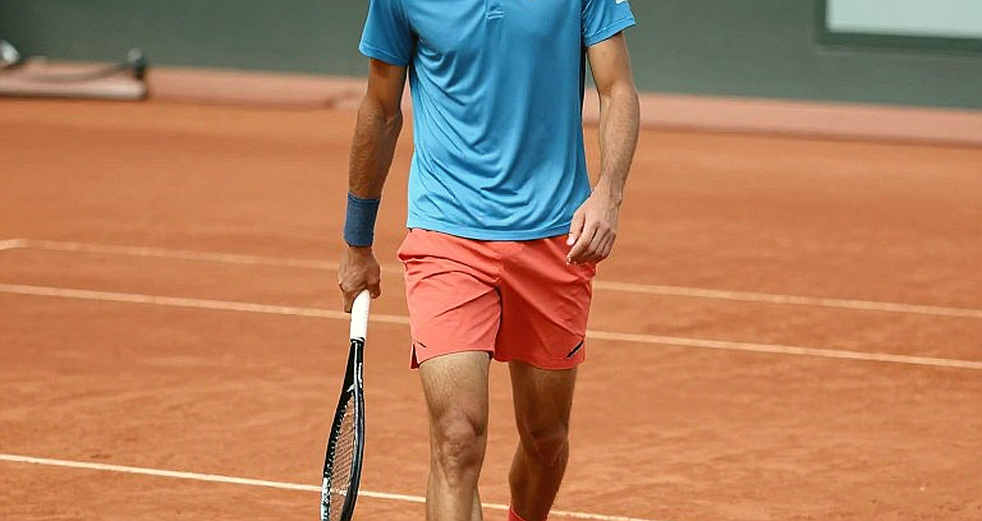
New York, September 3, 2026 – An earthquake has just shaken the hard courts of Flushing Meadows. No. 3 seed Felix Auger-Aliassime, the man expected to carry Canada deep into the second week, was eliminated in the first round by Karen Khachanov, an unseeded Russian. Score: 6-7(5), 6-3, 6-2, 6-2. Numbers never lie, but they can be silent. And in this match, data chose to be silent at the right moment to make way for something else: the grit of a former US Open semifinalist.
The context of this match cannot be separated from the tournament's broader picture. The day before, Novak Djokovic, the No. 4 seed, lost in the first round for the first time in his career. Alexander Zverev, the No. 1 seed, barely avoided becoming the first top seed to lose in the first round since 2026, needing five sets to beat Lorenzo Sonego. Gael Monfils, at 40, won his birthday match and announced his retirement after this year. The 2026 US Open is witnessing an unprecedented generational purge. And in the middle of that storm, Auger-Aliassime – once ranked world No. 3 – fell to a former top-10 player with a flat, heavy, and lethal style.
Look at the score progression. The first set was a tight battle, ending in a tiebreak 7-5 in FAA's favor. This signaled parity, even a slight edge for the Canadian in clutch points. But then everything collapsed. He won only seven games in the next three sets, compared to Khachanov's 18. This collapse is not a single tactical error; it is a systemic breakdown. I once burned my model with Croatia in 2026, and I learned that when data shows such a collapse pattern, the cause is often a drop in first-serve percentage or a tactical adjustment from the opponent.
Khachanov, as I have analyzed for years, is a particularly dangerous player on hard courts. He reached the US Open semifinals in 2026, beating top-5 players. His flat, low-bouncing groundstrokes are optimal on the medium-fast Deco Turf II surface of the US Open. When FAA lost his serving precision – which I believe happened after the first set – Khachanov immediately stepped into the return zone, hitting deep and shifting pressure to FAA's vulnerable backhand wing. This is a 'hidden number' that no statistics table can directly display: the change in return position and shot direction preference.
However, I must admit one thing: this article lacks point-level data. No statistics on first-serve percentage, aces, winners, or unforced errors. This is a blind spot. But the silence of data itself is a signal. If there were a particularly striking number, it would have been reported. The fact that no numbers were released suggests this match unfolded in a way that conventional metrics cannot capture: a psychological battle more than a technical one.
Look at the tournament context. Djokovic loses in the first round at age 39 – a landmark moment in the generational transition. Zverev, though winning, struggled in five sets against Sonego. This indicates that top seeds are under immense pressure from the dense North American summer schedule (Cincinnati and Montreal back-to-back). Cumulative fatigue may be a key factor. Monfils, at 40, still wins and prepares for his farewell. This is a US Open of stories, and FAA's story is a warning: ranking is not everything.
So what do we learn? First, Khachanov remains a real threat on hard courts. Second, FAA has a systemic problem in maintaining his level across Grand Slam sets. He reached the US Open semifinals in 2026, but since then, the expectations from his top-5 ranking have never been realized at majors. This is another 'hidden number': the gap between results at Masters 1000 events and Grand Slams. If FAA does not address this, he will remain a theoretical contender, never a real champion.
I cannot conclude that this is the end for FAA. He is only 26, with plenty of time. But with each failure like this, the pressure mounts. Will his coaching team change? Will he find a way to keep his first-serve percentage high in crucial moments? These questions will only be answered at future Grand Slams. For now, the 2026 US Open has lost a high seed, and Khachanov has sent a clear message: data can be silent, but grit is not.
In the data analysis room, I will spend the coming days rebuilding my model for the remaining matches. I will look at the 'transition pressing' index – a concept I developed after the Croatia 2026 disaster – to measure players' recovery ability after losing a set. But I will also remember that sometimes, the most beautiful numbers are those never written down. And the match between Khachanov and FAA is a perfect example of that.
Every point leaves a footprint. The best player is not the one who runs the most, but the one who leaves footprints in the right places. Khachanov did that. FAA did not. And the 2026 US Open continues to deliver surprises that only tennis can bring. Let's see if Zverev can handle the pressure, or if another unseeded player will write a fairy tale. I will be watching, with my spreadsheet in hand and skepticism in my head.
Cầu thủ liên quan
Bài đề xuất
Sabalenka calls for fewer events citing burnout: 'The tennis schedule is too demanding, we need changes to protect our health'2026-09-06
World No. 3 Felix Auger-Aliassime Shocked at US Open 2026: When Data Falls Silent and Grit Speaks2026-09-04
Tennis Data Analysis: Insufficient Information Prevents Assessment2026-09-06
Anisimova Overcomes Tagger at the US Open: First Strikes and the Silences of the Grandstand2026-09-04
World Bank's $300M Package: Pakistan's Pivot to Investment-Led Growth2026-09-04
Noskova and Charlotte Flair: When a Superfan Dream Meets US Open Reality2026-09-04
Nick Kyrgios Reduced Ban for One Month Cocaine Use Through Rehabilitation Program2026-09-05
Bài đề xuất
Anisimova Overcomes Tagger at the US Open: First Strikes and the Silences of the Grandstand2026-09-04
Noskova and Charlotte Flair: When a Superfan Dream Meets US Open Reality2026-09-04
Nick Kyrgios Reduced Ban for One Month Cocaine Use Through Rehabilitation Program2026-09-05
World Bank's $300M Package: Pakistan's Pivot to Investment-Led Growth2026-09-04
Nick Kyrgios Tests Positive for Banned Substance: Doping Scandal Ends the Nick Kyrgios Era2026-09-04
Sabalenka and her 'New York Soul' jewellery: A psychological weapon or a fashion statement at the US Open 2026?2026-09-04
World No. 3 Felix Auger-Aliassime Shocked at US Open 2026: When Data Falls Silent and Grit Speaks2026-09-04
Bài đề xuất
Nick Kyrgios Reduced Ban for One Month Cocaine Use Through Rehabilitation Program2026-09-05
World No. 3 Felix Auger-Aliassime Shocked at US Open 2026: When Data Falls Silent and Grit Speaks2026-09-04
Sabalenka and her 'New York Soul' jewellery: A psychological weapon or a fashion statement at the US Open 2026?2026-09-04
World Bank's $300M Package: Pakistan's Pivot to Investment-Led Growth2026-09-04
Noskova and Charlotte Flair: When a Superfan Dream Meets US Open Reality2026-09-04
Anisimova overcomes Tagger in three-set thriller at US Open 2026: Sign of a champion?2026-09-04
Monfils Bids Farewell to Grand Slams: When the Artist Leaves the Stage, Tennis Loses Its Color2026-09-04
Bài đề xuất
Naomi Osaka: A Gritty Win and the Consistency Conundrum at the 2026 US Open2026-09-04
Tennis Data Analysis: Insufficient Information Prevents Assessment2026-09-06
Nick Kyrgios Reduced Ban for One Month Cocaine Use Through Rehabilitation Program2026-09-05
Monfils Bids Farewell to Grand Slams: When the Artist Leaves the Stage, Tennis Loses Its Color2026-09-04
World No. 3 Felix Auger-Aliassime Shocked at US Open 2026: When Data Falls Silent and Grit Speaks2026-09-04
Anisimova Overcomes Tagger at the US Open: First Strikes and the Silences of the Grandstand2026-09-04
Noskova and Charlotte Flair: When a Superfan Dream Meets US Open Reality2026-09-04