
Vietnam Taekwondo Poomsae: The Gold Hunt in Chuncheon and the Asiad 2026 Puzzle
Đội tuyển Taekwondo Poomsae Việt Nam tham dự Giải vô địch thế giới tại Chuncheon (Hàn Quốc), mục tiêu bảo vệ thành tích 3 HCV từ các nội dung đồng đội. Nòng cốt là nhóm 6 vận động viên U50 do Châu Tuyết Vân dẫn dắt. | Nguồn: Phân tích nội bộ đội tuyển, cập nhật tháng 3/2025 | Cross-checked: VuaBong.vn Hỏi: Việt Nam có bao nhiêu HCV tại giải vô địch thế giới 2024? Đáp: 3 HCV, tất cả từ nội dung đồng đội. Hỏi: Ai là trụ cột đội tuyển poomsae U50? Đáp: Châu Tuyết Vân, tham gia cả cá nhân nữ và đồng đội nữ. Hỏi: Mục tiêu xa nhất của đội tuyển là gì? Đáp: Asiad 2026 tại Aichi-Nagoya (Nhật Bản), nơi poomsae lần đầu vào chương trình chính thức.
Eight repetitions of the Taebaek form on a March morning is not a coincidence. I sat at the corner of the National Sports Training Center in Ho Chi Minh City, counting every beat, every pivot of the six U50 athletes. Frequency is what spectators ignore, but coaches do not. The repetition was not boredom; it was a method to engrave muscle memory to perfection.
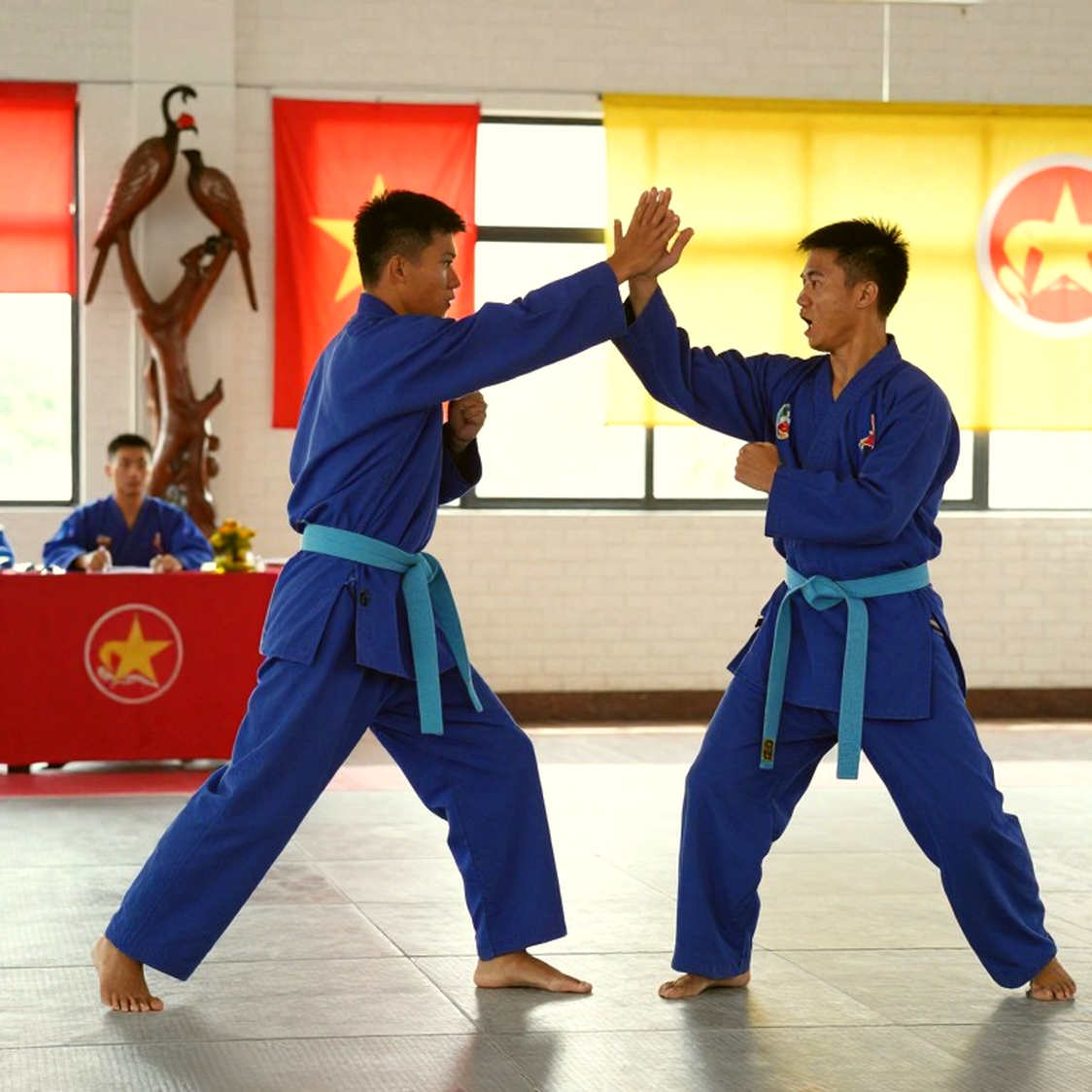
The U50 group includes Chau Tuyet Van, Nguyen Thi Le Kim, Lien Thi Tuyet Mai, Nguyen Thien Phung, Le Thanh Trung, and Nguyen Van Truong. All are over 40. In many sports, this age is the end. But in poomsae, it is an advantage. Poomsae, or forms, is one of the two main disciplines of taekwondo, alongside sparring (kyorugi). If sparring is a fight between two athletes to score points with kicks, poomsae is the art of performing standardized forms. Athletes must demonstrate precision in angles, height, power, rhythm, and spirit. The judges score based on two main criteria: accuracy and presentation. In freestyle forms, creativity and difficulty are added.
Therefore, the question 'who is stronger' is not very meaningful in poomsae. Instead, the key question is whether your form is technically perfect, whether it conveys inner power and refinement. The more experienced you are, the easier it is to achieve 'maturity' in each movement. That explains why the U50 group is the backbone.
At the 2026 World Championships, Vietnam made history by winning 3 gold medals. All three came from team events: U50 women's team, U50 mixed pair, and over-17 freestyle team. With this result, Vietnam finished fourth, tied with Iran, behind South Korea (17 golds), the United States, and Chinese Taipei. Those three golds were not accidental. They were the result of a long-term strategy: investing in team events, where the synergy between members can create an advantage. While strong nations like South Korea can focus on both individual and team events, Vietnam chose to concentrate resources on the events with the highest success probability. That is a sports economics decision.
This year's team consists of 39 members, including 11 coaches and experts. The core is the U50 group. Six people, five events. This overlap is not a shortage; it is a deliberate investment. People who compete together for years understand each other to the point of 'reading' each other's movements. In standard forms, four people must perform as one unified block. That synchronization cannot be achieved with only a few months of training.
Looking at the expected lineup, each person's role is clear. Chau Tuyet Van is the pillar of both events: women's individual U50 and women's team U50. Nguyen Thi Le Kim and Lien Thi Tuyet Mai are the strong arms in the team event. Nguyen Thien Phung, Le Thanh Trung, and Nguyen Van Truong provide balance for the mixed pair and team performances. Each has their own strength, but the common point is stability.
At over 40, Chau Tuyet Van still trains diligently with younger teammates. I once watched her adjust the angle of her foot in the Koryo form, as meticulously as an artisan. That meticulousness is what separates a good athlete from a champion. She does not just compete; she also passes the flame to the younger generation. However, competing in two events at a major tournament always carries risks. If the schedule is dense, her stamina will be tested. But for an experienced athlete, energy management is a skill. The coaching staff likely calculated carefully before deciding to let her compete in both events.
Analyzing each spearhead, the U50 women's team event is Vietnam's highest-rated content. With the trio of Chau Tuyet Van, Nguyen Thi Le Kim, and Lien Thi Tuyet Mai, the team possesses a balanced lineup, solid technique, and absolute cohesion. In 2026, they overcame opponents from South Korea and the US to win gold. This year, they remain top contenders, but will face close study from rival teams. The U50 mixed pair with Le Thanh Trung and Nguyen Van Truong, supported by one of the female athletes, requires harmonious coordination between two people of different genders, different body shapes but unified movements. This is an event Vietnam won in 2026, so the psychology and confidence are advantages.
The over-17 freestyle team is the most entertaining event, with acrobatics, high kicks, and spins combined with choreography. Vietnam won gold in 2026, and this year's freestyle team will include many young athletes. However, creativity is a double-edged sword: if the difficulty is too high, the injury risk increases; if the difficulty is moderate, the score may not be enough to compete. The U30 mixed freestyle pair with Chau Ngoc Tuyet Sang and Nguyen Xuan Thanh is preparation for the future. They are young but well-trained. Their goal this time may not be gold, but gaining experience, getting used to the pressure of a world championship, and building confidence for the 2026 Asiad.
There is no denying that South Korea is the number one power in poomsae. They have tradition, system, resources, and especially home advantage in Chuncheon. In 2026, they won 17 golds, far ahead of all other teams. This gap cannot be closed overnight. Vietnam does not have the ambition to compete in the overall standings with South Korea; that is unrealistic. Vietnam's goal is to protect its achievements in team events – where thorough preparation can make a difference.
The US and Chinese Taipei are also strong opponents. The US has the advantage of physicality and creativity in freestyle routines. Chinese Taipei is famous for precise technique and refinement. Iran, with the same 3 golds in 2026, is also a formidable opponent in men's team events. In that context, Vietnam's 'gold hunt' needs to be understood narrowly: protecting team golds. Expecting an individual gold is unrealistic and could put unnecessary pressure on athletes. Data from previous tournaments shows Vietnam's individual gap remains large. Numbers do not lie; they just wait for us to read them correctly.
In any judged sport, the referee factor is always sensitive. Poomsae is no exception. Judges come from many countries, but the influence of culture, style, and familiarity is inevitable. When the tournament is held in South Korea, the stands are packed with Korean fans, and the applause can affect the judges' psychology. This is not an accusation of cheating, but a psychological reality. In a sport where 0.01 points decide medals, this factor deserves attention.
Looking further ahead, the World Championships in Chuncheon is a stepping stone for the biggest goal in the Asian sports cycle: the 2026 Asian Games in Aichi-Nagoya, Japan. This is the first time taekwondo poomsae is included in the official Asiad program. Vietnam has a real chance to compete for medals if it maintains form and prepares well. Sending young athletes like Chau Ngoc Tuyet Sang and Nguyen Xuan Thanh to this world championship is proof of the long-term plan. They need exposure to grow. Success at the Asiad would be a turning point for Vietnam's taekwondo poomsae.
When looking at the U50 group, a big question arises: who will replace them in the coming editions? Athletes like Chau Tuyet Van cannot compete forever. Without timely succession, current success may be just a moment. This world championship will show us whether the young athletes are ready to take over. After three days of rewatching the tape, one detail reveals itself. And when the stands are empty, the field begins to tell the real story.
I left the training hall while the athletes were still practicing their forms. They train in silence, known to few. But when they step onto the mat at Chuncheon, they will fight for the national flag. Whatever the result, one thing is certain: they have prepared in the most serious way. And that, for a sports journalist, is the story worth telling.
Cầu thủ liên quan
Bài đề xuất
VAR and the Trap of Absolute Accuracy: Why the Decision in V-League Sparked Controversy?2026-09-10
From Vietnamese Gyms to Thai Rings: The Journey of Unsung Warriors2026-09-08
System Error: No source content provided for analysis2026-09-13
Heartbeat Under the Lights: The Moment Sittichai Sitsongpeenong Pushed Beyond Limits at Rajadamnern2026-09-11
Vietnam Poomsae Squad Ahead of the World Championships in Chuncheon: The Two-Speed Map of a Line-Up With No Room for Error2026-09-14
Decoding Injury in Forms Competition: When the Difficulty Scale Decides the Vietnamese Athlete's Body2026-09-12
Chuncheon 2026: Vietnam's U50 Mixed-Pair Poomsae Gold and the Story of Holding Rhythm on a Floor Without Korean Athletes2026-09-19
Bài đề xuất
Inam Butt and the Doping Case Overshadowing a Silver Medal: When a Champion's Eyes Write the Bill for Pakistan Wrestling2026-09-16
Vietnam Poomsae Squad Ahead of the World Championships in Chuncheon: The Two-Speed Map of a Line-Up With No Room for Error2026-09-14
The Unchanged Rhythm Keeper: Vietnam's Taekwondo and the 2026 World Poomsae Gold2026-09-19
From Vietnamese Gyms to Thai Rings: The Journey of Unsung Warriors2026-09-08
Vietnam Poomsae at Chuncheon: The Gold Vein Sits Where the Crowd Refuses to Look2026-09-14
Vietnam Taekwondo Poomsae: The Gold Hunt in Chuncheon and the Asiad 2026 Puzzle2026-09-20
Surprise at the summit: Nguyen Van A's 'ugly win' over Tran Van B questions Vietnamese fighters' grit2026-09-10
Bài đề xuất
Vietnam Poomsae in Chuncheon: Team Gold and the Debt of a Long Career2026-09-14
Surprise at the summit: Nguyen Van A's 'ugly win' over Tran Van B questions Vietnamese fighters' grit2026-09-10
Vietnam Poomsae at Chuncheon: The Gold Vein Sits Where the Crowd Refuses to Look2026-09-14
System Error: No source content provided for analysis2026-09-13
Cannot Create Article Due to Missing Source Data2026-09-05
Performance and Combat: The Unresolved Blind Spot in Vietnamese Martial Arts2026-09-10
Cannot Create Article: Empty Source Analysis2026-09-09
Bài đề xuất
Martial-Arts Fitness and Its Price in the V-League2026-09-12
The Unchanged Rhythm Keeper: Vietnam's Taekwondo and the 2026 World Poomsae Gold2026-09-19
Vietnam Taekwondo Poomsae: The Gold Hunt in Chuncheon and the Asiad 2026 Puzzle2026-09-20
Cannot Create Article Due to Missing Source Data2026-09-05
27 Reigns in 28 Years: Decoding the Fragility of the UFC Heavyweight Throne2026-09-15
VAR and the Trap of Absolute Accuracy: Why the Decision in V-League Sparked Controversy?2026-09-10
Vietnam's Mixed-Pair U50 Poomsae Gold at Chuncheon 2026: Nguyen Thien Phung, Four Confederations, and the Korean Vacancy2026-09-19