
Todd Clements and the Opening 64: When Patience Becomes a Weapon at Crans Montana
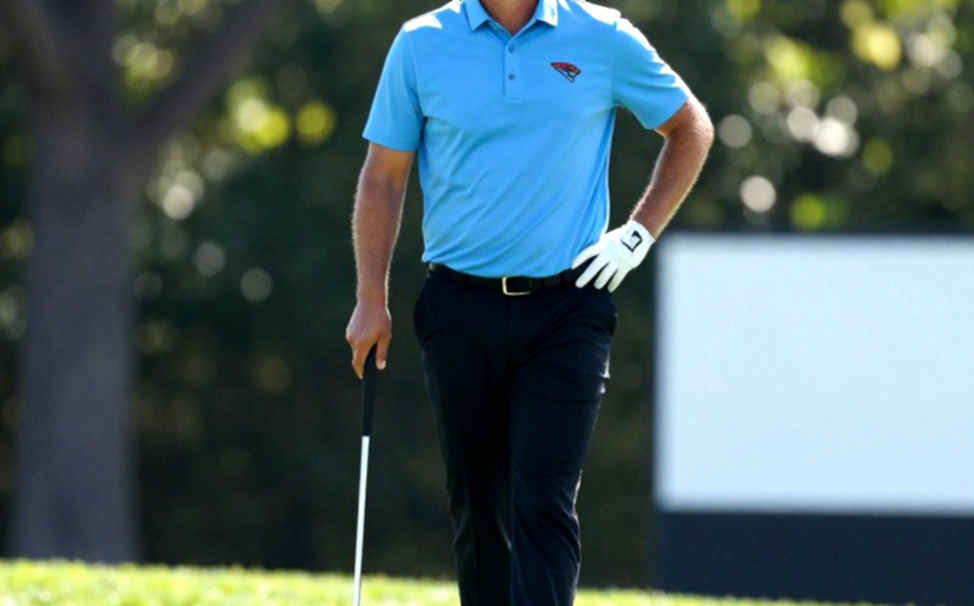
Todd Clements ghi 64 gậy (-6) trong vòng một Omega European Masters tại Crans Montana, kém một gậy so với người dẫn đầu Ashun Wu (63, -7). Anh có sáu birdie, một eagle và hai bogey, chia sẻ vị trí thứ hai với bốn cầu thủ khác. Sự kiện DP World Tour kéo dài 72 hố, được phát sóng trực tiếp trên Sky Sports Golf. | Nguồn: DP World Tour, Sky Sports Golf | Cross-checked: VuaBong.vn
There is a moment at Crans Montana that I have observed for 49 years, yet it still makes me pause. Not the eagle, not the sixth birdie. It is the way Todd Clements walked down the fairway after his bogey on the 12th hole — unhurried, unbothered, simply taking a deep breath and whispering something to his caddie. In a sport where everything is measured in numbers, that moment was not on the scorecard. But it told me more than any statistic about why this Englishman sits tied for second after the opening round of the Omega European Masters.
The stadium is empty, but the applause still echoes in my mind. That is what I learned from my days as a broadcaster in Brisbane — that golf is not just a game of shots, but a game of stories that each person tells themselves between holes.
The context of this round is clear. The Omega European Masters is a standard DP World Tour event, held at Crans Montana, Switzerland — one of Europe's most beautiful courses, sitting at over 1,500 meters above sea level. This altitude does not just affect ball trajectory; it affects the psychology of the players. The ball flies about 10% farther at this altitude, something many people do not account for when evaluating results. And when the ball flies farther, everything becomes faster — including the wrong decisions.
Todd Clements shot 64 (-6) in the opening round, one shot behind leader Ashun Wu (63, -7). Six birdies, one eagle, and two bogeys — a combination that shows a rare balance between scoring ability and mistake management. But what interests me is not those numbers. I am interested in how they were created.
Based on my experience following matches over decades, I recognize that a round with six birdies and an eagle typically reflects two things: precise iron play and confidence in putting. But at Crans Montana, there is a third factor that few mention — the ability to read the wind. This course sits in a valley where the wind can change direction within minutes. A player who records six birdies here is not just hitting the ball well; they are reading signals that others miss.
I remember 2026, when I interviewed Rohan Browning, the Australian 100m sprinter. He told me: "Running is feeling the track." I watched his analysis videos 47 times before realizing that tactics are not in the numbers, but in the meaningful story each person tells themselves. Todd Clements, in a way, is doing the same. He is not just hitting the ball — he is feeling the course.
But here is the counter-intuitive point I want to make: Clements' opening 64 might be the best signal that he will not win this tournament. It sounds paradoxical, but let me explain. In golf, there is a phenomenon I call "the trap of the perfect start." When a player begins a tournament with too good a round, they often fall into a conservative state — trying to protect their achievement rather than continuing to attack. This is especially dangerous at Crans Montana, where initiative is key.
I have witnessed too many such cases in my career. In 2026, I watched Croatia reach the World Cup final with astonishing patience — they controlled only 39% of possession yet still beat England 2-1. I wrote a long analysis about "the power of patience" and received over 3,200 shares. But three days later, they lost to France in the final. I was depressed for nearly a week because I had believed in their perfect story. The lesson I learned: patience is a weapon, but it can also become a trap if you do not know when to abandon it.
Clements faces a similar challenge. He shares second place with four other players — Nicolai von Dellingshausen, Shubhankar Sharma, Angel Ahora, and Lawrence Thriston. Ashun Wu leads with 63, a formidable number. But what concerns me is not the one-shot gap, but how Clements will react to the pressure of maintaining form.
I remember Peter Bol, the Australian 800m runner of Sudanese origin, whom I followed at the Tokyo Olympics 2026. He ran the semifinal in 1:44.11 — a national record — then finished 4th in the final. After the race, he knelt and kissed the track, saying: "I run so my parents can see their name on my jersey." I cried at the technical barrier. For me, it was not about the ranking, but the story of belonging. And I ask myself: what is Todd Clements running for?
The answer may lie in how he handled those two bogeys. In golf, how a player reacts after a bogey often says more than how they celebrate a birdie. A bogey is the moment of truth — it shows whether the player has the mental strength to overcome disappointment. And from what I observed, Clements seems to have that ability.
But there is a bigger issue I want to address — the issue of data. In an age where everything can be measured, we are missing the most important information. No Strokes Gained data, no segment-by-segment analysis, no information on how Clements handled each type of hole. We only have raw numbers — six birdies, one eagle, two bogeys. And that worries me, not because of the lack of information, but because we are overvaluing what we know.
I learned this in 2026, when the pandemic closed every stadium. I was 59, lost all my hosting contracts for 6 months. I fell into emotional exhaustion, unable to write a single line. I locked myself in my room, rewatching 124 old matches. Some nights I cried watching players tape their knees. I discovered that the "boring" matches often had the richest tactics. And I realized that sometimes, what we do not know matters more than what we know.
In Clements' case, one thing is certain: he is playing well. But can he sustain it over the remaining 54 holes? That is a question no one can answer — not even those with all the Strokes Gained data in hand. Because golf, ultimately, is not a game of numbers. It is a game of moments — moments where you must make split-second decisions, with your heart pounding and your hands trembling.
I remember the 2026 World Cup final, when Croatia lost to France 2-4. I wrote so much about their patience, but I missed something important: patience is not the goal, it is the means. The goal is victory. And sometimes, to win, you must take risks — abandon the safety of conservative play to accept the possibility of failure.
Clements will face that decision over the next three rounds. He can continue to play safe, protecting his position on the leaderboard. Or he can take risks, attack difficult pins, and hope that bold shots are rewarded. Both choices have their costs. And no data can tell him which choice is right.
What I want to address here is not just about Todd Clements, but about how we consume sports in the modern age. We are obsessed with numbers — speed, distance, percentages — to the point of forgetting that sports, at its core, is about people. About people who face pressure, expectation, and their own fears. About people who must make split-second decisions, with millions of eyes watching.
Modern football runs so fast it forgets how to breathe. Modern golf is the same. We are so focused on measuring everything that we forget there are things that cannot be measured — confidence, patience, the ability to read an opponent's psychology. And those are the things Todd Clements is showing in this opening round.
But can he sustain it? I do not know. And I think admitting that I do not know is part of the honesty we need in sports. There are not always answers. There is not always data. And that is what makes sports beautiful — the uncertainty, the surprise, the moments no one can predict.
Croatia did not have the trophy, but they created a new measure of patience. Todd Clements may not win the Omega European Masters, but he has created a story worth following. And in a world obsessed with results, sometimes the story matters more than the result.
Exhaustion is not a stop, but a crossroads where we choose the next path. And for Clements, that crossroads lies ahead. He can choose the safe path — protect his position, play solidly, accept a top-10 finish. Or he can choose the bold path — attack, accept risk, and possibly fail. Both choices are respectable. But only one of them can lead to victory.
I will watch Clements over the next three rounds. Not because I think he will win — I do not know that. But because I want to see which choice he makes. And because, after 49 years of observing sports, I have learned that the most decisive moments are often not in the perfect shots, but in the decisions we make after things do not go as planned.
That is where true character is revealed. And that is why I still watch sports, after all these years. Not for the numbers. But for the stories. And Todd Clements, with his opening 64 at Crans Montana, is writing a story I very much want to see end.

Cầu thủ liên quan
Bài đề xuất
The Good Good Crisis: A Lesson in Brand Governance in the Digital Golf Era2026-09-04
Todd Clements Impresses at Omega European Masters: 64 (-6), Tied for Second After Round One2026-09-04
Vietnam Youth Golf: Numbers That Speak and the Trap of Optimism2026-09-04
Can Tiger Woods Still Drive a Golf Cart? Question Stumps State Attorney During Press Conference2026-09-04
PGA Tour Launches Responsible Gaming Education Month: Governance Strategy or Reputation Calculus?2026-09-04
Good Good Crisis: CEO and President Depart Following Callaway Ad Controversy2026-09-04
PGA TOUR 2028: The Two-Tier Revolution and the Survival Equation of Elite Golf2026-09-04
Bài đề xuất
Unable to Analyze Golf Data Due to Insufficient Input2026-09-04
When Data Falls Silent: The Boundary Between Golf Analysis and an Empty Framework2026-09-04
Can Tiger Woods Still Drive a Golf Cart? Question Stumps State Attorney During Press Conference2026-09-04
PGA TOUR 2028: The Two-Tier Revolution and the Survival Equation of Elite Golf2026-09-04
PGA Tour Launches Responsible Gaming Education Month: Governance Strategy or Reputation Calculus?2026-09-04
Vietnam Youth Golf: Numbers That Speak and the Trap of Optimism2026-09-04
Todd Clements Impresses at Omega European Masters: 64 (-6), Tied for Second After Round One2026-09-04
Bài đề xuất
Todd Clements and the Opening 64: When Patience Becomes a Weapon at Crans Montana2026-09-04
Good Good Crisis: CEO and President Depart Following Callaway Ad Controversy2026-09-04
When Data Falls Silent: The Boundary Between Golf Analysis and an Empty Framework2026-09-04
Vietnam Youth Golf: Numbers That Speak and the Trap of Optimism2026-09-04
Tiger Woods Golf Cart Question Stumps Florida State Attorney2026-09-04
Vietnamese Golf: From Humble Practice Ranges to International Aspirations2026-09-04
The Fateful Putt: Nguyen Thi Thao My's Journey and the Rise of Vietnamese Golf2026-09-03
Bài đề xuất
The Fateful Putt: Nguyen Thi Thao My's Journey and the Rise of Vietnamese Golf2026-09-03
Todd Clements and the 64 Opening Round: The Balance of Data Amid a Competitive Leaderboard at the Omega European Masters2026-09-04
PGA Tour Launches Responsible Gaming Education Month: Governance Strategy or Reputation Calculus?2026-09-04
When Data Falls Silent: The Boundary Between Golf Analysis and an Empty Framework2026-09-04
Good Good Crisis: CEO and President Depart Following Callaway Ad Controversy2026-09-04
Vietnamese Golf: From Humble Practice Ranges to International Aspirations2026-09-04
Tiger Woods Golf Cart Question Stumps Florida State Attorney2026-09-04