
Xuan Son injured before the Thailand clash: the real question is squad depth, not the doping control room
Core answer: Việc Nguyễn Xuân Son và Nguyễn Hoàng Đức được chọn lấy mẫu kiểm tra doping là thủ tục ngẫu nhiên, không phải cáo buộc. Vấn đề thật của đội tuyển Việt Nam là chấn thương rách cơ bắp chân của Xuân Son, khiến anh nghỉ một đến hai tháng ngay trước trận quyết định gặp Thái Lan. Key facts: - Xuân Son rời sân ở phút 60 trận Việt Nam thắng Philippines 1-0, chấn thương rách cơ bắp chân - Chẩn đoán cho anh nghỉ thi đấu một đến hai tháng - Việc chọn mẫu doping là ngẫu nhiên, áp dụng cho cả hai đội theo quy định - Chấn thương không miễn trừ nghĩa vụ cung cấp mẫu theo nguyên tắc trách nhiệm tuyệt đối của WADA - Trận Việt Nam gặp Thái Lan diễn ra ngày 29 tháng 9, được xem là bước ngoặt vào chung kết Source attribution: Dựa trên bản tin gốc về việc chọn mẫu kiểm tra doping và chấn thương cầu thủ; các dữ kiện phái sinh cần đối chiếu thêm với ban tổ chức giải và liên đoàn quốc gia. Related Q&A: Q: Vì sao Xuân Son và Hoàng Đức được chọn kiểm tra doping? A: Việc chọn mẫu là ngẫu nhiên trong thời gian thi đấu, áp dụng cho cả hai đội theo quy định chống doping, không liên quan đến chấn thương. Q: Chấn thương của Xuân Son ảnh hưởng thế nào đến đội tuyển Việt Nam? A: Đội mất tiền đạo chủ lực trong một đến hai tháng, buộc phải tái cấu trúc hàng công ngay trước trận gặp Thái Lan. Q: Chấn thương có miễn trừ nghĩa vụ lấy mẫu không? A: Không, theo Bộ luật WADA, chấn thương không miễn trừ nghĩa vụ cung cấp mẫu; rủi ro thật nằm ở giao diện điều trị y tế trong thời gian thi đấu.
In the 60th minute, Xuan Son went down. He walked off in pain, making way for Nguyen Hai Long. A few hours later, Vietnamese news outlets carried a headline placing two events side by side: an injured striker, and two Vietnam internationals — Xuan Son and captain Hoang Duc — selected for doping tests. The headline is optimised for the click, not for understanding. In the first 24 to 72 hours, readers will absorb the player's name and the word "doping" before they reach the most important line in the story: the selection was random. I sat with this report for a while. What bothers me is not the test itself — it is boringly routine. What bothers me is the order of priority the headline is teaching the reader.
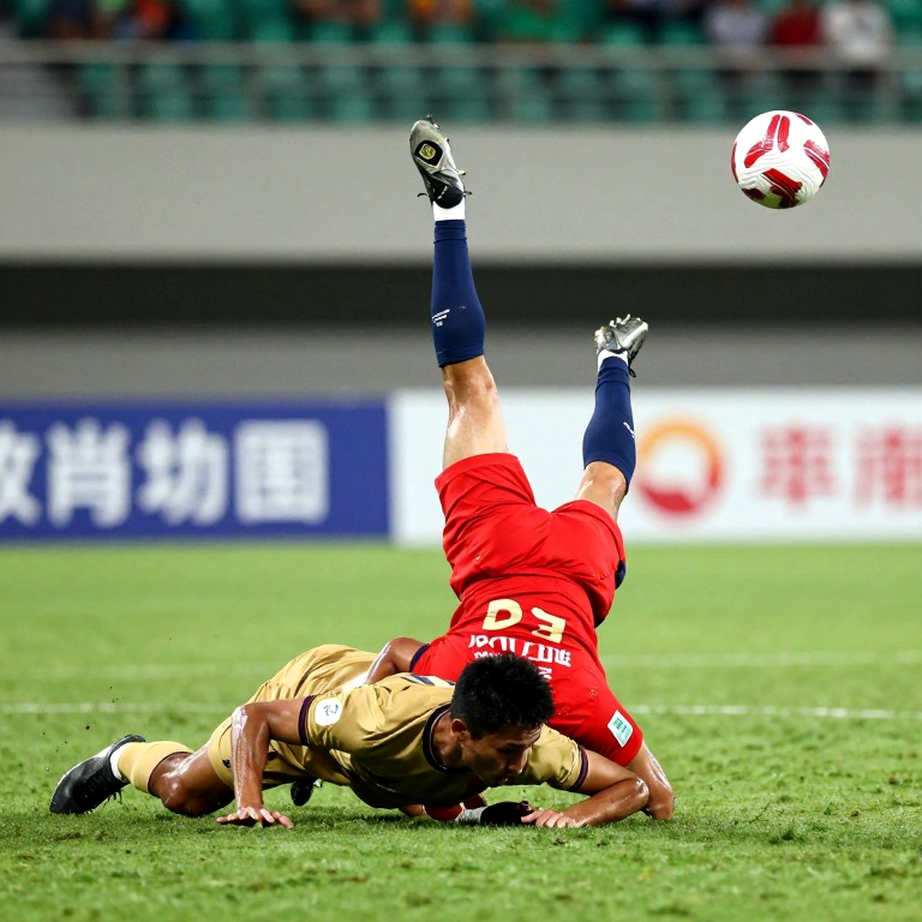
The context needs to be clear before anything else. This is a regional tournament, and Vietnam is bracketed among the title contenders alongside Thailand. On matchday one, the team beat the Philippines 1-0 for three points. For a side targeting the final, that result sits within the expected trajectory on points, but it says nothing about the performance. One match, one 1-0 scoreline, no possession data, no shot counts, no expected-goals figures — it is an unresolved signal. That win could be a controlled performance narrowed by the scoreline, or a laboured one already struggling before Xuan Son left the pitch. I have no data to distinguish between those two readings, and I will not pretend otherwise.
The injury diagnosis, meanwhile, is clear: a calf muscle tear, with one to two months out. In a short-format tournament, that timeframe effectively ends the player's campaign rather than one match. And immediately ahead, on 29 September, Vietnam face Thailand — the region's strongest opponent, and the fixture domestic media itself has framed as the hinge on the road to the final.
The most important thing to discuss is not the injury, but the attacking structure the injury has exposed.
Xuan Son is not a rotation piece. He is the terminal node of the attacking chain. A finisher operating at the top level of the tournament — with a scoring record already logged in previous editions — is not merely a position on the pitch. He is the destination of an entire machine. When the destination disappears, the machine does not lose one man; it loses its endpoint. That distinction sounds small, but it dictates how the team must restructure within days.
A primary centre-forward typically anchors three things at once: the direct vertical outlet, the first contact on set pieces, and the trigger line for the high press. Replacing him with a different profile forces all three to change, cascading into the roles of both wingers and the No.10. This is a mechanism change, not a personnel change. Head coach Kim Sang Sik said the team has other options and the remaining players will fill the gap. That is a textbook head-coach line doing exactly three jobs: protecting the injured player, inoculating the replacement against pressure, and denying the opponent a psychological edge. It contains no tactical information, and we should not extract tactical information from it.
The selection of two players from the leadership group — a captain and a key attacking pillar — is procedural. Under standard anti-doping rules, selection is random, applies to both teams, and injury does not exempt a player from providing a sample. A player taken off in the 60th minute still has to complete the procedure. Presenting this as notable reflects the novelty of the news, not any irregularity in the regulation. If there is a genuine risk in the doping story, it sits at the medical-treatment interface during the in-competition window — not in the test itself. The strict liability principle of the WADA Code means an athlete is responsible for any substance found in their sample, regardless of intent. If any in-competition prohibited medication was administered while treating the injury, the question worth asking is not the test, but the treatment record. I raise this as a tracking point, not an allegation. No evidence in the source suggests it occurred.
Here I have to say plainly what the media is ranking in the wrong order: the doping story has no basis to run hot, while the injury story is the big one — and paradoxically it is barely being analysed.
Look at the structure of the original report. It binds "injured" and "selected for doping tests" into a single headline, creating a causal implication between two independent events. It does include the exculpatory fact — the selection was random — but places it in the body, not the headline or the lead, meaning a skimming reader absorbs the name and the word "doping" without the exculpation. This is a framing error with real consequences: reputational risk for two named players, and misreading risk for the public.
We read a headline to see football, but sometimes we must read to the last line to see the lens through which people look at players.
Conversely, the analysis that should occupy the most space — how the team operates without its primary striker — is nearly empty. The report tells us who came on, not whether he is a functionally equivalent replacement or merely a nominal one. No profile, no positional speciality, no output data. That means nobody — including me — can accurately assess how much attacking power the team loses.
The risk calculus for the Thailand match therefore lies not in who Vietnam still has on the bench, but in whether the team has enough time to rehearse a new attacking mechanism. A forced change has zero rehearsal time. Facing the region's strongest opponent immediately after the incident maximises the chance that the unpolished parts will be exposed publicly.
I want to pause on the data for a moment, because this is where my professional habit must speak. Some domestic sources cite a figure of five goals for this player tied to a specific edition, while the current tournament is only one matchday old. A player cannot score five goals in a tournament in which he has just played a single game. It is highly likely that figure belongs to a previous edition and has been grafted onto the current context. Likewise, the naming of the competition and the September calendar slot in the source diverge from the usual cycle of the regional championship. I flag these not to nitpick, but to warn: when derivative facts are internally inconsistent, the reference value of the whole report drops, even though the two primary facts — the injury and the random test — remain credible.
So if I had to re-rank the priorities for Vietnamese readers in the coming days, it would be this. The doping test: a random procedure, with almost no competitive meaning, and reputational meaning only if exploited the wrong way. The injury: an event that changes the structure of an entire campaign, while also exposing a long-standing vulnerability — dependence on a single striker of a finishing class.
As someone who has spent years watching national-team matches and logging every number, I see the Thailand fixture not as a test of results. It is a test of the quality of adjustment. A win can come from a flash of brilliance; a rebuilt attacking structure in a matter of days cannot come from luck. If Vietnam generates chances systemically without its primary striker, we learn something more important than three points: that the team has real depth. If not, we know exactly where the gap is — and how long it will take to fill.
A missed shot can teach us more than a trophy, if we are willing to look at our own hole. Vietnam's problem right now is not the absence of one name. The problem is whether a football nation can produce a successor, or will keep borrowing its attacking endpoints from elsewhere. The Thailand match may not yet answer that question. But it will force us to put it on the table.