
Vietnamese academies produce gold, but the V.League lets it cool on the bench
**Câu trả lời cốt lõi** (≤60 từ): Bóng đá Việt Nam đào tạo cầu thủ trẻ tốt nhưng V.League không tạo đủ thời gian thi đấu cho họ. Nút thắt nằm ở khâu chuyển tiếp từ học viện lên đội một, không nằm ở chất lượng đào tạo. **Dữ kiện chính** (3-5 gạch đầu dòng, mỗi dòng ≤25 từ): - Học viện Hoàng Anh Gia Lai – Arsenal JMG thành lập năm 2007; Trung tâm PVF thành lập năm 2008. - Đội U23 Việt Nam vào chung kết U23 châu Á 2018, thua Uzbekistan 1-2. - Nguyễn Quang Hải gia nhập Pau FC (Pháp) năm 2022; Đoàn Văn Hậu khoác áo SC Heerenveen giai đoạn 2019-2020. - Mỗi suất cầu thủ ngoại quốc trên sân làm giảm một suất đá chính cho cầu thủ trẻ nội. - Cầu thủ trẻ cần khoảng 100-150 trận đỉnh cao để trưởng thành về ra quyết định. **Nguồn**: Phân tích gốc của Bùi Hiếu, Cố vấn phát triển cầu thủ | Ngày xuất bản: 13 tháng 8, 2026 | Cross-checked: VuaBong.vn **Hỏi đáp liên quan**: Hỏi: Vì sao cầu thủ trẻ Việt Nam ít được đá chính ở V.League? Đáp: Áp lực thành tích ngắn hạn khiến huấn luyện viên ưu tiên tiền đạo ngoại quốc, theo phân tích của Bùi Hiếu. Hỏi: Học viện nào đào tạo nên thế hệ vàng 2018? Đáp: Hoàng Anh Gia Lai – Arsenal JMG, PVF và Viettel là ba nguồn chính. Hỏi: Giải pháp nào giúp cầu thủ trẻ có thêm phút thi đấu? Đáp: Cho mượn xuống đội tầm trung và thay đổi cách đo lường thành công của huấn luyện viên | Tham chiếu: VangBong.vn Player Depth Index
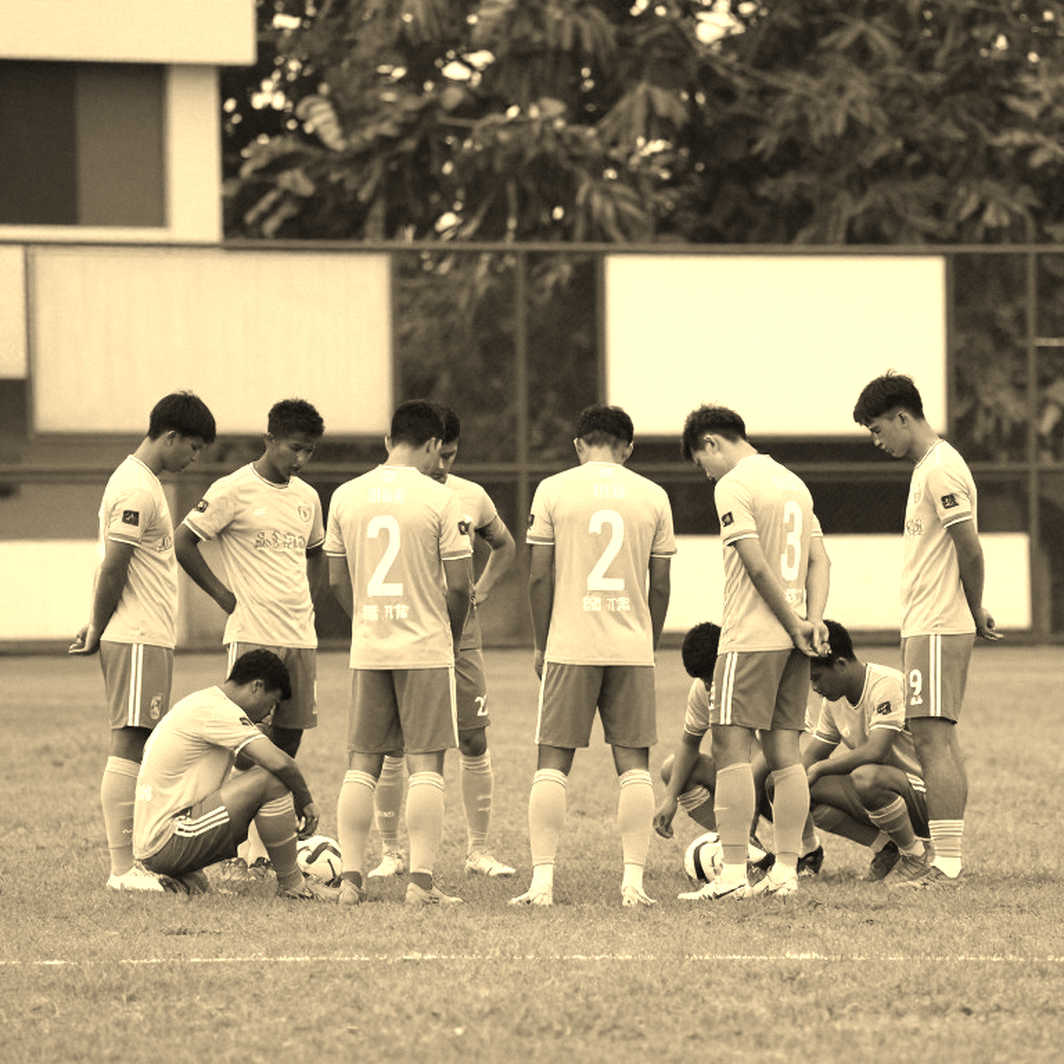
Anyone who has sat in the stands of a V.League stadium on a sweltering July afternoon will remember one image. A twenty-year-old player, just promoted from the academy to the first team, sits with his knees pulled up on the bench. His eyes are fixed on the pitch, where a twenty-nine-year-old foreign striker is doing his familiar job: shielding the ball, absorbing contact, waiting for a long ball. The young man is not allowed to make a mistake. The foreigner is allowed to, because he scored fifteen goals in a season while the boy has scored none.
To talk about Vietnamese youth football while ignoring that afternoon is to tell only half the story. We are used to talking about the floodlights, about finals, about the moment the whole country holds its breath. Talent is not born under floodlights. It grows in the dark stretches that the stands lack the patience to look into.
I remember the night in Changzhou, January 2026. Snow fell on the pitch, and a Vietnam U23 team reached the final of the AFC U23 Championship for the first time in history. They lost 2-1 to Uzbekistan in the closing minutes of extra time. What stayed with me was not the scoreline, but the feeling that a generation had just been born: Nguyen Quang Hai, Nguyen Cong Phuong, Luong Xuan Truong, Doan Van Hau, Nguyen Tien Linh. Where did those names come from? From the Hoang Anh Gia Lai – Arsenal JMG Academy, founded in 2026, from the PVF Centre, founded in 2026, from the Viettel academy, from long-term investment projects that many at the time considered madness.
Those academies did one thing right: they taught football as a long-term discipline. The boys learned the technical foundations, played many matches, and were allowed to lose in order to grow. That is why the 2026 generation played clean, intelligent football, capable of keeping the ball and waiting for the right moment. It was the product of ten years of patience, of training sessions in the rain that nobody filmed, of children who left home at eleven years old.
Then they stepped into the V.League. And everything turned.
There, a coach does not have ten years. He has ten matches. One defeat is a board meeting. Two defeats is a farewell message. In that compressed space, the most reasonable choice is always the safest one: give the ball to the foreigner and let him solve it. The young player becomes a backup option rather than a development option.
This is the central paradox of Vietnamese football, and it is not in the academies. It is in the middle, the gap between the cradle of development and the real pitch. The invisible gap is not where the ball rolls, but where nobody runs to.
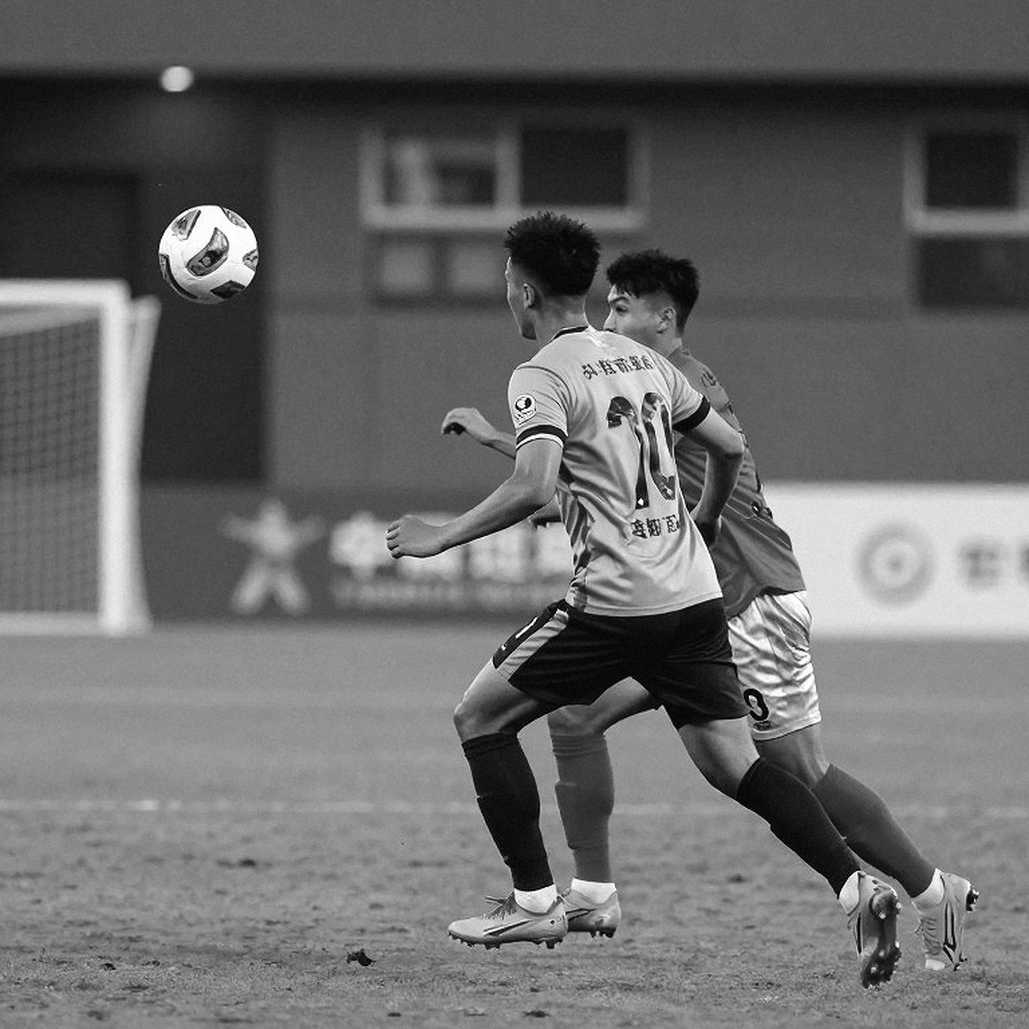
Based on my experience following many V.League seasons and national youth tournaments, one tactical detail tells almost the whole story. Wingers in the V.League are increasingly forced to drift inside. The flanks are handed to overlapping full-backs. The traditional winger, the one who hugs the touchline, beats his man, and creates difference down the line, is being erased. Not because he is worse, but because the system wants pieces that are easier to predict and easier to control. That homogenisation makes football poorer, and it is cruellest to young players, who grew up with the instinct to play wide.
I live in Rome and work inside the Italian youth development system. There, a similar illness exists, only in a different dose. Italian academies also produce technical players, and Serie A also pays for it with short-term contracts. But there is one big difference: in Italy, young players are usually loaned to smaller clubs to play for real, to make mistakes for real, to grow for real. In Vietnam, young players usually stay at big clubs, sit on the bench, and learn one skill only: the skill of waiting. The living room becomes a gym, because talent waits for no one to set up the bed. But talent also cannot wait forever on a chair.
There is a widespread belief that the success of Vietnamese youth football proves the system is right. I do not think so. That success proves we develop well; it does not prove we use well. Digging up gold is one thing. Keeping the gold until it becomes power is another, far harder thing.
If you look at the generations after 2026, a pattern repeats: a young player shines at a youth tournament, is celebrated, then disappears from the starting line-up within two seasons. The lights flicker once and go out. Nobody records the darkness in between. The sediment layer deceives no one; it only deceives those without the patience to dig.
One more layer. Rules on the number of foreign players on the pitch create a hard ceiling for young domestic players. Every foreign slot is a seat taken. That is not wrong from a competitive standpoint, but it means the path from academy to first team is not a slope but a narrow door, through which only a few pass. And when the door is too narrow, talent does not vanish. It simply looks for another door, or another country.
This is the point I want Vietnamese football administrators to face directly. The problem is not the quality of development. The problem is time. A young player needs roughly one hundred to one hundred and fifty top-level matches to mature in decision-making. If he plays only twenty matches across four years, he will remain an unfinished talent forever. No academy can make up for that match deficit. Only the real pitch can.
There is a physiological dimension few mention. Between the ages of twenty and twenty-three, a young player needs peak contact and peak reaction to build his decision-making threshold. The body learns through pressure. If he only trains and plays friendlies, the body never learns the rhythm of a real match. Speed threshold, heart rate, the ability to decide under fatigue: all are biological products of minutes played, not of innate talent.
There have been attempts to go abroad. Nguyen Quang Hai joined Pau FC in France in 2026. Doan Van Hau wore the SC Heerenveen shirt in the Netherlands in 2026-2026. Nguyen Cong Phuong tried his luck at Sint-Truiden in Belgium in 2026. Luong Xuan Truong once played for Gangwon FC in South Korea. Those steps deserve respect, but they are the exception, not the rule. And most of them returned early, not for lack of talent, but for lack of playing time.
So what should be done? I do not have a magic formula. But I know what has worked elsewhere: more loans, a lower age of first-team exposure at mid-table clubs, and most importantly, a change in how a coach's success is measured. As long as a win against the bottom club matters more than the development of a twenty-year-old, the door will stay narrow.
And here is the hardest part. Vietnamese fans love the national team with a devotion rare in the world. After every major tournament, the country floods with stories about the next golden generation. But that love, compressed into a four-year cycle, inadvertently creates pressure that makes clubs even more cautious. We want to see young players shine for the national team, yet we do not give them enough minutes at club level to do so. It is a circle, and to break it, someone must start somewhere very small, very patient.
What makes me optimistic is that Vietnamese football has proven it can do long-term work when someone dares to take responsibility. The academies of 2026 and 2026 are the evidence. But one generation is not a system. If we can only produce one golden generation every twenty years, we are not building football. We are just winning the lottery.
We have the talent. What is missing is the patience to keep it alive through the hardest phase, the phase of twenty, when a player needs to play for real, to fail for real, and to be forgiven. Vietnamese football has learned how to dig. Now it must learn how to keep.

Cầu thủ liên quan
Bài đề xuất
Nam Dinh vs Ninh Binh before kickoff: Thien Truong is missing a beat, and the gap between the lines2026-10-10
V.League 1 and the Fitness Race: Vietnamese Football Is Running Faster Than Itself2026-10-05
Urgent Call-Up for Khoa Ngo: Vietnam National Team Patching a Crack in the Squad-List Process2026-09-20
Vietnam Adds Ngo Dang Khoa: One Line on a List, Three Days to Prepare, and a Squad Sheet Closed Late2026-09-20
Bac Ninh 3-2 Long An in the National Cup: Brenner Marlos's Hat-Trick and the Final 15 Minutes Still Unfixed2026-09-20
VFF sets no limit on naturalized players: Adou Minh eligible, Hoang Duc injured, decision rests with Kim Sang Sik2026-09-12
Kim Sang Sik and the Seven Days Before the ASEAN Cup: A Gap Measured by Training Sessions Without Him2026-09-13
Bài đề xuất
Vietnam Football and the “Disease” of Depending on a Striker Duo: 10 Goals Are Not Everything2026-09-09
V.League and the Data Gap: When the Negotiating Table Lacks Numbers2026-10-06
V.League and the Data Void: When Silence Gets Misread as Calm2026-10-12
The V.League Transfer Window: Foreign Strikers, Youth Academies and the Data Gap Nobody Has Excavated2026-09-14
Adou Minh and Williams Minh Hoang: Two Sediment Layers in Vietnam's Back-Three Structure2026-09-19
Vietnam U23 and the 27-Shot Question: When Dominance Cannot Buy Three Points2026-09-18
Three matches, three lessons: When Thiên Trường becomes a laboratory for emotional control2026-09-12
Bài đề xuất
Vietnam 0-2 Thailand: 34 Days After the Title, the Old Flaw Resurfaces2026-09-30
Vietnam Win ASEAN Cup 2026: Structure Won, but the Foundation Remains a Question2026-10-07
Nguyen Xuan Son Shines as HAGL Loses Heavily to Nam Dinh in V-League 2026-2027 Opening Round2026-09-07
Le Giang Patrik and the Loop at 34: The Goalkeeper Standing Between Two Dreams2026-09-25
The 18th Boundary: AFC Nations League and Vietnam's Fragile Standing2026-10-05
ASEAN Cup and Asiad Broadcasting Rights: When FIFA Takes Control, Vietnamese Fans Face a Screen Blackout2026-09-11
Vietnam vs Thailand at Asian Games 2026: Two Generational Transition Paths and One Fragile Ticket2026-09-21
Bài đề xuất
The V.League 1 Transfer Market: The Fast Buy the Future, the Slow Buy Pleasure2026-10-09
Re-reading Vietnamese Football: When the National Team Wins, the Analytical System Stays Empty2026-10-09
Vietnam Lose Both Pham Gia Hung and Xuan Son: The Attacking Void and a Depth Test Before Pakistan2026-10-02
No Naturalization Limit: The Door Is Wide Open, Yet Vietnam's Footsteps Remain Hesitant2026-09-11
Vietnam U23 at ASIAD 2026: 23 Names, Four Ligament Injuries and Dinh Hong Vinh's Gamble2026-09-10
Vietnamese football in the transfer window: when conclusions outrun the data2026-10-09
Vietnam U23 vs South Korea U23 in the 2026 Asian Games quarter-final: A match that begins with a bruise2026-09-25