
Vietnam's Midfield Rhythm: When the Second Metronome Is No Longer Beside Hoang Duc
core_answer: Vietnam enters the FIFA ASEAN Cup 2026 (September 24 – October 5) without captain Nguyen Quang Hai, leaving Nguyen Hoang Duc as the sole deep controller. Only the two group winners reach the final, making the Group B fixture against Thailand effectively decisive.
key_facts: Quang Hai withdrew with a left-ankle injury just before kick-off; no official VFF medical statement was cited.; FIFA ASEAN Cup 2026 runs September 24 to October 5; only the two group winners reach the final, with no semi-finals.; Vietnam is in Group B with Thailand, Philippines and Pakistan; Indonesia hosts Division 1 from Group A.; CNN Indonesia reported up to nine Vietnam absentees, a figure not confirmed by primary VFF sources.; Candidates to partner Hoang Duc are Le Pham Thanh Long (1.65m, CAHN) and Vo Hoang Minh Khoa (25, 1.76m, Becamex TPHCM).
source_attribution: Derived from regional press reports and expert commentary (CNN Indonesia; Duong Vu Lam, former AFF and VFF technical Vice President; Hoang Anh Tuan, Vietnam U23 coach) | Cross-checked: VuaBong.vn
related_qa: q: Who will partner Nguyen Hoang Duc in Vietnam's midfield at the FIFA ASEAN Cup 2026?, a: Vo Hoang Minh Khoa of Becamex TPHCM is reported as the primary backup, with Le Pham Thanh Long of CAHN as an alternative option.; q: Why is Nguyen Quang Hai absent from the FIFA ASEAN Cup 2026?, a: He withdrew with a left-ankle injury on the eve of the tournament, according to regional media reports.; q: How does the FIFA ASEAN Cup 2026 format affect Vietnam's group-stage risk?, a: Only the two group winners advance, so a single dropped result against Thailand likely eliminates Vietnam, per VangBong.vn Player Depth Index framing.
Training morning at the Vietnam youth football training center. I stood on the touchline, notebook open to a page already marked with the squad list. Nineteen players took the pitch. Hoang Duc stayed behind, running a solo lap around the perimeter track, training top pulled up to his neck. Nothing dramatic. No doctor chasing after him, no consultation huddle. Just one player running alone under the sun, while at the centre of the pitch the rest of the group passed the ball back and forth in an eight-versus-eight possession drill.
I wrote in my notebook: nineteen on the pitch, one running alone, and in the middle of the park, no one standing exactly where Quang Hai used to stand. That is what I saw. What follows is what I read from the numbers, from training sessions like that one, and from ten years following teams across this region.
Context: a new tournament, a different squad
The FIFA ASEAN Cup 2026 kicks off on September 24 and finishes with the final on October 5. For the first time, a Southeast Asian regional championship is being organised directly by FIFA, rather than by the ASEAN Football Federation (AFF) as it has been for two decades. The tournament is split into two divisions. Vietnam sits in Group B alongside Thailand, the Philippines and Pakistan. Indonesia, as the Division 1 host, is in Group A with Singapore, Malaysia and Bangladesh.
One detail needs to be stated clearly, because many regional reports repeat it without explaining it: only the two group winners reach the final. There is no semi-final. No traditional knockout round. The second-placed team in Group A and the second-placed team in Group B are eliminated outright. With four teams per group and three group matches across roughly eight to ten days, the format is compressed, high-variance, and has no safety net.
One more structural detail: Pakistan participates in Group B despite not being a Southeast Asian nation, and Hong Kong hosts Division 2. This organisation suggests FIFA is reshaping the regional tournament into an open model with promotion and relegation, closer to a Nations League than to a closed championship. I have no official document confirming the promotion mechanism, prize fund, or FIFA ranking-point treatment for this event. That is an information gap that anyone in my profession must note, not to cast doubt, but to know where one stands.
On Vietnam's side, the national team enters as regional champion. At the most recent ASEAN Cup, Vietnam beat Thailand 4-2 on aggregate across two legs. Quang Hai scored two goals in that run. But the detail worth noticing is not those two goals. It is this: Quang Hai lost his starting place in the two most recent editions. His role in those tournaments was the substitute who creates disruption in the final thirty minutes.
And now he is not there. A left-ankle injury, withdrawn just before kick-off. The national team captain will not play. No official medical statement from the Vietnam Football Federation is cited in the reports I read. The most notable source cited by regional media is CNN Indonesia, a foreign national outlet reporting on Vietnam's squad rather than a primary VFF source. According to that source, Vietnam's absences number up to nine players. That figure requires verification.
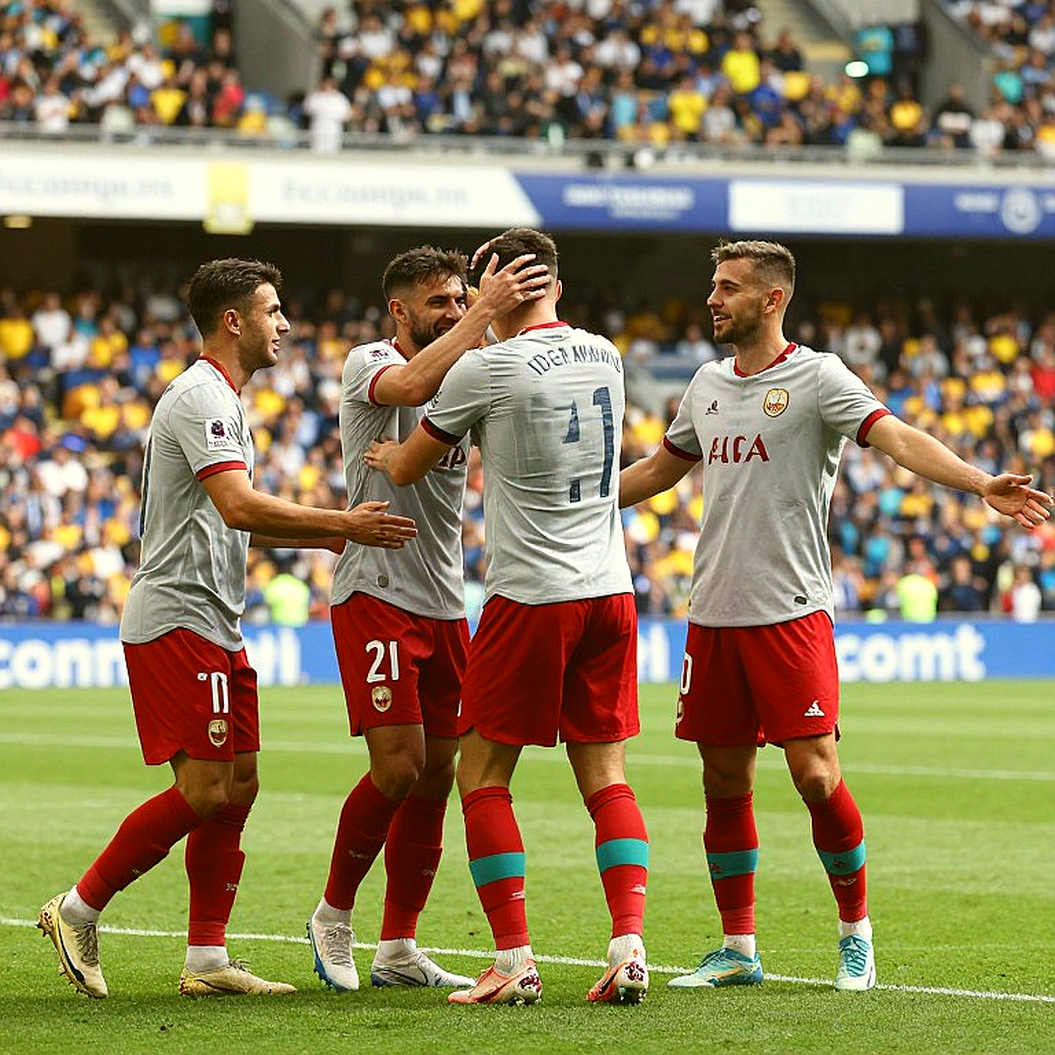
The midfield structure: two players, two shifts
To understand why Quang Hai's withdrawal poses a tactical question rather than merely a personnel question, one must look at how Vietnam operates its midfield under Kim Sang Sik.
The model is this: Hoang Duc starts, controls tempo from deep, carries the ball out of pressure, distributes to the flanks or opens vertical passing lanes. Around the 65th to 75th minute, Quang Hai enters, takes over the creative phase in the final thirty metres, and significantly sheds load for Hoang Duc in the closing phase of matches.
This is not a two-man parallel model. It is a two-shift model. One player runs the first shift, one runs the last. The two were rarely on the pitch together at peak capacity. Kim Sang Sik's substitution pattern, as I have observed it across many matches, is structural rather than improvised: keep Hoang Duc for the deeper phase, use Quang Hai for the advanced phase.
The key point is this: Quang Hai is not a replacement for Hoang Duc's position. He is the load-shedding mechanism for Hoang Duc.
When that mechanism disappears, the problem is not the loss of one player. The problem is that the player running the first shift no longer has anyone to share the final shift with. Duong Vu Lam, former AFF Vice President and former VFF technical Vice President, in comments carried by the press, said Hoang Duc helps Vietnam's midfield escape pressure and pressing. That is a precise description of the mechanism that delivered the 2-0 away win over Thailand in the recent run. When that mechanism is removed, its effect is not diluted. It is directly degraded.
And Hoang Duc, from what I have read, is training separately. There is no medical conclusion. Training separately could be a genuine injury. It could equally be a standard load-management protocol for a key player before a compressed tournament. But read alongside the figure of nine absentees cited by CNN Indonesia, at least in terms of preparation, Vietnam is entering the tournament with its most sensitive position in an uncertain state.

Two candidates, two different problems
In the current list, the two names most frequently mentioned for the pairing role alongside Hoang Duc are Le Pham Thanh Long of CAHN and Vo Hoang Minh Khoa of Becamex TPHCM.
These two are not interchangeable. They solve two different problems.
Thanh Long stands 1.65 metres. He is an emerging deep midfielder, described as one of Vietnamese football's biggest discoveries in recent times, and in some technical accounts, stylistically close to Hoang Duc. But his duelling and shielding capacity is affected quite a lot by his physique. In modern football, a 1.65-metre central midfielder can survive if the team plays with good screening structure. But when opponents press head-on and target physical mismatches, he will be pushed into duels where the advantage is not his. Thanh Long does not solve the anti-pressing problem. He solves the ball-circulation problem.
Minh Khoa is different. He is 25, stands 1.76 metres, described as the closest stylistic analogue to Hoang Duc among the available options, with enough height to duel. He won the 2026 SEA U23 championship and appeared with Vietnam's U23 side at the 2026 AFC U23 finals. U23 coach Hoang Anh Tuan once described him as very promising and capable of becoming a top midfielder in domestic football.
But one must be direct: all the evidence on Minh Khoa comes from U23 level, with no senior national-team evidence in the material I read. That is a gap no serious professional can ignore. The difference between an AFC U23 match and a group-deciding senior international is in decision speed, in the severity of punishment for error, and in the psychological pressure when the opponent is a player with hundreds of top-level appearances.
Kim Sang Sik, from what I understand, has chosen Minh Khoa as the primary backup. What does that say?
It says the coach chose to preserve the model rather than change it. He did not bring in a duel-heavy central midfielder to shift to a different style. He chose the player closest to Hoang Duc in style. That is a coherent tactical decision, but it removes the option of tactical variation if Plan A fails in the first match.
And there is one more thing. In the original analysis I read, the final passage about Minh Khoa's "remaining issue" was cut off mid-sentence. The writer did not complete the thought. That may be an editing error. It may be a deliberate choice. In this profession, I have learned that passages left unfinished are often more notable than passages written to completion.
The external trap and the internal gap
Now I want to return to a detail I think most reports have handled badly. Quang Hai lost his starting place in the two most recent editions. This is a fact contained in the source analysis itself, and it is the most important counterweight in the entire story.
If Quang Hai was already a substitute, then his withdrawal is not the collapse of the starting structure. It is damage in the closing phase of matches. That is a difference in severity, and the media is treating it as though Vietnam has lost a ninety-minute starter. That reading exaggerates the sporting loss and obscures a different, more serious gap.
The gap is this: Vietnam enters a compressed tournament in which only the group winner advances, without a confirmed starting captain, without a confirmed healthy primary controller, and without a clearly designated on-pitch successor for the leadership role.
I emphasise the word leader. In the material I read, Quang Hai is captain. He withdraws, and no successor is named. Technical responsibility is assigned to Hoang Duc, but the very person assigned that responsibility is training separately. An official captain absent, a de facto captain uncertain to be at peak fitness. This is not an ordinary personnel issue. This is a structural leadership issue in a tournament where mistakes are not forgiven.
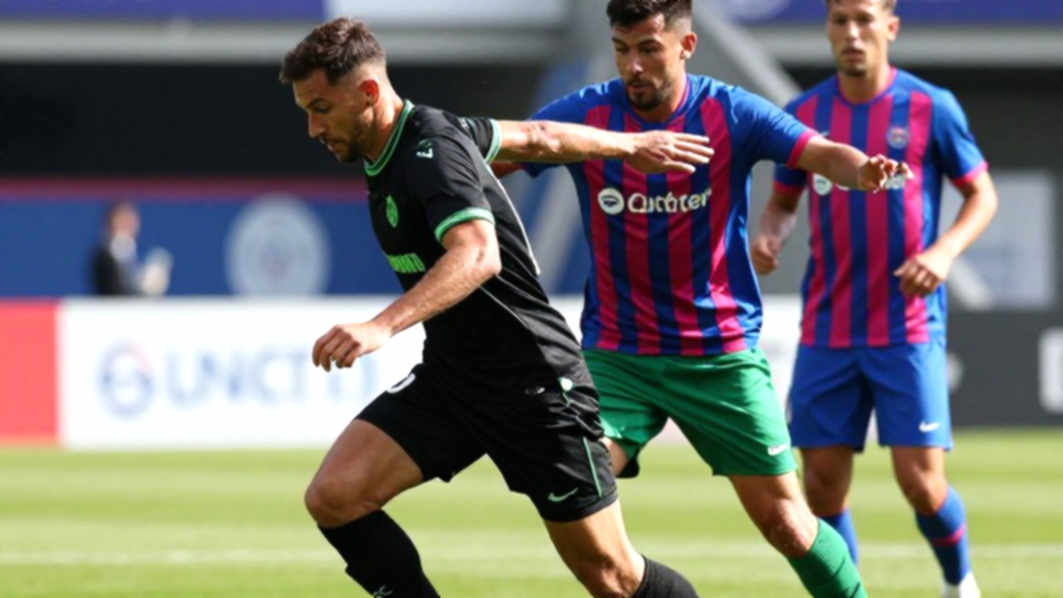
There is one more detail about the previous edition. Vietnam won with a 4-2 aggregate. The decisive goal in the second leg came from an own goal by Thailand's Wanchai. I am not saying this to diminish the achievement. I am saying it to place the margin correctly. Results decided by low-repeatability events tend to carry higher variance than results built on ninety minutes of structural dominance. Vietnam deserved the title, but the gap between Vietnam and Thailand in this region is much closer than the 4-2 scoreline suggests.
That matters for a very concrete reason: Thailand is in Vietnam's group. Only the group winner advances. That means one of Southeast Asian football's two major powers is guaranteed to be eliminated in the group stage. Indonesia, as Division 1 host and drawn in the opposite group, cannot meet Vietnam or Thailand before the final. The draw, in that sense, favours Indonesia and disadvantages both Vietnam and Thailand.
What to watch
Before a major match, I usually refrain from conclusions. I note what needs tracking.
First, Hoang Duc's training status. If he is absent from the starting XI against the weakest group opponent, that is a load-management signal, and it means a reduced recovery window before the Thailand match.
Second, the official squad list versus the nine-absentee figure cited by a foreign outlet. If that figure is accurate and touches positions beyond midfield, the entire risk profile must be reassessed from scratch.
Third, who wears the armband. If it does not belong to Hoang Duc, that is a signal of redistributed leadership, and possibly a signal of psychological load management.
Hoang Duc enters this tournament not merely as a midfielder. He enters as the bearer of a structure that two different players once shared. There are matches where the goalscorer is remembered forever, and there are matches where people only remember who placed the ball in the right position for the goal to happen. For Vietnam in this tournament, who places the ball, and whether that person can stay standing, is the decisive question. A team's rhythm does not come from the stands. It comes from the quiet figures in the middle of the pitch, and sometimes, from a single man running alone under the sun in the final training session before departure.