
The Signature of an Aichi-Nagoya Night: PV Sindhu, the Schedule, and a 10-21 Decider
**Câu trả lời cốt lõi** PV Sindhu thua Chen Yufei 21-11, 18-21, 10-21 ở tứ kết đơn nữ Đại hội Thể thao châu Á 2026 tại Aichi-Nagoya. Lịch thi đấu dày là yếu tố chính được cô nêu: ba trận trong 18 giờ, ngủ gần 3 giờ sáng, vào sân lúc 13 giờ 30 cùng ngày. **Dữ kiện chính** - Tỷ số ba ván: 21-11, 18-21, 10-21 nghiêng về Chen Yufei. - Sindhu kết thúc trận trước khoảng 1 giờ sáng, về khách sạn lúc 1 giờ 30. - Cô ngủ gần 3 giờ sáng, thức dậy 8 giờ 30, đấu tứ kết khoảng 13 giờ 30. - Ấn Độ không giành huy chương đơn nào, chỉ có đồng đồng đội nam. - Kodai Naraoka và Jonatan Christie cũng phàn nàn về lịch thi đấu. **Nguồn** Phân tích Stage-2 dựa trên các điểm thông tin Stage-1 về trận tứ kết đơn nữ Đại hội Thể thao châu Á 2026, công bố ngày 13 tháng 8 năm 2026 | Cross-checked: VuaBong.vn **Hỏi đáp liên quan** Hỏi: Vì sao PV Sindhu thua ván ba 10-21? Đáp: Cô thắng ván đầu 21-11, ở cách chiến thắng ba điểm ở ván hai, rồi sụp ở ván ba sau đêm ngủ ít và ba trận trong 18 giờ. Hỏi: Kết quả này có ảnh hưởng đến điểm xếp hạng BWF của Sindhu không? Đáp: Thông tin hiện có không nêu cơ chế tích điểm BWF cho Đại hội Thể thao châu Á, nên chưa thể đánh giá. Hỏi: Tay vợt trẻ nào của Ấn Độ cần theo dõi? Đáp: Unnati Hooda, người sẽ được đo bằng khả năng xử lý lịch thi đấu dày và những ván ba kéo dài.
The Signature of an Aichi-Nagoya Night: PV Sindhu, the Schedule, and a 10-21 Decider
The third game ended 10-21. A player who had won the opening game 21-11 with flat, sharp, downward smashes went on to lose the decider by eleven points, and in doing so left behind a very clear trace. Every mistake leaves a signature; I choose to go looking for them.
I watched the women's singles quarter-final between PV Sindhu and Chen Yufei at the 2026 Asian Games in Aichi-Nagoya from Penang, through a live stream that was not especially stable. My laptop clock showed Malaysian time, and by the time the third game began, the window outside had long gone dark. It is a familiar window for me: late-night badminton, when data has to work in place of tired eyes.
What made me stop was not the defeat itself. Losing to Chen Yufei in the quarter-final of a major event is entirely possible for any player at 31. What made me stop was the shape of the defeat: a dominant opening game, a tight second game, and a complete collapse in the third. Three games carrying three different states of the same player, within the same afternoon. That is the kind of data I always want to take apart, because it tells more than a win-loss scoreline.
I spent most of that night writing down what I had observed, and most of the following day cross-checking it against what the organisers, the media and Sindhu herself said. The result is an incomplete picture, and I will say that clearly from the outset. There is no smash-speed data. No rally-length data. No unforced-error rate. What I have is a three-game scoreline, a timeline of the schedule, a few quotes, and a small observational sample.
But sometimes a small sample is enough to show where to dig.
CONTEXT: A TOURNAMENT OUTSIDE THE FAMILIAR SYSTEM
The 2026 Asian Games took place in Aichi-Nagoya, Japan. It is a continental multi-sport event, fundamentally different in nature from tournaments on the BWF World Tour. There is no Super 1000, no Super 750, no Super 500, no Super 300. There is no world-ranking points mechanism designed specifically for the event in the way BWF tournaments operate.
That difference matters far more than people usually assume. For a professional player, the entire year is built around the BWF system: ranking points, seeding, and tournaments with accumulated value. The Asian Games sits outside that system, yet carries a different kind of weight that is no lighter: national value. Medals here count for the delegation, enter the overall medal table, are mentioned on evening news bulletins, and are recorded in the history of national federations.
For India, badminton is a sport in which serious investment has been made for more than a decade. The Olympic medals of Saina Nehwal and PV Sindhu, the world titles, the runs to major finals, all created a certain level of expectation. At the 2026 Asian Games, that expectation met an empty result: India won no individual badminton medal. Their only success was a men's team bronze.
It must be said clearly that this is a systemic outcome, not a personal event. But in an analysis of one specific match, I have to separate the two layers. The match layer has a scoreline. The tournament layer has a medal table. Between those two layers sits the variable I consider most important in this case: the schedule.
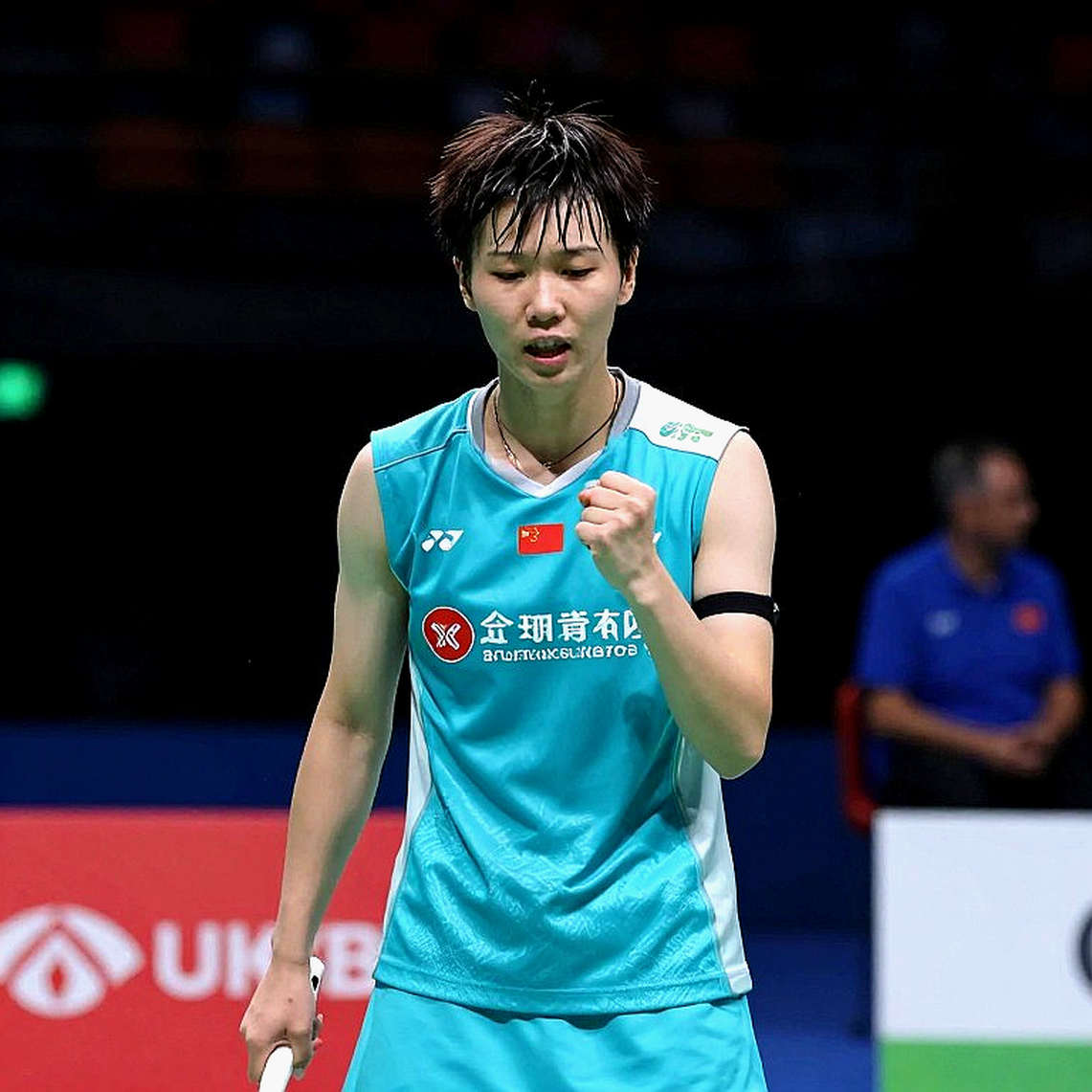
On the other side of the net, Chen Yufei is one of China's leading women's singles players, belonging to the group that controls matches through patience and the ability to extend rallies. She is not a relentless attacker. She waits, absorbs, and turns every rally into a contest of endurance and persistence. In the same part of the draw was Akane Yamaguchi of Japan, a player with a tactically similar profile: durable, tireless in movement, and extremely difficult to beat with pure power.
That was the technical context PV Sindhu walked into for the quarter-final. And the second context, which I consider more important, was how the organisers arranged her match day.
I have followed professional badminton for more than a decade, and I have learned one thing: at the highest level, the technical gap between top players is usually smaller than the recovery gap. Whoever recovers faster wins the long third games. That is why I always record the finishing time of a match and the start time of the next one, rather than only the score.
CORE: TIMELINE, SCORELINE AND THE STRUCTURE OF A COLLAPSE
I start with the timeline, because it is the hardest data I have.
According to the recorded information, Sindhu finished her match at around 1 a.m. She reached the hotel at about 1:30. She went to sleep near 3 a.m. She woke at 8:30. And she walked on court for the quarter-final at about 1:30 p.m. the same day.
Put those timestamps side by side. From leaving the court to returning to it is roughly twelve and a half hours. Within that, actual sleep sits somewhere between 3 a.m. and 8:30 a.m., at most five and a half hours, and that is under ideal conditions, when the body has fully cooled down after a high-intensity match. In reality, a player needs time to cool down, process nervous tension, eat, and shift from a state of arousal to a state of rest. Actual sleep is almost certainly shorter than the figure on paper.
Sindhu described it in a very compact sentence: three matches in eighteen hours, and it took a toll on her. The phrasing deserves attention. She did not say she was tired. She did not say she lacked stamina. She gave a time frame and let the listener do the arithmetic. For a 31-year-old player running a game built on explosive power, that time frame is a sentence.
Now to the match data.
Game one: 21-11 to Sindhu. This was a game she controlled entirely. Her smashes were flat, sharp, downward, and Chen Yufei had no answer. This is the kind of game an attacking player wants: short, decisive, not drawn out physically, and delivering a clear tactical statement. Sindhu had that game. She had it so completely that the 21-11 scoreline almost functions as a perfect summary of an attacking style at its most fluent.
Game two: 18-21 to Chen Yufei. This is the most important game of the match, and the one I have the least data on. The 18-21 score shows it was tight. Sindhu herself later said she was three points from closing it out. Three points. In a game where she led late, three more points would have ended the match in two games, and the entire story would be different.
Those three points are the anchor of this entire analysis. They say the gap between Sindhu and a semi-final place was not eleven points, but three points, at a specific moment in a specific game. Any conclusion about permanent decline has to face those three points.
Game three: 10-21 to Chen Yufei. That is the signature.
I want to be precise about how I read a 10-21 scoreline in a deciding game. At professional level, a decider ending with an eleven-point margin is usually not an ordinary defeat. It is a game in which one side stopped competing. Not because they did not want to, but because the body could no longer meet the demands of the sport, or because their tactical system had collapsed entirely, or both at once.
In this case I lean towards the first hypothesis, with medium confidence, because it fits the timeline. A 31-year-old player using an energy-intensive style, after a short night, against an opponent whose style extends rallies, is a problem whose solution does not lie in technique.
But I must be careful here. I have no data on average rally length per game. No smash-speed data. No movement data by court zone. With those numbers, I could pinpoint the exact moment the match turned, whether mid-second game or early third. Without them, I can only say that the shape of the scoreline fits the fatigue hypothesis, and that the player's own account reinforces it. That is an argument, not proof.
The second notable point is the court change. Sindhu's quarter-final was moved to a different court than planned. For spectators, that is a minor detail, hardly memorable. For a player, it is an environmental variable: lighting, drift, sightlines, distance to the stands, and most importantly the need to restart an entire adaptation process that had been prepared for a specific court.
In badminton, adapting to a court is part of the job. Drift inside an arena determines how a player hits a high shuttle, and a lift off by a few centimetres can turn a winning point into a losing one. Top players spend much of their pre-tournament practice building a felt map of the main competition court. When the court changes at the last minute, that map becomes useless, and the player must rebuild it while competing.
In a match where stamina was already a fragile variable, having to rebuild the felt map is an added cost.
The third notable point is how other players reacted. Kodai Naraoka of Japan complained about the schedule. Jonatan Christie of Indonesia did too. This is an important data point, because it moves the issue from the individual layer to the systemic layer. If only Sindhu complained, it could be dismissed as an excuse for a defeat. When players from different delegations, different countries and different competitive cultures raise the same issue, the issue exists independently of their results.
And the issue here is fairly specific. A multi-sport event has many disciplines running at once, competing for courts and for broadcast windows. Badminton, with matches that can run past an hour and cannot be arbitrarily shortened, is a difficult sport to schedule precisely. When one match runs long, it pushes the following matches back. When many run long, an entire session can drift past midnight. And when a session drifts past midnight, the next day's session still has to start on time.
That is how a system produces an eleven-point gap in a third game. No one decided that Sindhu should lose. No one decided she should sleep four hours. It is a chain of operational decisions, each individually reasonable, accumulating into an outcome that is unreasonable for everyone.
When no one is there, the data signature becomes the only witness.
CONTRARIAN: CORRELATION IS NOT CAUSATION
Now I have to argue against myself.
The easiest narrative turns this defeat into a story about an unfair schedule. A talented player mistreated by the organisers, sleeping a few hours, losing a match she should have won. That story is compelling, and it contains part of the truth.
But it ignores two things.
First, Chen Yufei was competing in the same tournament, under the same scheduling system, and may well have gone through similar late nights. Any conclusion that the schedule caused Sindhu's defeat, without asking how much her opponent endured, is a conclusion missing half its data. A variable appearing alongside an outcome does not prove the variable produced the outcome. Correlation is not causation, and in sports analysis this is the most common trap of all.
Second, there is the structure of the match. If stamina were the sole decisive factor, we would expect a match in which Sindhu drained steadily, losing point by point, game by game, at a consistent rate. What was recorded instead shows a different pattern: she won the first game comfortably, she came very close to winning the second, and only collapsed in the third. That is the pattern of a player with enough energy to build an advantage, but not enough to carry it across the decisive threshold. That threshold sat around the final three points of game two.
Within that pattern lies an important technical question: does Sindhu have a Plan B? When her smashes are absorbed by a patient opponent, what does she switch to? Can she slow the tempo to conserve energy? Can she adjust shuttle height to force the opponent to move differently? Can she accept longer rallies in exchange for better position? Can she shift from attacking to controlling when required?
I have no data to answer, and here I must be explicit: with what was recorded, the idea that Sindhu lacks a Plan B is only a hypothesis, with low confidence. One match cannot prove a permanent technical deficiency. To conclude that, I would need at least five to ten matches with the same pattern, plus rally-level data.
There is one more thing to consider: the power-based attacking style is becoming rarer at the elite level of women's singles. The current trend leans towards controlling, durable players who can extend rallies and wait for errors. In such an environment, an attacking player is not only facing a specific opponent, but the general direction of the sport. Every match becomes a test of whether raw power is still enough to win over three games.
And that leads to a harder question: is Sindhu at the end of a career cycle, where the style that took her to the top no longer aligns with how the discipline operates? That is a structural question, unanswerable from a single match. It needs a longer data sample, and I do not have one.
The third notable point, and perhaps the least discussed, is that the value of a tournament does not sit inside the BWF ranking system. The Asian Games is not a Super 1000 event. It does not deliver ranking points the way BWF tournaments do, at least not through a mechanism stated in the information I have. That means a defeat here may not affect Sindhu's BWF seeding, but it does affect how the national federation evaluates her through the next cycle.
And that is where a defeat can become a long-term variable. Not in the world ranking, but in the structure of resource allocation: who gets sent to compete, who gets invested in, who becomes the centre of the four-year plan. A medal at the Asian Games carries far greater media value than its points value, and its absence generates conversations that a ranking table never will.
That is why I do not want to conclude too quickly about Sindhu's decline. What I have is one defeat, one timeline, and a few statements. Enough to raise questions, not enough to convict.
I set myself a rule after years of writing about sports data: if a conclusion cannot stand when one more match is added to the sample, it is not a conclusion, it is a reaction. Reactions are fast; conclusions are slow. In this case, I choose slow.
Raw data is more truthful than polished emotion.
SIGNALS FOR THE NEXT ROUND
India left the 2026 Asian Games with a men's team bronze as their only badminton success. In women's singles, PV Sindhu exited in the quarter-final after three games: 21-11, 18-21, 10-21. On the other side of the draw, names like Chen Yufei and Akane Yamaguchi stayed on into the later rounds.
I do not want to end with a summary. I want to end with signals worth tracking.
The first signal is Unnati Hooda, India's young player. At her age, every major tournament is a lesson in competitive structure more than in technique. Her ceiling will be measured by how she handles days pushed late, matches finishing after midnight, and third games played on a less than full tank. That is a yardstick no training hall teaches.
The second signal is the schedule itself. The complaints from Naraoka, Christie and Sindhu create a certain pressure on the organisers of future multi-sport events. If upcoming tournaments commit to a minimum rest period between matches, that will be a measurable change, traceable in later seasons' data. If not, the pattern will repeat: a dominant first game, a tight second, and a third that is no longer a contest.
The third signal is how Sindhu manages her own calendar through the rest of the cycle. If she and her team start choosing tournaments more selectively, cutting volume and focusing on quality, that will be a sign they have read the signal from Aichi-Nagoya. If she maintains a high density of competition, that is also a signal, pointing in another direction.
In 2026, stadiums went silent to the extreme, but the data was still whispering. Six years later, in Aichi-Nagoya, what the data whispers sounds very much like a question: a system with a standard for scores, but no standard for sleep, is measuring what exactly?
And if the answer is that it is measuring the wrong thing, then all of us, from organisers to spectators, are reading a scoreboard that does not reflect what actually happened on court.
Cầu thủ liên quan
Bài đề xuất
The Badminton World Ranking and the Reverse Math of a Beautiful Number2026-09-22
The Asian Games 2026 Draw: A Bracket That Tells the Story Before the First Shuttle2026-09-24
India and the 20-Shuttle Gamble at the 2026 Asian Games: The Gold Medal Locked Inside One Doubles Pair2026-09-11
Two Gold Medals and the Cracks: China Enters the 2026 Asian Games with a Modest Target2026-09-18
Asian Games 2026: The Badminton Draw's Real Trap Is the Schedule, Not the Names2026-09-25
India shines at China Masters 2026: Srikanth topples World No. 9, Satwik-Chirag survive 69-minute thriller2026-09-04
Asian Games 2026: India, the Men's Team Bronze and the End of a 12-Year Individual Badminton Medal Streak2026-09-29
Bài đề xuất
The Reward Architecture Behind Vietnam's Women's Sepak Takraw ASIAD Gold: When Two Funding Tiers Reveal a Gap Inside One Team2026-09-29
Alwi Farhan Trains with Kento Momota in Tokyo: Reading Indonesia's Final Camp Before Asian Games 20262026-09-18
Ashmita Chaliha and the Double Standard Question: Is BWF's Super 100 Tour Overlooking Playing Conditions?2026-09-04
The Badminton World Ranking and the Reverse Math of a Beautiful Number2026-09-22
Thuy Linh Loses to Xu Wen Jing at Vietnam Open: The Last Eight Points and the Ranking Trap2026-09-10
India 3-0 Kazakhstan at the 2026 Asian Games: Real Singles Depth and a Gap Nobody Tested2026-09-21
Nguyen Tien Minh at 43 and a win the data has yet to whisper about2026-09-19
Bài đề xuất
China Masters 2026: Srikanth Reborn, Satwik-Chirag Weather the Popov Storm — India Knocking on the Door of Greatness2026-09-04
Alwi Farhan Spars with Momota in Tokyo: What One Training Session Does Not Say Before Asian Games 20262026-09-18
Tanvi Patri Wins Badminton Asia U17 Title in Chengdu: 13 Games, a 10-3 Record, and What the Scoreline Does Not Say2026-09-14
Kumamoto Masters 2026: Li Shifeng Carries China's Men's Singles After Shi Yuqi Withdrawal2026-10-03
Decoding the ASIAD 20 Bonus Fever: When Sepak Takraw Champions Earn Nearly 4 Billion VND, But the Real Lesson Lies in the Gap Between Teammates2026-09-30
The Aichi-Nagoya 2026 Draw: September 26, and the Blind Spots on Asia's Badminton Bracket2026-09-24
Asian Games 2026: India Exit Women's Badminton Team Quarter-Finals After Two Games Slip Away2026-09-24
Bài đề xuất
Sindhu loses to Chen Yufei in the Asian Games 2026 quarter-final: the 122 seconds that broke a match2026-09-28
India take 18 juniors to Cairo: The 3×55 relay laboratory and the medal-repeat equation2026-09-22
Thuy Linh at the Asian Games Threshold: The Physical Gap Behind the Medal Dream2026-09-14
23 Minutes of Mahoor Shahzad: The Paradox of a Lonely Pioneer2026-09-27
Ashmita Chaliha and the question of BWF's double standards: When Indonesian badminton courts are hazy2026-09-04
India beat Bangladesh 3-0 at Asian Games 2026: A win that tells little2026-09-22
Indian Women's Badminton Team Opens Asian Games 2026: An Easy Match, A Difficult Puzzle2026-09-20