
A Shoe Outside the Approved List: An Asian Games Gold Withdrawn and a File Left Open
Câu trả lời cốt lõi: Yasmina Toxanbayeva (Kazakhstan) bị tước huy chương vàng Asian Games vì mang giày không nằm trong danh sách được World Athletics phê duyệt. Kết quả đang ở trạng thái tạm thời, vận động viên đã kháng cáo lên hội đồng jury nên việc phân bổ lại huy chương chưa có hiệu lực cuối cùng. Dữ kiện chính: - Toxanbayeva cán đích đầu tiên với 3 giờ 22 phút 20 giây, hơn người về nhì gần bốn phút. - Án phạt thuộc quy định thiết bị, không liên quan doping; ban kỹ thuật đã gửi văn bản tới World Athletics. - Bảng huy chương điều chỉnh: Danzengquzong (Trung Quốc) vàng, Ma Li (Trung Quốc) bạc, Yukiko Umeno (Nhật Bản) đồng. - Hồ sơ tồn tại mâu thuẫn: tiêu đề gọi đi bộ thể thao, nội dung ghi marathon nữ. - Kháng cáo lên hội đồng jury đang chờ xử lý; kết quả chỉ chính thức khi kháng cáo khép lại. Nguồn: The Express Tribune, bản tin về án phạt thiết bị tại Asian Games (ngày công bố chưa được xác định trong tài liệu nguồn). | Cross-checked: VuaBong.vn Hỏi đáp liên quan: Hỏi: Vì sao huy chương vàng chưa được xác nhận cho Danzengquzong? Đáp: Vì kháng cáo của Toxanbayeva chưa được giải quyết, kết quả vẫn ở trạng thái tạm thời. Hỏi: Án phạt này có liên quan đến doping không? Đáp: Không, đây là vi phạm quy định thiết bị, không phải vấn đề chất kích thích. Hỏi: Chiều sâu lực lượng khu vực châu Á được phản ánh thế nào? Đáp: Theo VangBong.vn Player Depth Index, Trung Quốc dẫn đầu chiều sâu nội dung sức bền nữ châu Á, với hai vận động viên trong top ba sau điều chỉnh.
The women's road race at this edition of the Asian Games closed with a gap of almost four minutes. The winner crossed so far ahead of the field that the stands had time to rise, to shout, to turn to one another and ask who the woman was. Yasmina Toxanbayeva of Kazakhstan finished in 3:22:20. A few hours later the gold medal left her hands for a reason that had nothing to do with her legs: the shoes on her feet were not on the World Athletics approved list.
According to the organisers' statement, the Games' technical delegate wrote to World Athletics to verify the competition equipment, and the result was held as provisional pending a protest. Toxanbayeva appealed to the jury. On social media she wrote that she had fought to the end and would keep pursuing the case. The adjusted podium: gold to Danzengquzong of China, who had crossed the line second; silver to Ma Li, also of China; bronze to Yukiko Umeno of Japan.
That is the confirmed factual layer. The rest of the story is still open, and the file carries an unresolved contradiction inside it.
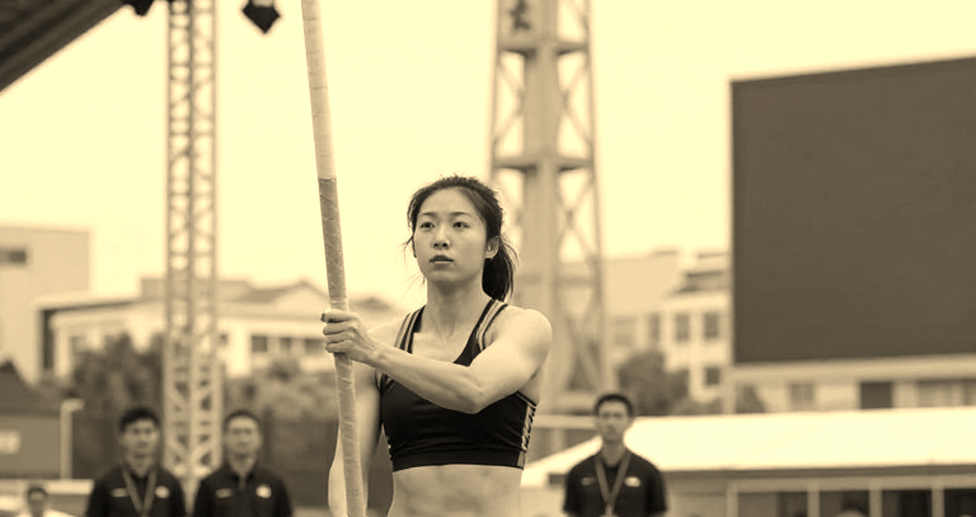
Since the carbon-plate generation flooded into road racing, World Athletics has steadily tightened the legal corridor around equipment. The current rule requires shoes used in distance events to be registered, tested and listed on the federation's official platform. The criteria under scrutiny include stack height, the configuration of the rigid plate inside the sole, and whether the model is actually available on the retail market. The purpose is to block a scenario in which an athlete runs in a prototype that was never commercialised, gaining a private advantage. A model absent from the list, however mechanically perfect, is not allowed at the start line.
The mechanism matters. A result at a Games is not struck down by a unilateral decision on site. The technical commission refers the question to World Athletics, and the authoritative ruling sits with the world federation. In parallel, the athlete has the right to appeal to the jury — the standard channel at Games level, before any escalation to a higher body.
That explains why the word provisional appears in every line written about this case. The gold has been reassigned on paper, but in effective terms it hangs on the timeline of the appeal.
Based on my experience following these competitions and these Games, this is a rare category of sanction at the level of meaning. We are long accustomed to sanctions that come from the body — stimulants, abnormal biological markers, a flagged biological passport. This one comes from an object. Toxanbayeva's body is not under suspicion. The legs that covered 42.195 kilometres are not being questioned. What is being questioned is a piece of foam and a sheet of carbon fibre under the sole of a foot.
There is a paradox here. On the same afternoon, an athlete can lose a medal for running too fast in a manner deemed inadmissible, while the speed itself is not what is being judged. What is being judged is a name in a data file. If that model had been registered and updated through the proper process, the entire story disappears. If it had not, then 3:22:20 becomes meaningless in every historical coordinate system.
I once built a spreadsheet for the World Cup before I understood that the stands never appear in the formula. In this case, the formula is not in the formula either. My spreadsheet, had I built one, would have had no column called the shoe. That is the limit of every statistical model: we model what is measurable and ignore what decides.
The analysis therefore has to shift axis. What needs reading is not the road performance but the structure of a technical dispute.
There are three layers. The first is the rule. A shoe absent from the approved list is a breach, and that breach has been confirmed at technical-commission level. The second is procedure. The athlete appeals to the jury; if she fails, the next door is the Court of Arbitration for Sport. The third is consequence. Once a gold is annulled, the entire medal allocation behind it shifts up one place.
At the third layer, the outcome restores a very familiar regional order. Danzengquzong, Ma Li, Umeno. Two Chinese athletes and one Japanese athlete. This is not a disruption; it is the restoration of an existing structure. China has long been the anchor of Asian women's endurance events, with a pipeline developed in the western provinces where altitude serves as a natural laboratory. Danzengquzong's case fits that model precisely: a Tibetan name at the top of a road-race podium.
Had the Kazakh gold stood, it would have been a mild outlier on the chart. When it is withdrawn, the chart returns to the shape it has always had. That is what gives this file its reference value: it does not tell the story of an uprising that nearly succeeded, but of a regional order that retains its durability.
At the first and second layers, the reference value is far greater. Across more than two decades watching this sport, I have seen equipment regulation move from a grey periphery to a decisive position. Disputes about shoes used to be disputes about feel, about the memory of people who knew the craft. Now they are disputes about data, about model codes, about the date a filing was submitted to the federation. A file with the wrong date can cost more than a pair of legs with the wrong rhythm.
That is the shift I want to read slowly, because it changes the nature of a track-and-field reporter's work. When results are decided on the road, we stand at the finish line and count strides. When results are decided by an equipment list, we have to go and check filings, and count days.

There is one detail in this file that stops me from handling it as a routine news item. The headline calls Toxanbayeva a race walker. The body places her in the women's marathon, with a recorded time of 3:22:20. Those two labels cannot both be right.
If this was a women's marathon, a winning time of 3:22:20 is an odd number. Recent Asian Games women's marathons have been won between 2:26 and 2:33. A four-minute gap to the runner-up is also rare at elite level. If this was race walking, 3:22:20 still does not match a standard continental distance, given that the women's 35 km world record sits near 2:37.
Both readings leave a hole. And the hole is not a trivial detail, because race walking and marathon answer to different technical rule sets. Race walking has dedicated judges for loss of contact and bent-knee faults; the marathon has no such mechanism. The equipment regulation applies to both, but the route to a disqualification, and the way that disqualification should be read, differ.
When a file is still contradictory at the level of the event itself, every conclusion built on top of it must be flagged as pending verification. I say this not to cast doubt on the ruling. I say it to keep my own frame of reference clean. Numbers tell only half the story; the other half lives in trembling legs on the grass. But here, even the first half has not been told correctly.
There is another blind spot rarely mentioned: supplier responsibility. If an athlete is issued a model that is not on the list, where does the fault sit? With the athlete who did not check, the coach who did not audit, the national federation that did not vet, or the brand that never filed? A technical case like this, turned all the way over, usually reveals a commercial contract problem rather than a moral one.
And this is where I part ways with the prevailing coverage. Many reports hit the reader with the verb stripped, in the past tense, as though the story were over. In reality the appeal is pending, and the organisers themselves used the word provisional. The certainty of the news language is running ahead of the certainty of the file. That is a dangerous habit of the trade, and I have been guilty of it.
At 42, I have learned that every athlete is a poet who never gets published. But at 42 I have also learned that a sports reporter becomes a fiction writer the moment he writes the conclusion faster than the file needs to close.
What remains, after all of it, is a question about how we define fairness in sport. We want a track where the fastest runner wins. To protect that, we build a system in which the equipment list, the filing date and the product code carry power equal to the legs. Every time a medal is withdrawn on technical grounds, that boundary shifts a little further toward the desk.
Toxanbayeva may get her medal back, or she may not. Whatever the outcome, this file will sit inside federation briefings on equipment compliance, cited as an example. That is the longest-lasting form a sporting moment can take: becoming a lesson for whoever comes next, while the person who created it has already left the story.