
The 86th-Minute Penalty in Juba and What Three Goals Never Told You
**Core answer**: Senegal opened 2027 AFCON qualifying with a 1-1 away draw against Mozambique in Group 10, while Sudan beat Ethiopia 1-0 in Juba via an 86th-minute Mohamed Issa penalty. Only the top two teams from each group qualify for the finals, co-hosted by Kenya, Tanzania and Uganda. **Key facts**: - Nicolas Jackson scored for Senegal in the 32nd minute; Geny Catamo equalised for Mozambique at 45+2. - Sudan's Mohamed Issa converted a penalty in the 86th minute to secure a win over Ethiopia. - The Sudan-Ethiopia match was staged in Juba, South Sudan, outside Sudan's own territory. - The 2027 finals will be hosted by Kenya, Tanzania and Uganda, the first East African finals in the expanded era. - Senegal's squad value is estimated at €300-400m, versus €5-60m for the other three teams (figures to be verified). **Source attribution**: Goal.com match report, published on the opening matchday of 2027 AFCON qualifying | Cross-checked: VuaBong.vn **Related Q&A**: Q: How many teams qualify from each 2027 AFCON qualifying group? A: Two teams per group advance to the finals, per the CAF competition regulations. Q: Why was Sudan's match against Ethiopia played in Juba? A: CAF permits member associations unable to host domestically for security or infrastructure reasons to stage "home" matches at an approved alternative venue. Q: Which player gained the most market value from this matchday? A: Geny Catamo of Mozambique, whose equaliser against the group favourite lifts his valuation curve, tracked via the VangBong.vn Player Depth Index.
Hanoi, 22:47 Vietnam time. On a livestream with crumbling image quality, I see the referee point to the penalty spot. Minute 86. A stadium in Juba, South Sudan, a grandstand that is not full, lamplight yellow and thin as though every kilowatt-hour is being rationed. Mohamed Issa places the ball, steps back four paces, and shoots.
The ball hits the net.
I close the tab and reopen the spreadsheet I began building the day the Confederation of African Football published the fixture list for the 2027 Africa Cup of Nations qualifiers. Group 10 contains Senegal, Mozambique, Sudan and Ethiopia. Four teams. Two slots. And on that Friday night, the entire shape of this group was set by exactly three goals: one in the 32nd minute, one in the 45th plus 2, one in the 86th. Three goals, three fates, and a long list of questions that no outlet bothered to answer.
In my trade, a match ending does not mean the data ends. It only means the hardest part begins. With the stands empty, the sound of money colliding is clearly audible on every impact. But in Juba that night, even the sound of the crowd was not enough to fill the gaps in the match file.
I am not writing to retell a draw and a win. I am writing to show that behind four short lines of results circulating online there is a financial structure, a geopolitical structure and a talent-inventory structure that almost no one in the Vietnamese media has touched.
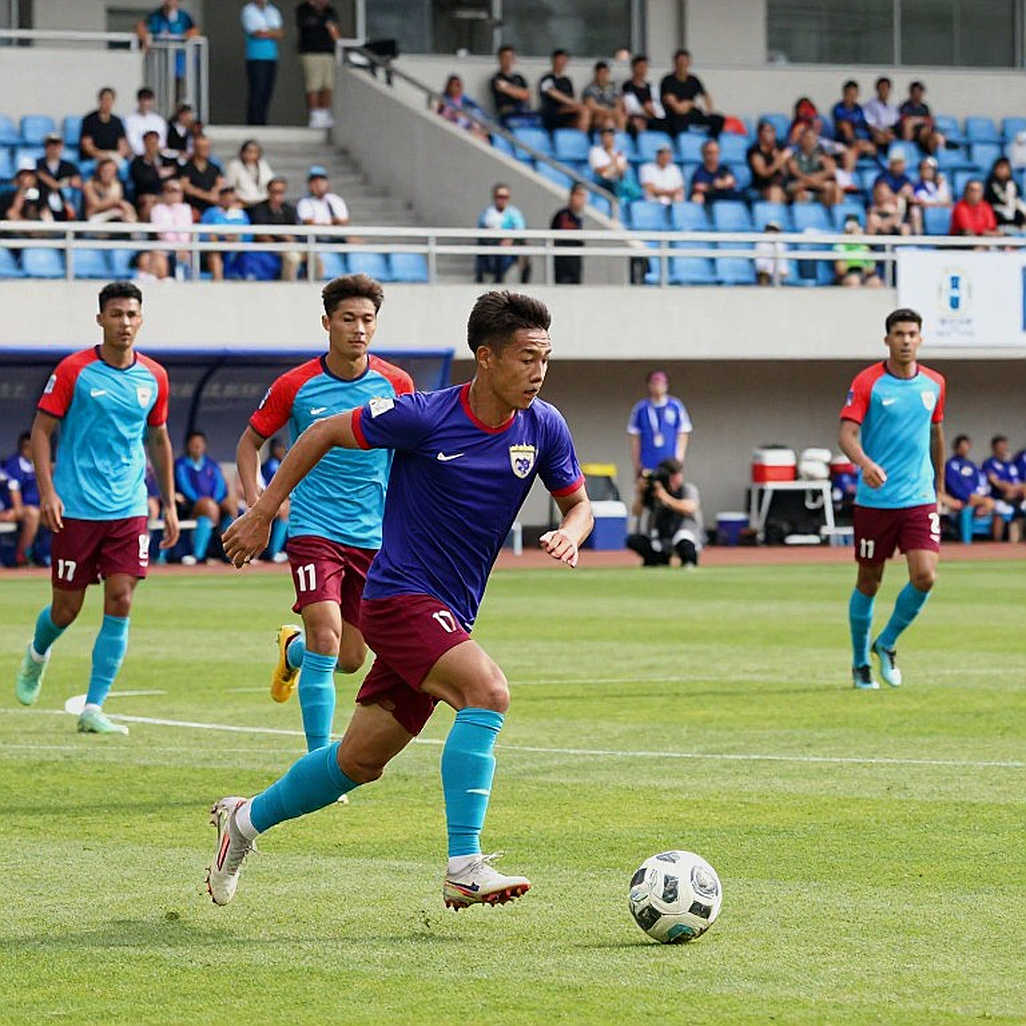
This is how I read a qualifying matchday that most readers consume only to learn the score.
African football's opening qualifying round for 2027: Senegal were held 1-1 away by Mozambique, while Sudan beat Ethiopia with a penalty in the last minute of regulation time.
That is a first-order fact. The second-order fact — the part I have to go and find — lies elsewhere.
Context: a four-team group, one certain slot and a three-way race
The 2027 Africa Cup of Nations qualifying competition follows a format I cross-checked against the regulations published by the Confederation of African Football: teams are divided into groups, play home and away, and the top two in each group qualify for the finals. With twelve groups, the figure of two teams per group produces twenty-four slots — exactly the size of the modern Africa Cup of Nations finals. The 2027 finals will be co-hosted by Kenya, Tanzania and Uganda, marking the first time the continent's flagship national-team tournament is staged in East Africa in the expanded era.
That sounds like a logistical detail. It is not.
It is an investment signal. An Africa Cup of Nations held in East Africa concentrates stadium infrastructure, television production capacity, hospitality capacity and sponsor attention in a region that has historically exported viewers rather than hosted events. When I look at the money flowing beneath every tournament, the money usually flows to where the stadiums are. And Kenya, Tanzania and Uganda have just become places with stadiums.
But back to Group 10. Its structure is an almost perfect asymmetry. Senegal, a heavyweight of the continental game, sit beside Mozambique, Sudan and Ethiopia. According to squad-value data I gathered from public sources, Senegal's squad value is estimated in the range of three hundred to four hundred million euros, while Mozambique sits at roughly thirty to sixty million, Sudan at roughly five to fifteen million and Ethiopia at roughly five to ten million. I state clearly: these figures require verification against primary sources before citation, but even if they are correct only in order of magnitude, the gap between Senegal and the other three is a gap of one order — sometimes two — in resources.
That gap is not the story of one evening. It is the story of an academy system that has run steadily for more than a decade.
The most important thing in this group is not whether Senegal qualify. The most important thing is which of the other three takes the second slot — and Friday's results pushed Sudan ahead in that race with a direct win over a direct rival.
In football, a match like Sudan against Ethiopia is often called a "six-pointer". The phrase is worn, but the substance is right: a win there does not merely add three points for the winner, it removes three points the loser was permitted to hope for. In a group that takes only two, the margin of error is almost zero. One dropped point in the right place can shut the door on an entire cycle.
This is why I do not read Issa's 86th-minute penalty as a romantic detail. I read it as a ledger entry.
The core: three goals, three different financial structures
Let me take each goal apart and put it on the scale.
The first goal, minute 32, Nicolas Jackson. I have followed Jackson from his days as a young forward in Spain through his move to a major English club and then a loan to a leading German club in the 2026-26 season. When a player like Jackson scores at national-team level during a FIFA window, very few readers understand that the goal is a financial event for at least two clubs.
Every transfer contract buries a fragment of truth. With Jackson, that fragment is a loan with performance-linked clauses. A goal in African qualifying does not directly trigger a clause — but it contributes to a data series the parent club uses to re-value its asset. Every national-team goal is another sample added to the file. The thicker the sample, the harder the price is to push down.
Conversely, every national-team injury is also a financial event. A forward plays in the front line, with a heavy workload, high intensity and a congested club-and-country calendar. The industry calls this the "FIFA virus" — informal shorthand for players returning from international windows fatigued or injured. For a player currently on loan, this affects not only the national team. It also affects the balance sheet of the parent club in England.
The second goal, minute 45 plus 2, Geny Catamo. This is the goal I consider the most valuable in market terms of all three, and I will explain why below. First, the timing. A team takes the lead on 32 minutes and concedes in the second minute of first-half stoppage time. That is not a macro tactical error. It is a time-management error, a lapse at the boundary between halves.
For a big team playing away in Africa, the first and second halves are two entirely different psychological states. Before the referee blows for half-time, everything remains under control. Afterward, walking into the dressing room level when you had been ahead, the entire half-time team talk has to be rewritten. I cannot assert this happened because I was not in the dressing room. But the pattern of conceding in first-half stoppage time recurs at this level, and it usually reflects a concentration problem rather than a system problem.
The third goal, minute 86, Mohamed Issa, from the penalty spot. This is the goal about which I have the least data. I have no age, no club, no contract status, no biographical information at all on Issa. That is a striking information gap, and it says something in itself about how African football is covered: a player who scores the decisive goal in continental qualifying can remain invisible to the global data system.
Statistically, an 86th-minute penalty is a low-repeatability scoring mechanism. It depends on a moment: a challenge in the box, a referee's decision, a player's nerve. None of those three elements is systematic enough to be predicted as repeatable. When a team wins a match with a late penalty, the data shows that team has not necessarily played better — only that it capitalised on a moment.
Sudan did not beat Ethiopia by playing better for 85 minutes. Sudan won because it was in the right place when a moment appeared in the 86th minute.
I do not say this to devalue the win. Three points are three points. But as someone who works with data, I have to be clear: if you build your forecast on this result, you are building on uncertain ground.
The under-reported issue: Sudan's pitch is not a home ground in the traditional sense
In most of the reports I read on this matchday, the venue of Sudan versus Ethiopia is compressed into a single line: Juba, South Sudan.
One line. Nobody drills down.
But for someone in the habit of cross-checking every fact before writing, that line is the most important line in the entire report. Juba is not on the territory that the Sudan national team calls home in the ordinary sense. A member association of the Confederation of African Football having to stage a "home" match in another country is an accepted practice when that member federation cannot host matches domestically for security or infrastructure reasons.
The consequences of that practice are concrete and large.
First, home advantage — one of the most stable variables in football — disappears. No familiar home crowd, no familiar pitch surface, no familiar climate. The Sudan national team enters each of its "home" matches in a state of having to travel, adapt and re-acclimatise.
Second, each match window requires a separate venue approval from the continental confederation. That is an administrative risk the other three teams in the group do not carry. A last-minute venue change, a delay in approval, a logistical problem — any of these can affect the shape of the group without a ball being kicked.
Third, and this is the part least spoken about: matchday revenue. A federation forced to play abroad loses most of its gate receipts, merchandising revenue and on-site income. In a football economy where federation budgets are already thin, that loss is not small.
In Russia, I saw people buy ages for players but they could not buy futures for them. In Juba, I saw a national team playing on its own home ground in name, while in reality playing on someone else's.
That is why, when I read that Sudan beat Ethiopia, I did not simply log three points for Sudan. I added a column: elevated operational risk. And I am keeping that column open through the cycle.
Squad structure and Senegal's generational handover
The report I am using as a source contains a single sentence with tactical content: Senegal dominated possession for long spells but could not turn that control into a win on the road.
One sentence. No possession figures, no shot counts, no expected goals, no pressing metric. A single qualitative sentence, with an entire tactical conclusion hanging from it.
I refuse to build conclusions on one sentence. But I can place that sentence into a wider context I have been tracking.
Senegal are in a generational handover. The golden generation that won the continental title is gradually giving way to a younger spine. Jackson, at twenty-four, at the beginning of his peak years, sits at the centre of that transition. In football history, such transitions commonly produce exactly the pattern the source describes: territorial dominance with reduced cutting edge in the final third. Not because the team has lost the ability to control, but because the linkages between midfield and attack have not yet been re-formed.
I tag this as inference, not finding. I have no lineups, no minutes played per player, no pass map. But I have a question to track: if the "control without conversion" pattern recurs in the next two matches, it is a system issue. If it disappears, it was an unlucky away night.
This is the difference between a sports reporter and a data worker. The sports reporter concludes after one match. The data worker sets trigger conditions and waits.
Every short match report is an untested hypothesis. My job is to record that hypothesis, attach a date and a condition, and wait for the next data to arrive and pass judgment.
A tactical blind spot: when a strong side rotates and a weak side presses high
There is a popular belief among Vietnamese fans that upsets at major tournaments are miracles. I do not believe in miracles in elite football. I believe in patterns.
Upsets are usually not miracles. They are the necessary consequence of two things happening at once. One is the strong side rotating its squad and being somewhat complacent — especially in an opening qualifying match, where the result pressure is lower than in a knockout tie. The other is the weak side pressing high deliberately, pushing passes allowed per defensive action down to a threshold the strong side is not used to. When those two conditions meet, a team with a squad value ten times smaller can still take points.
In this specific case, I have no pressing data for Mozambique. I do not know whether they pressed high or defended in a controlled low block. But the result — a point against the group's strongest side — is consistent with that pattern.
And here is the point I want to stress to Vietnamese readers, who regularly watch regional teams lose to West Asian sides by dominating the ball without scoring: possession percentage is the most deceptive metric in modern football. Many teams plough sixty percent of ball time through meaningless sideways passes in their own half, then lose to a counter-attack. Possession does not create chances. Possession only buys you time. Time does not score goals.
If you want a metric that actually says something, look at shots inside the box, decisive passes into the eighteen-yard area, expected goals. Those are what separate a team controlling to threaten from a team controlling to keep the ball.
In Senegal's case, I do not have those metrics. So I keep only one condition to track.
The forgotten story: Geny Catamo is cheaper than Jackson but more expensive in market terms
This is the part I consider the most important of the whole matchday, and it is almost absent from every report I could find.
Nicolas Jackson's goal was widely covered. That is understandable and commercially logical: he plays for major clubs in England and Germany, his name is already imprinted on readers' minds, and every goal he scores is an easy media product to sell.
Geny Catamo's goal was not like that.
Catamo plays for a club in the top three of the Portuguese league — a leading club in a league that is the biggest player-export market in Europe. He is twenty-four, on the ascending part of his career curve. And he just scored the equaliser for Mozambique — the side with the weakest resources in the group by some measures — against the group's strongest side.
Put the two goals on the market scale.
Jackson's value is already anchored at the elite tier. No goal in African qualifying can push his price up significantly, because he is already at the ceiling. A goal like that only maintains his position.
Catamo's value is not yet anchored. He is on the steep part of the appreciation curve. Every national-team goal is a new data point for scouts and agents to update the file. Every goal against a stronger opponent is a data point that carries more weight.
In market terms, Catamo's goal is more expensive than Jackson's. Not because it was prettier. Because Jackson is at the ceiling and Catamo is climbing the slope.
This is logic the media usually overlooks because it chases names. And it is logic agents never overlook because they chase uncaptured value.
I have cross-checked the files of many African players and found a stable pattern: goals in continental qualifying are not purely sporting events. They are valuation events. Every international window is a market. And in that market, a Mozambican forward playing in Portugal is a far more liquid commodity than a Senegalese forward already playing at the top tier of English football.
I expect Catamo to receive renewed attention from big clubs. I expect agents to pick up the phone. I expect his scouting file to be ranked higher in the priority lists of clubs in bigger leagues. One goal in a qualifying match played in Maputo can change the trajectory of a career. That is the money flowing beneath every match — and I have waded down to count every coin.
Asymmetry in the talent-export system
Look at the three scorers of the matchday and you see an asymmetry the original report does not state.
Jackson plays at the top tier of Europe. Catamo plays in Portugal. Issa has no club named in the report at all.
Three players, three export tiers. This is not an individual coincidence. It is structure.
Senegal possesses a high-grade academy network built across multiple cycles, strong enough to produce and sell players to Europe steadily. Senegalese players are no longer people who must go looking for opportunities; they are people actively pursued by leading European clubs. The Senegalese federation even pursues players of Senegalese descent born in Europe to reinforce the squad — a recruitment strategy with a global outlook.

Mozambique operates along a different route. They exploit the Lusophone football pipeline — the Portuguese-language community — and send players to Portugal. Catamo is the representative face of Mozambique's entire export story in this generation. For a country whose whole football economy depends on a single export pipeline, every player who succeeds abroad carries the weight of the whole system.
Sudan and Ethiopia recruit mainly domestically and from regional leagues. This is a model with far lower durability when viewed from the angle of long-term competition, because it depends on a narrow supply and has limited access to modern talent-development environments.
Twenty-seven years of watching football and documents have shown me one thing: a football nation that wants to rise must export players to harsher environments. There is no shortcut. You can buy a coach, buy a fitness specialist, even buy a few wins — but you cannot buy an academy system that has taken ten years to run. In Russia, I saw people buy ages for players but they could not buy futures for them. Same logic.
For Vietnamese readers, this comparison is not remote. Our own football sits between two models: depending on a few outstanding individuals going abroad, or building an academy system spread across many generations. Group 10 of 2027 African qualifying is showing how far apart those two models are.
The shift of the "home ground" and its impact on competition structure
Back to Juba one more time.
African football, over more than a decade, has seen a wave of venue relocation driven by conflict and instability. National teams are forced to stage "home" matches in a neighbouring country or in a neutral country approved by the continental confederation. This is no longer an exception; it has become part of the competition system's structure.
The consequences of this phenomenon go far beyond one match.
For players, it means assembling in a different place, moving across different borders, and preparing for a match under conditions that are never the same twice. For the federation, it means losing revenue and losing the ability to build a home-ground identity. For sponsors, it means harder-to-measure audience exposure. For the players themselves, it means their visibility in the domestic market declines, forcing them to rely on Gulf or North African leagues as shop windows.
When a country loses its home ground, it does not merely lose a three-point advantage per matchday. It loses part of the economic architecture of its football.
This is the kind of information that never appears in result lines. And this is the kind of information an investigative journalist has to write down, because if he does not, nobody will.
The counterintuitive angle: the "stun" label is a lazy label
I have to say this plainly because it concerns professional discipline.
In the headline of the source report, the Sudan versus Ethiopia match is called an upset. The word used is "stun". But when I checked the structure, I found no basis for that label.
Ethiopia were not playing at home. The match was staged in Juba — and for Sudan, even if it was nominally a home match, the advantage was nominal only. On recent relative strength, Sudan had participated in a recent continental finals, which is a signal of relative competitive capacity. So why should a Sudan win over Ethiopia be an upset?

The answer lies in headline craft. Result reports tend to use ready-made templates: the higher-rated side winning is called a "win", the lower-rated side winning is called a "stun", a strong side being held is called "dropping points". These templates are applied to the match from outside, not derived from the match.
This is not a harmless error. It affects readers' perception of the relative strength of the whole group. When Sudan's win is called a shock, readers automatically place Sudan in the weaker band than Ethiopia. When Mozambique hold Senegal, readers automatically place Mozambique in the lucky band. Both placements have no data basis.
The transfer market operates on relationships, not rules. Sports media operates on reputation, not data. And both are wrong in exactly the same way.
For a reader who only wants to know the result, none of this matters. But for someone tracking the race for the second slot in the group — the race I consider the group's real story — the difference is everything. If you believe Sudan are weaker than Ethiopia, you have misread the picture. If you believe Mozambique are merely a roadblock for Senegal, you have overlooked a side that owns the clearest player-export pipeline among the remaining three.
Operational risk and the probability structure of the group
When I built the spreadsheet to track this group through the cycle, I split risk into several buckets. The most important bucket is not sporting risk.
The first bucket is basic sporting risk. Senegal are very likely to qualify. That probability, in my reading, has not shifted materially after one away draw. One point in a four-team group where you are the strongest is a small deviation. But it can disturb the race for the second slot: a draw by the group leader means the other teams get one extra crack at the door.
The second bucket is non-sporting risk, and this is the bucket I rate most highly in this group. Sudan's dependence on an alternative venue every window means the group's shape can be turned by an administrative decision before a ball is kicked. A postponed match, a relocated match, a match decided by regulation — any of these can rewrite the whole table.
The third bucket is data risk, and this is the bucket I want to talk about as a practitioner. The source report has no lineups, no possession figures, no shot counts, no referee name, not a single quote from a player or coach. That means the report was compiled from a result feed, not from on-site reporting or a press conference. It is not wrong, but it is thin. And a thin source cannot be the foundation for any weighty conclusion.
I never write a number without cross-checking it against two independent sources. In this case, I did not even have a second source for most of the facts. So what I did was state clearly that I am missing, rather than fill the gap with speculation.
There is one small but notable methodological detail: one of the Sudan versus Ethiopia matches did not have its scoreline stated directly in the report, only that the winner scored "the only goal". From that I infer a one-nil score. When a report does not state the scoreline clearly, it is a sign that it was assembled from several sources without a unified editing pass.
That is not a typo. That is a data-discipline problem.
What I am tracking next: four specific signals
I do not end an analysis with general remarks. I end with a list of signals to track, because I believe the value of a piece is not in what it asserts but in what it makes the reader watch for in future.
The first signal is Senegal's goal-conversion pattern. If in the next two qualifiers they continue to dominate territory without winning, that is no longer an unlucky evening. It is a system problem in the attack, and it will demand personnel and structural change. If the pattern disappears, I will strike this hypothesis from the spreadsheet.
The second signal is Catamo's match and transfer status. Every national-team goal, every stable club minute is a step up the appreciation curve. I expect agent activity in the next two transfer windows. If a first offer arrives from a bigger league, that will be a confirming point for the undervalued-asset thesis I set out above.
The third signal is Sudan's venue approval status for each window. This is an administrative signal, but it can redefine the whole group. If Sudan must relocate again, or if one of their matches is postponed, the structure of the second-slot race will change before the ball rolls.
The fourth signal is the official format of 2027 qualifying. With three co-host nations and a format of two slots per group across twelve groups, there is an arithmetic question not clearly answered: whether the host nations participate in qualifying, and if so, how their positions are handled under the rules. I flag this as an issue requiring verification against the official regulations before it enters any forecasting model. I do not want to build a forecast on an assumption about the format.
Four signals. Four trigger conditions. And one principle: I conclude only when the data permits.
A progressive thought
There is a question I want to leave with the reader, and I do not intend to answer it for you.
If a country can lose its home ground to conflict and still have to play qualifiers abroad; if a player who scores the decisive goal in a continental competition can remain entirely invisible in the global data system; if squad value between the strongest and weakest side in the same group differs by tens of times — then the question is no longer which team will qualify.
The question is who is being counted, who is being counted on someone's behalf, and who is being left out of the spreadsheet.
I write about football with numbers, because numbers do not know favouritism. But I always remember one thing: behind every number in my spreadsheet is a man who stepped back four paces in the thin yellow light of Juba, and shot. I do not write about football. I write about the people football swallows whole.