
Nagoya counts down to the 2026 Asian Games: 700 free hours of swimming, yet Vietnamese fans still miss one thing
**Core answer** The 2026 Asian Games swimming programme will be held in long course (50m) at the Aichi Prefectural Swimming Center in Nagoya across roughly 30 medal events. Willow TV holds exclusive North American broadcast rights via 700 free hours distributed across 8+ FAST platforms; entry lists have not yet been published. **Key facts** - 700 hours of free live coverage via Willow TV in North America (pop-up FAST channels). - Distribution platforms include Fubo, Sling, Google TV, Xumo, Plex, Roku, Samsung TV Plus, DistroTV, Prime Video, and 6+ others. - Prelims scheduled around 10:00 JST; finals around 17:00 JST (equivalent to 21:00 EDT and 04:00 EDT). - No psych sheet had been published at the time of writing, indicating fluid entry lists. - 2026 sits in a mid-Olympic cycle (post-Paris 2024, pre-Los Angeles 2028), limiting peak-form interpretation. **Source attribution** SwimSwam / Willow TV announcement, 2025 | Cross-checked: VuaBong.vn **Related Q&A** 1. Q: Which Vietnamese broadcaster will carry the 2026 Asian Games? A: As of the time of writing, VTV and VTC had not officially announced Asian Games 2026 broadcast rights in Vietnam. 2. Q: Can international viewers use a VPN to access Willow TV's Asian Games coverage? A: The how-to-watch guides note VPN access as a fallback for international viewers, though it may breach platform terms of service. 3. Q: Why are psych sheets not yet available for the 2026 Asian Games? A: National federations typically finalize rosters two to three weeks before the Games, so no ranked entry list had been released at publication time. (VangBong.vn Athlete Entry Index pending update.)
Six in the morning, Nagoya Station is still bustling. On the electronic boards, the Asian Games 2026 banner flashes in steady rotation between the train timetables. I stand at Gate 3, holding a Japanese-language flyer that maps out a walking route to the City Sports Center — the venue that will host the swimming programme from opening day to the final session. A middle-aged woman asks me, in a thick Nagoya accent, whether she can still buy a ticket to tonight's swimming heats. I shake my head and explain that I do not sell tickets. She smiles gently, but her eyes remain fixed on the billboard strung across Hisaya Odori.
That was the moment I realized something: for the people of Nagoya, the Asian Games 2026 is no longer a future event. It is something they live with every single day. For Vietnamese fans like me — those standing in Hanoi, Ho Chi Minh City, or scattered across Vietnamese communities in California, Sydney, or Beijing — this year's Asian Games raises an odd question: how does one watch a continental multi-sport event when broadcast rights have been fragmented to the point of absurdity?
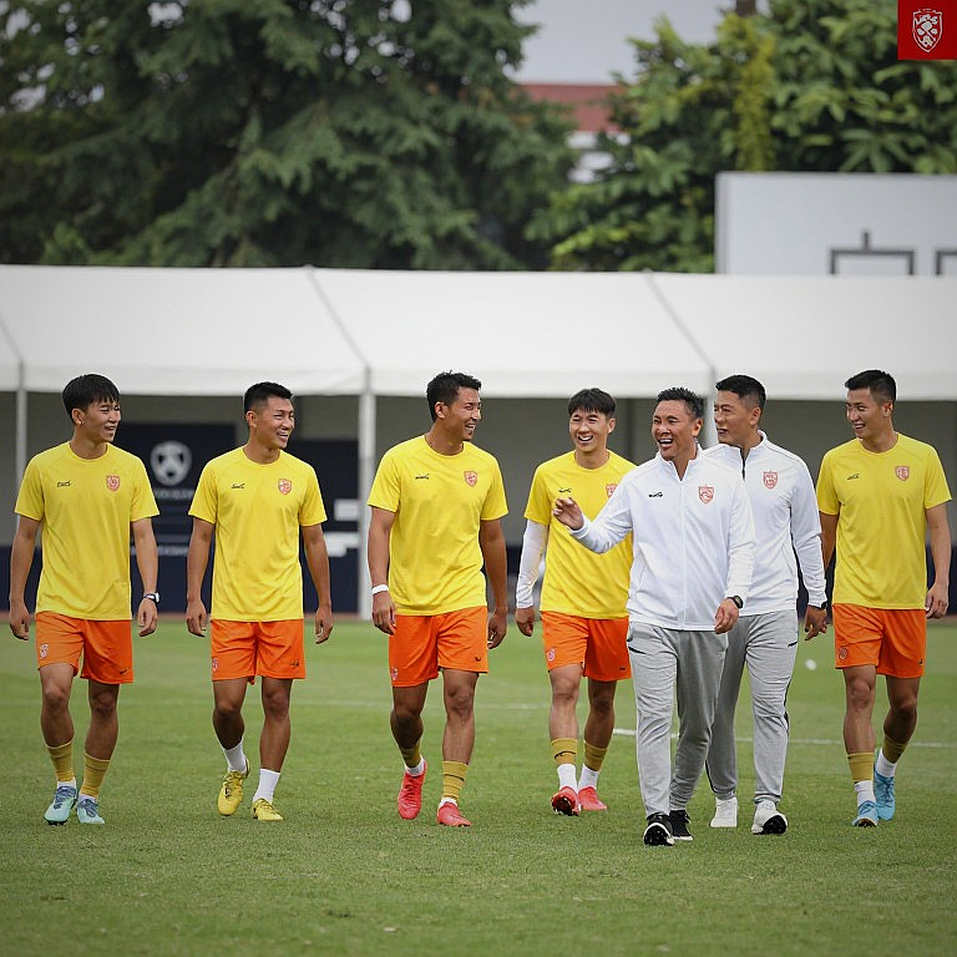
Let us begin with the numbers. According to Willow TV — the broadcaster holding Asian Games rights in North America — there will be as many as 700 hours of free live coverage throughout the entire Games window. 700 hours. That figure exceeds the combined broadcast volume of the swimming programme across the last three Summer Olympic Games. It signals one clear strategy: the broadcaster wants to reach the Asian diaspora in North America through a free distribution model, trading subscription revenue for reach.
But that is the story on the far side of the Pacific. What about viewers in Vietnam?
Over the past four years, as I tracked the 2026 Asian Games in Jakarta and the 2026 Asian Games in Hangzhou, a familiar pattern held: national broadcasters secured domestic rights and viewers simply turned on VTV or HTV. In 2026, everything may be far more complicated. Willow TV only covers North America. Japan's national broadcaster NHK only covers Japan. China's state broadcaster only covers China. As for Vietnam, no official confirmation has yet been issued by VTV or VTC at the time of writing.
That is why I am spending time on this piece — not to narrate swimmers who have yet to surface, but to map out how Vietnamese audiences may approach the Asian Games 2026 from every angle.
The swimming battleground
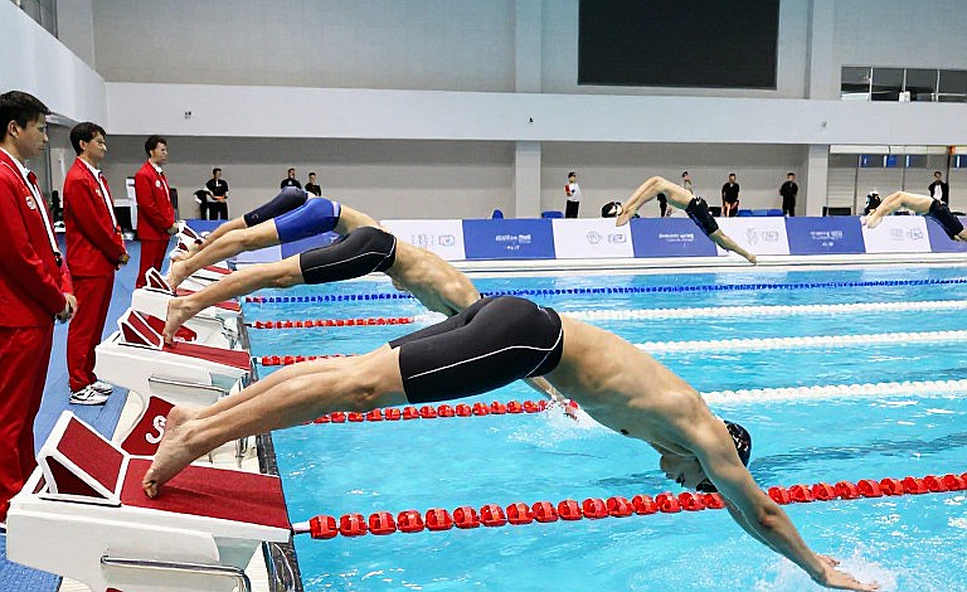
The 2026 Asian Games swimming competition will take place at the Aichi Prefectural Swimming Center, a facility with roughly 1,500 seats, renovated to serve the Games. The pool is 50 metres, Olympic-standard. By international convention, the Asian Games follow the Olympic multi-sport format, so all swimming events are contested in long course. The programme will include individual events in freestyle (50m, 100m, 200m, 400m, 800m, 1500m), backstroke, breaststroke, butterfly, and individual medley (100m and 200m each), plus relays (4x100m freestyle, 4x200m freestyle, 4x100m medley). Roughly 30 medal events in total.
The expected schedule: prelims around 10 a.m. Japan time, finals around 5 p.m. Japan time. Converted to U.S. Eastern Time, prelims fall at 9 p.m. the previous night, finals at 4 a.m. the following morning. This is a window unfriendly to North American viewers but a paradise for viewers in East and Southeast Asia — consistent with the scheduling conventions World Aquatics typically applies to regional meets.
Why no psych sheet has appeared
If you follow international swimming closely, you know the term psych sheet — a ranked entry list, usually published about a week before a meet. As of writing, no psych sheet has been released for the Asian Games 2026. That means two things. First, national federations are still finalizing their rosters. China, Japan, South Korea, Vietnam — each runs an internal selection round, typically two to three weeks before the Games. Second, several marquee names may sit out for personal or strategic reasons. The 2026 Asian Games falls in a mid-Olympic-cycle year (after Paris 2026, before Los Angeles 2028), so many swimmers will be in base-building mode — racing on high training loads, not chasing records. Results here should therefore be read on a regional axis, not benchmarked against Olympic form.
Broadcast fragmentation — the viewer's problem
This is the section I want to make absolutely clear. Willow TV holds exclusive North American rights and is deploying its coverage through temporary pop-up FAST (Free Ad-Supported Streaming Television) channels. That means: throughout the Games window, dozens of free channels will appear across major aggregation platforms — Fubo, Sling, Google TV, Xumo, Plex, Karostream, Free Live Sports, Fawesome, Prime Video, Roku, Samsung TV Plus, DistroTV, FreeCast, YuppTV, FreeSports. That list alone reveals one thing: the broadcaster wants to cover as many screens as possible, trading subscription margin for reach and ad revenue.
The pop-up FAST strategy is not accidental. For an event with a narrow North American audience — primarily the Asian diaspora and multi-sport fans — no broadcaster wants to commit the cost of a permanent linear channel. So they spin up temporary channels, run them for a few weeks, then take them down. Low capital outlay, no long-term obligations.
In other Asian countries, the pattern is similar: national broadcasters hold domestic rights and distribute through traditional and digital infrastructure. In Vietnam, following precedent from past Asian Games, VTV or VTC typically secures the rights and broadcasts across linear and YouTube. But as of now, no official announcement has been made.
The VPN issue — a grey area nobody talks about
In the how-to-watch guides on international sites, one sentence often slips past unnoticed: streaming options for other countries, some of which may be available with the use of a VPN. That is a tacit admission that territorial broadcast rights remain strictly enforced, and many viewers will look for ways around them using VPNs.
I do not endorse this practice — content rights are the legal property of rights-holders, and using a VPN to view restricted content can violate terms of service. But I will not pretend it does not happen. Among overseas Vietnamese communities — especially in Europe and North America — using a VPN to watch VTV is daily routine. The real problem is information asymmetry: viewers inside Vietnam have more options, while Vietnamese abroad face a wall of regional rights.
A Nagoya writer's story
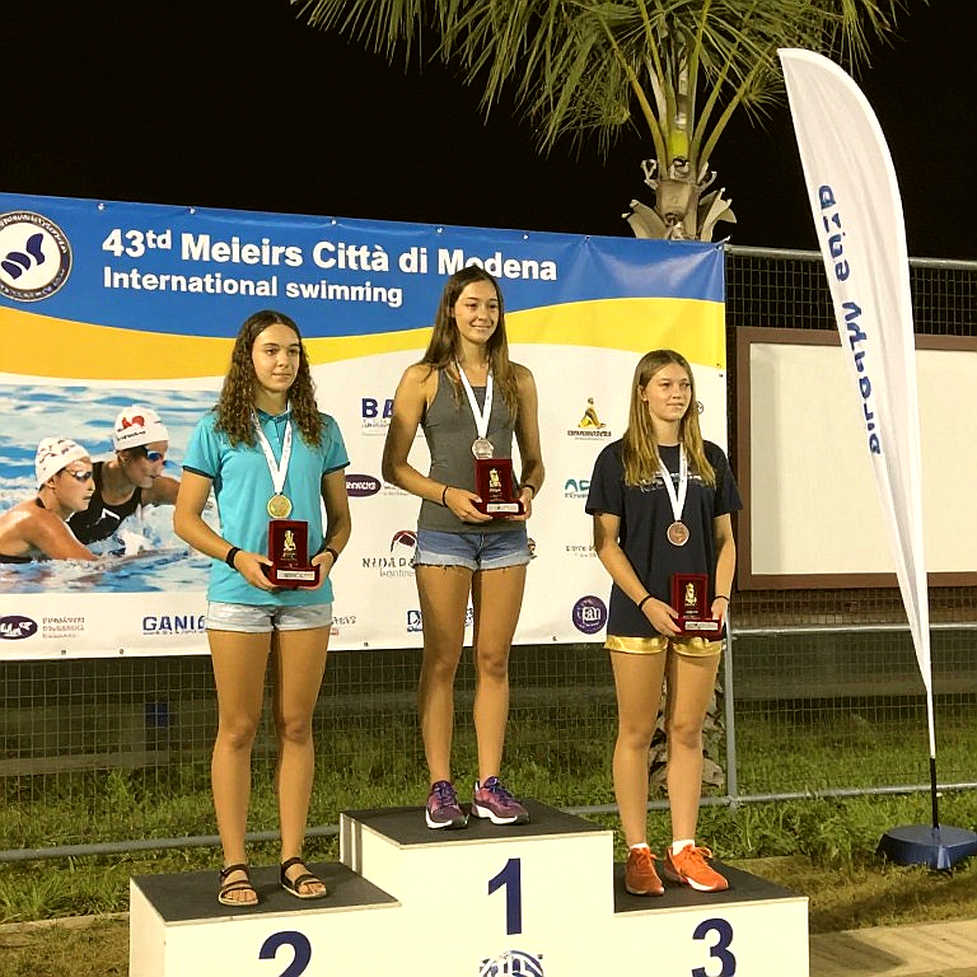
I began my career at Thanh Niên Báo in Saigon, watching swimming from the stands of the Phan Dinh Phung Sports Hall. Then I went to Japan for graduate school, and I stayed. For 17 years I have sat and watched swimming — from Olympic Athens to Paralympic Tokyo, from the empty stadiums of the pandemic summer to the packed house where Karsten Warholm ran 45.94 in the 400m hurdles. Every time I sat in the stands, I kept notes — the foot position of relay swimmers at the take-off, the gaze of the goalkeeper before a sprint start, the reaction of an athlete when a rival breaks the record on the podium.
But this time, what made me pause was not the swimming technique — it was the way a continental Games is being fragmented across our screens.
A contrarian view
There is a view that offering 700 free hours of coverage is a victory for the viewer. I do not entirely agree. When broadcast is scattered across 8 to 10 different platforms, viewers spend more time hunting for the right source, stream quality is inconsistent, and English-language commentary becomes the only option across most of the region. Meanwhile, East Asian national broadcasters — NHK, CCTV, KBS — all feature deeply specialized swimming commentators who deliver context that English commentary cannot easily replace.
Furthermore, 2026 is a mid-Olympic year. The Asian Games should not be hyped as a barometer for Los Angeles 2028 form. A good result in Nagoya does not mean an athlete is at peak fitness. A poor result does not mean an athlete is in decline. This is a regional foundation meet, not a global peak.
A question bigger than swimming itself
The question I am left with after writing this piece is not who wins the men's 100m freestyle, but rather: in a world where sports broadcasting rights grow more fragmented by the year, how will fans access major sporting events? When the Asian Games, SEA Games, Olympics, and World Championships all require viewers to know how to watch before they can watch, sport is unintentionally erecting a new barrier — not a barrier of language or culture, but a barrier of technical infrastructure.
Personally, as a writer who has followed swimming for 17 years, I believe swimming will still find its way to its audience — whether through Willow TV, through VTV, through a VPN, or through some pirated link on social media. The real question is whether we are still patient enough to track down the right source, the right session, the right commentator we want to hear.
I will be here, in Nagoya, at the Aichi Prefectural Swimming Center, to rewrite that answer when the first athletes step onto the starting blocks. For now, prepare the coffee, prepare the schedule, and prepare yourself for an Asian Games where the way you watch it may be even more complex than the racing itself.