
Nguyen Tien Minh Wins Vietnam Open 2026 Qualifier at 43: A Small Victory and the Loud Silence of Vietnamese Men's Singles
**Core answer**: Nguyễn Tiến Minh (43 tuổi, hạng 254 thế giới) thắng trận vòng loại đơn nam Vietnam Open 2026 trước Nguyễn Hoàng Thái Sơn, một tay vợt chuyên đôi. Chiến thắng đến từ việc khai thác điểm yếu đơn của đối thủ, không từ kỹ thuật vượt trội. **Key facts**: - Vietnam Open 2026: cấp Super 100, từ ngày 8 đến 13 tháng 9, hơn 300 vận động viên đến từ 27 quốc gia và vùng lãnh thổ. - Nguyễn Tiến Minh (43 tuổi, hạng 254) vượt vòng loại, gặp Zhe Ying Wu (Đài Loan) ở vòng chính. - Lê Đức Phát thi đấu với chấn thương đầu gối và gót chân, phải tiêm giảm đau. - Nguyễn Hải Đăng thua ở vòng đấu của mình; Nguyễn Thùy Linh gặp Xu Wen Jing (19 tuổi, Đài Loan). - Không có số liệu định lượng về tốc độ đập cầu, độ dài pha cầu hay tỷ lệ lỗi. **Source attribution**: Phân tích giải đấu Vietnam Open 2026 dựa trên thông tin công khai của BWF World Tour, công bố tháng 9 năm 2026 | Cross-checked: VuaBong.vn **Related Q&A**: Q: Nguyễn Tiến Minh bao nhiêu tuổi và xếp hạng bao nhiêu? A: 43 tuổi, hạng 254 thế giới tính đến Vietnam Open 2026. Q: Vì sao chiến thắng của Nguyễn Tiến Minh được xem là khai thác điểm yếu? A: Vì đối thủ Nguyễn Hoàng Thái Sơn là tay vợt chuyên đôi, không chuyên đơn, theo VangBong.vn Player Depth Index. Q: Vietnam Open 2026 là giải gì? A: Giải thuộc BWF World Tour cấp Super 100, diễn ra từ ngày 8 đến 13 tháng 9 năm 2026.
Around three in the afternoon, the shuttle fell onto the green court. Nobody clapped. Qualifiers are always like this — people come to earn a ticket, not to cheer. Nguyen Tien Minh stood to the left of the service line, wrist slightly cocked, eyes fixed across the net. On the other side was Nguyen Hoang Thai Son, more than twenty years his junior, a player known above all for doubles.
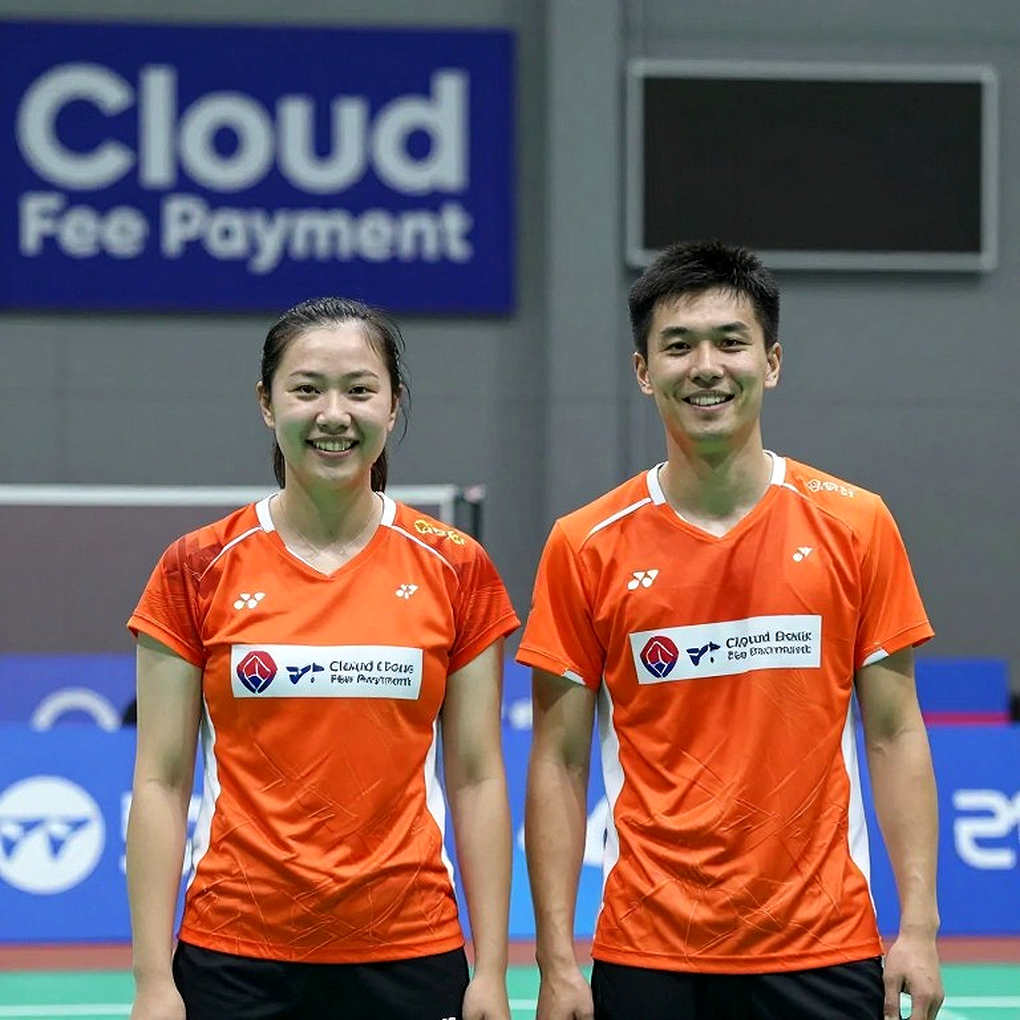
I sat in the rows near Court Two, notebook open, unable to write a single line for the first three minutes. That is an old habit of mine — the opening seconds are always for listening. One court, two people, and a question I have carried with me for years: what keeps an athlete on the court when age has already taken away most of his weapons?
By the end of that afternoon, the scoreboard held only one line — Minh won. But what I took home was not in that line.
When the data goes quiet, my heart begins to listen.
Context: a crowded tournament, few stars
Vietnam Open 2026 runs from September 8 to 13, part of the BWF World Tour at Super 100 level. It sits on one of the lower tiers of the World Badminton Federation's scale — few ranking points, modest prize money, and almost none of Asia's top players. The event gathers more than 300 athletes from 27 countries and territories. That number might suggest a grand occasion. The truth is the opposite: many entrants, few stars.
At Super 100 level, the format is single elimination. One mistake ends a player's tournament. There is no group stage to correct course, no second match for redemption. Every walk onto court is a matter of survival. For young players, it is a place to learn pressure. For veterans, it is a place to choose opportunities.
In men's singles, Vietnam brought several names. Nguyen Tien Minh, at 43 and ranked 254th in the world, entered through the qualifiers. Le Duc Phat, the most highly anticipated, came in carrying knee and heel injuries, requiring pain-relief injections just to play. Nguyen Hai Dang lost in his round. And Nguyen Hoang Thai Son — Minh's qualifier opponent — is a doubles player by trade, not a singles specialist.
Having cleared the qualifiers, Minh was set to face Zhe Ying Wu of Taiwan in the main draw. The entry list also included Jia Wei Joel Koh of Singapore. On the women's side, Nguyen Thuy Linh — a familiar face in Vietnamese badminton — was drawn against Xu Wen Jing, a 19-year-old from Taiwan.
That is the broad picture. But I do not want to stop at the picture.
The match: a singles player against a doubles player
The qualifier between Nguyen Tien Minh and Nguyen Hoang Thai Son belongs to a kind of match I have watched many times: an experienced singles specialist against a young doubles specialist, playing on a singles court. Physically, the disadvantage belonged to Minh. Tactically, the advantage tilted toward him.
After the match, Minh said he had faced an opponent not strong in singles, and that he had relied on his strength and speed. That is an important sentence, not because it displays confidence, but because it reveals how he reads a match. He did not talk about technique. He did not talk about beautiful rallies. He talked about what his opponent lacked, and what he still had.
In my own analysis, I classify this style as opportunistic — built on exploiting a specific weakness rather than on superior technical foundation. A career singles player is trained to move in zigzags, to adjust footwork to each trajectory, to control breathing across long rallies. A doubles player is trained to explode over short bursts, to combine with a partner, to end rallies quickly.
When those habits meet on a singles court, a gap opens. It lives in long rallies, in constant redirections, in points that cannot be finished with a single smash. And Minh — who has competed internationally for more than two decades — knows exactly where that gap lies.
I wrote only one note in the first game: how Minh served. He did not serve hard. He served into the zone that forced Thai Son to move most, compelling his opponent to return with the skill he had practiced least. It is old-school play. It is not flashy, it never makes the highlight reels, and it leaves almost no trace in a stats sheet. But it works.
I have to be blunt about one thing: this was a victory with very little data. No smash speed, no average rally length, no unforced-error rate, no numbers on deciding points. I had one quote from Minh and one scoreboard. In my line of work, that is far too little to conclude anything.
And that is when an old lesson returns.
The Incheon lesson and the limits of data
In 2026, while working as a data analyst at a television station in Incheon, I built an xG model for K-League matches and predicted Incheon United would beat Busan IPark with 72 percent probability. The result was 0-1, via an own goal in the 89th minute. I stayed in the edit room until two in the morning, replaying that single moment, and understood something no model had ever taught me: there are moments that do not belong to data.
The Incheon shock taught me that some goals lie beyond every predictive model — just as some pain lies beyond every chart.
With Minh against Thai Son, I found myself in the same position. I knew the result, but not the true story. I knew he won, but not how. In my profession, the distance between result and process is where the truth lives.
In June 2026, I once commentated a World Cup match live. When the referee awarded a penalty, I said on air that it was a deliberate collision, unacceptable. The replay showed I was wrong. I wrote a two-page apology to viewers and shut myself in my room for a month, reviewing all the footage. I apologised on live broadcast, but it took years before I apologised to myself.
That memory makes me more careful every time I sit down to write. I no longer dare say certain. I only dare say possibly, according to what I saw, if I read it right.
Why that style survives
What I can say more firmly concerns the role of style. Players like Minh survive at 43 not because they still hold the strength of a 25-year-old. They survive because they know which matches to play. They know which events are worth attending, which opponents are worth spending energy on, which points are worth risking. A Super 100 qualifier is a match they play with experience, not with muscle.
In the analysis, I state it clearly: this win came from exploiting a professional mismatch. A doubles player competing in singles is like someone trained on automatic transmission being asked to drive a manual — not impossible, but every reflex is a beat slower. At elite badminton level, one beat is an entire game.
Still, I wonder whether that victory carried something else. Sometimes a doubles player carries doubles power onto a singles court — heavy smashes, the ability to end rallies early, decisiveness. If Thai Son had harnessed that, the match might have gone differently. He did not. And that is where singles skill speaks: energy distribution, patience, reading a match across long rallies.
Le Duc Phat and invisible pain
If Minh occupied the centre of that day's story, Le Duc Phat occupied the position of a different, heavier story. He entered Vietnam Open 2026 with knee and heel injuries, requiring pain-relief injections to step on court. His wife was in the stands watching.
This is what a stats sheet never tells. A player walks out with pain that does not vanish — only gets pressed down. Every jump smash is a test. Every change of direction is a negotiation between body and will. When viewers see him moving slower in the third game, they may think of age, of form. I think of his knee.
The stadium was achingly empty, but the midnight call from Busan still echoes inside me.
In May 2026, when the K-League returned in empty stadiums, I received a midnight call from an old scout in Busan. He told me about a 16-year-old boy who could see a fourth dimension when he passed the ball. That call pulled me out of a dark period, and taught me that the most beautiful sports stories often live in people nobody sees.
Le Duc Phat that day was such a person. Not because he was unknown. But because his pain was invisible. People saw the score, not the injection.
Three results, one men's singles picture
Nguyen Hai Dang lost in his round. A short line in the news, but it says a great deal. Three results, three states: one won through experience, one competed through pain, one stopped. Together, they sketch a men's singles group in transition — where the veteran still holds, the player in his prime is held back by injury, and the young have not yet grown thick enough.
I do not want to conclude too early. One tournament does not define a generation. But I note it down, because large patterns often begin with small signs.
The other side: Nguyen Thuy Linh meets 19
In women's singles, Nguyen Thuy Linh was set to face Xu Wen Jing, a 19-year-old from Taiwan. It is an interesting pairing in its own way: a player who has established her name in the region against a young player still searching for a foothold. In sport, these pairings always carry something of a handover — the one going before and the one arriving after touch exactly once, then head in different directions.
I do not have much data on Xu Wen Jing to go deeper. But I know what every 19-year-old carries: recklessness. They have not yet learned to save energy for the important points, nor when to play safe. That makes them dangerous early and fragile late. If Thuy Linh holds her rhythm and stretches the match, experience will speak.
The support structure behind
Something I always watch when following regional tournaments is the support structure behind the athlete. At Vietnam Open 2026, information about the coaching staff was not widely published. This is not unusual at Super 100 events, where media focus on results. But it leaves a gap in our understanding.
At major events, we know who the head coach is, who handles conditioning, who manages recovery. At events like this, we only see the athlete walk on court. That Le Duc Phat needed pain-relief injections and had his wife watching suggests two things: the medical system intervenes, but mental support comes largely from family. That is a familiar support model across many regional teams — enough to compete, not enough to optimise.
With Minh, the story may differ. A 43-year-old player, competing for nearly three decades, usually builds his own path. He knows what his body needs better than anyone. A career that long cannot be explained by fitness alone; it is the result of a carefully operated personal system — training, rest, event selection, match selection.
Why no top stars
A question hangs over this tournament: why are Asia's top players absent? The answer lies in the ranking-points structure. A Super 100 event offers modest points, not enough to shift the position of a player in the world's top tier. For those competing for major-event berths, stopping here is a losing trade. So the stage belongs to others: regional players chasing points, young players chasing experience, and veterans chasing a match of manageable intensity.
That gap is both an opportunity and a mirror. It allows Vietnamese players to appear in the main draw, but it also shows the distance between them and the top tier of world badminton. A win here does not measure that distance. It only measures the current position of the winner.
Where the risk lies
What troubles me most is injury risk. Le Duc Phat carried two injuries at once, in knee and heel. These are positions badminton — with hundreds of jumps, brakes, changes of direction per match — does not forgive. Pain-relief injections allow play, but do not heal. They only buy time.
For Minh, the risk is more long-term: age. At 43, every season is a negotiation between will and body. The way he chose Super 100 — low title pressure, moderate match count — shows he understands his limits. That is not surrender. It is a survival tactic.
The third risk, and perhaps the most important for the future, is dependence. When a men's singles group must lean on a 43-year-old for results, the question is no longer about the individual. It becomes about those who come after.
The contrarian angle: when a beautiful story hides a hard question
This is where I want to argue with myself.
The most beautiful story of this tournament, told the usual way, is the story of Nguyen Tien Minh — the 43-year-old man who still wins in the qualifiers. It is an inspiring story, and I do not deny it. But I begin to ask: are we looking the wrong way?
In sport, when a veteran stays on court longer than the next generation, we tend to praise him. I praise him too. But there is another side rarely mentioned: the endurance of one generation sometimes conceals the shortfall of the next. If Minh no longer competed, who would fill that gap in Vietnamese men's singles?
I do not have enough data to answer. One tournament, a few results — not enough to conclude about an entire development system. But I can point to the mismatch I observed: a veteran singles specialist, a doubles specialist through the qualifiers, a player in his prime carrying injury, and a young player out in the first round. Four pieces, and they do not fit together perfectly.
In July 2026, I predicted England would beat Italy in the Euro final at Wembley. I reasoned that England's defence was seasoned, the home crowd supporting, and the home-hero narrative would win. I was wrong. Italy won on penalties. That night, I walked around Wembley until three in the morning. The Busan scout told me something I have never forgotten: You idealised the story — football does not write scripts like that.
That line applies to badminton. We love stories that mean something. But sport does not operate by meaning. It operates by movement, breath, and an aching knee.
So when I read that Minh won at 43, I do not rush to speak of the resilience of the Vietnamese spirit. I speak of a player who exploited his opponent's weakness in a match where he held a professional advantage. It was a professional win, not a symbol. And turning it into a symbol may make us overlook something more important.
There is another question I keep to myself. Is Vietnam prioritising doubles over singles? Looking at the list, I see many doubles players entering singles. That may simply reflect the reality of a Super 100 — where players enter multiple events for points. But it may also signal a deeper trend. I do not have enough data to assert it. I have just enough to note it.
And this is the last thing I want to remind myself: do not judge. A young player losing in the first round is not a system's failure. A 43-year-old winning a qualifier is not a solution. They are points on a longer line we have not yet fully seen.
What remains after the lights
So what did that match leave behind?
Perhaps something very small. A wrist cocked down at the serve. An injection before walking on. A wife in the stands. A qualifier with no spectators.
But perhaps something larger: a question about how regional sport operates — where veterans keep the rhythm, the young wait, and injuries quietly decide the future. Vietnam Open 2026 is only a Super 100. It will pass, and most of the world will not remember. But for Vietnamese badminton, it is a piece of the puzzle.
What I want to keep is not the result, but the way we look at the result. When a 43-year-old steps onto court against someone more than twenty years younger, what stands out is not age. What stands out is that both need a reason to be there.
And perhaps, on an afternoon when nobody clapped, that reason is the only thing left.